
Salads
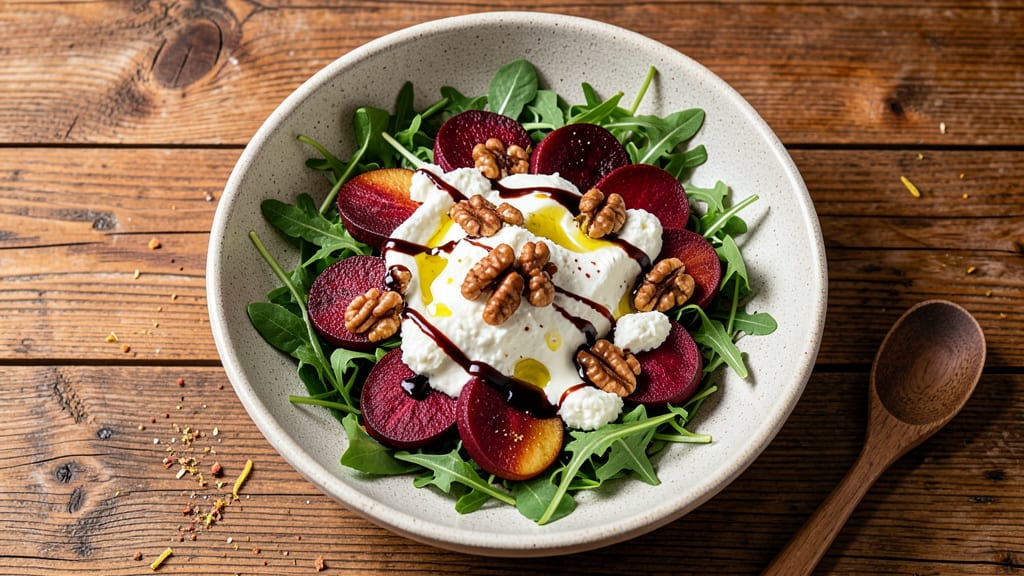
This beet walnut goat cheese salad recipe transforms simple ingredients into a vibrant, texturally complex dish that balances earthy sweetness with nutty crunch. 💛 The secret lies in roasting beets until tender yet firm, toasting walnuts for maximum flavor, and crumbling goat cheese for creamy contrast—each element carefully layered to create a salad that feels both elegant and approachable.
What sets this salad apart is its harmonious flavor profile: naturally sweet roasted beets complement the tangy richness of goat cheese, while toasted walnuts add a satisfying crunch.
The dressing ties everything together with a bright, herby finish that cuts through the richness without overpowering the natural flavors of the ingredients.
By the time you assemble this salad, you'll have a dish that's as visually stunning as it is delicious—deep ruby beets, golden walnuts, and creamy cheese create a striking presentation.
The best part? It comes together in just 20 minutes of active prep, making it perfect for weeknight dinners or impressive gatherings.
This recipe works beautifully as a standalone vegetarian main or as a side to complement grilled meats and fish. The ingredients are straightforward, but the techniques ensure restaurant-quality results at home—no fancy skills required.
Ingredients for beet walnut goat cheese salad
These twelve ingredients create a visually stunning, texturally complex salad with harmonious earthy-sweet flavors.
| Ingredient | Amount | Notes |
|---|---|---|
| Medium Beets 🍠 | 2 whole | Medium size, organic preferred |
| Extra-Virgin Olive Oil 🫒 | ¼ cup | For roasting and dressing |
| Balsamic Vinegar 🍷 | 2 tbsp | High-quality aged variety |
| Walnuts 🥜 | 1 ½ oz | Raw, unpeeled for toasting |
| Goat Cheese 🧀 | 8 oz | Soft, crumbled style preferred |
| Baby Arugula 🌿 | 5 oz | Fresh, vibrant leaves |
| Red Wine Vinegar 🍷 | 1 tbsp | For dressing acidity |
| Honey 🍯 | 1 tbsp | Raw or local preferred |
| Dijon Mustard 🌶️ | ½ tsp | Mild variety for balance |
| Fresh Thyme Leaves 🌿 | ¼ cup | Chopped, for dressing |
| Diamond Crystal Kosher Salt 🧂 | ½ tsp | For seasoning and dressing |
| Freshly Ground Black Pepper 🌶️ | ¼ tsp | For finishing |
The beets are the foundation—organic medium beets from Whole Foods or your local farmers market yield the best color and texture. Always roast them whole with their skins on for even cooking; the skins become tender and edible. Walnuts should be raw and unpeeled—Costco or Trader Joe's carry them at the best prices. Toasting them in a dry pan until fragrant unlocks their rich, buttery flavor. Goat cheese is non-negotiable for this dish; Murray's Cheese or local artisanal brands offer the creamiest, tangiest options. Baby arugula adds peppery contrast, so choose the freshest bunch you can find—Trader Joe's consistently has excellent quality.
No organic beets? Regular beets work fine—just peel them after roasting. Walnuts too expensive? Pecans or almonds toast just as beautifully, though they'll alter the flavor profile slightly. Substituting goat cheese for feta adds saltiness, while creamy ricotta offers a milder alternative. The dressing can be made ahead—store it in an airtight jar for up to 5 days. For the balsamic, aged varieties from Italian markets provide deeper complexity. If you're missing honey, maple syrup works in a pinch, though it lacks floral notes. Fresh thyme can be swapped for dried at one-third the amount, but fresh is ideal for that bright herbal finish.
Roasted beets keep 5-6 days in the fridge wrapped in foil, while toasted walnuts stay fresh for 1 week in an airtight container. Crumbled goat cheese should be stored in its original packaging and used within 1 week of opening. The dressing components separate, but simply whisk before using. For a make-ahead meal, assemble the salad without dressing up to 24 hours ahead—keep dressing separate until serving. Store all components in airtight containers to maintain crispness and flavor.
Why You'll Love This Recipe
- No-Cook Magic: I swear by this one when I’m too tired to chop much. Roast the beets ahead of time (or grab pre-cooked ones from the store), toss in walnuts and goat cheese, and—boom—salad’s done. The only real effort? Cracking open the balsamic.
- Sweet-Savory Balance: That earthy beet meets tangy balsamic and creamy goat cheese? It’s like a flavor party where everyone’s invited. The walnuts add a crunch that keeps every bite interesting—no two mouthfuls taste the same.
- Lunchbox Hero: Pack this for work or school—it holds up better than most salads, and the dressing clings to everything. Honestly, I’ve sent this in jars with my kids, and they’ve come back begging for it the next day. (Yes, even my picky eater.)
- Budget Bright Spot: Beets and walnuts stretch further than you’d think, and goat cheese lasts weeks if stored right. I’ll often double the batch—half for dinner, half to toss with leftover chicken or greens later. Minimal waste, maximum flavor.
Step-by-step instructions for beet walnut goat cheese salad
Transform simple ingredients into a sophisticated salad with perfect roasted beets and balanced flavors.
🔥 Step 1: Roast the Beets to Sweet Perfection
Preheat your oven to 400°F. Scrub the 2 whole medium beets clean, leaving the skins on for texture, and trim off the stems. Wrap each beet tightly in aluminum foil, then place them on a baking sheet. Roast for 45-50 minutes until tender when pierced with a fork.
The beets are done when they yield easily to pressure and develop a deep caramelized color through the foil. Let them cool slightly before handling—they'll be hot! Once cool enough to handle, peel off the skins (they should slide right off) and slice into ¼-inch thick rounds. Set aside for the dressing assembly.
🍳 Step 2: Toast Walnuts and Prepare Goat Cheese
Spread the 1.5 oz walnuts on a dry baking sheet and toast in the same 400°F oven for 5-7 minutes until fragrant and golden. Watch closely—they burn quickly! Let them cool, then roughly chop with a knife. Set aside for the final assembly.
While the walnuts toast, crumble the 8 oz goat cheese into a bowl. I like to use my fingers for this—it creates irregular pieces that hold together better in the salad. Cover and refrigerate until ready to assemble, keeping it cold until the last moment to prevent melting.
👨🍳 Step 3: Whisk the Dressing Components
In a small bowl, whisk together the 0.25 cup extra-virgin olive oil, 2 tbsp balsamic vinegar, 1 tbsp red wine vinegar, 1 tbsp honey, and 0.5 tsp Dijon mustard. Add the 0.25 cup chopped fresh thyme leaves, 0.5 tsp Diamond Crystal kosher salt, and 0.25 tsp freshly ground black pepper.
Taste and adjust the balance—you want the dressing to be tangy with a touch of sweetness. The thyme adds an earthy depth that complements the beets beautifully. If it seems too thick, add 1-2 teaspoons of water to reach a pourable consistency. Keep this dressing separate until ready to toss.
🥘 Step 4: Assemble the Salad Components
In a large bowl, combine the 5 oz baby arugula with the roasted beet slices. Gently toss with just enough dressing to lightly coat the leaves—about 2 tablespoons. The arugula should remain vibrant, not wilted. Add the toasted walnuts and crumbled goat cheese, then toss everything together.
Here's the thing—goat cheese can be delicate, so I like to add it last to preserve its creamy texture. The warm beets and toasted walnuts will soften slightly from the dressing, creating the perfect contrast with the peppery arugula. Taste and adjust seasoning if needed, adding more salt or pepper as necessary.
🍽️ Step 5: Serve Immediately for Optimal Texture
Divide the salad among 4 plates, drizzling with any remaining dressing. The presentation should showcase the deep red beets against the bright green arugula, with golden walnuts and white goat cheese scattered throughout. Serve immediately while the beets are still warm from roasting.
Each bite should deliver a symphony of textures—creamy goat cheese, crunchy walnuts, tender beets, and peppery arugula—all bound together by the tangy-sweet dressing. For extra flair, garnish with additional thyme leaves or a final drizzle of balsamic glaze. This salad keeps well for 2 hours refrigerated, though the beets may soften slightly over time.
Pro Tips For Making Beet Walnut Goat Cheese Salad
- ROAST BEETS UNTIL TENDER: I learned this the hard way—medium beets need 45-50 minutes at 400°F (200°C) until a knife slides in like butter. Cut them into 1-inch cubes first; smaller pieces cook faster but risk drying out, while larger ones stay juicy but might feel underdone.
- TOAST WALNUTS LOW AND SLOW: Skip the high-heat blitz that turns them bitter. Spread walnuts on a dry pan over medium-low (about 300°F/150°C) and stir every 2 minutes until fragrant and golden, not dark. This takes ~8-10 minutes—yes, it’s slow, but it makes all the difference in flavor.
- DRESS BEETS WITH OIL FIRST: Add olive oil to raw beet cubes before roasting. The fat creates a barrier that keeps them from drying out into sad, mealy cubes. Toss them well—no pools of oil, just a light coat—and they’ll stay moist and caramelized.
- CHILL GOAT CHEESE BEFORE CRUMBLING: Take the goat cheese out of the fridge 10 minutes before using—it’ll soften just enough to crumble easily without turning into a sticky mess. If it’s too firm, warm it slightly in your hands (yes, really) or use a fork to break it into chunks that’ll hold shape in the salad.
Storing and reheating this recipe
Refrigerator Storage
Store roasted beets in an airtight container wrapped in foil for up to 5-6 days. The foil preserves their moisture and prevents them from drying out.
Toasted walnuts should go in a separate glass jar with a tight seal—they stay fresh for 1 week at room temperature, but refrigeration extends their crunch for another 3-4 days. Keep crumbled goat cheese in its original packaging or an airtight container for 1 week maximum. 💛
Freezer-Friendly Components
Roasted beets freeze beautifully—slice them and store in a freezer-safe bag with 1 inch headspace for expansion. They'll keep for 3 months. For walnuts, toast them fresh before using frozen beets, as their texture changes when frozen.
Goat cheese doesn't freeze well, so use it fresh or within 1 week of opening. The dressing components (oil, vinegar, honey) can be frozen in ice cube trays for 3 months, then thawed and whisked back together. ❄️
Reheating Roasted Beets
For best results, reheat sliced beets in a skillet over medium heat with 1 teaspoon olive oil for 3-4 minutes until warmed through. Avoid microwaving—they'll turn mushy. If using frozen beets, thaw them in the fridge overnight first.
The walnuts and goat cheese should be added fresh after reheating to maintain their texture. A quick toss with warm dressing revives their flavors perfectly. 🔥
Assembling Ahead of Time
Prepare the salad 24 hours ahead by storing components separately in airtight containers. Keep the dressing in a jar and toss everything together just before serving. The arugula will wilt slightly, but adding it fresh at serving time keeps it crisp.
For a make-ahead lunch, assemble the salad without dressing, store in a container, and drizzle with dressing when ready to eat. This method preserves the best textures and flavors. ⏰
Reviving Wilted Greens
If your arugula looks sad after storage, revive it by placing it in a colander under cold running water for 10 seconds. Gently shake off excess water and pat dry with a clean kitchen towel.
Add the dressing right before serving to keep it vibrant. For extra crunch, toss the arugula with 1 teaspoon apple cider vinegar before adding other components. 💫
Dressing Refresh Tips
If your dressing separates after refrigeration, simply whisk vigorously to re-emulsify. For extra brightness, add 1 teaspoon fresh lemon juice or a pinch of smoked paprika.
The honey may crystallize slightly—just warm the dressing for 10 seconds in the microwave to restore its smooth consistency. Always taste and adjust seasoning before serving. 💡
Nutrition facts
Frequently asked questions
Can I use cooked beets instead of roasted?
Roasting beets enhances their natural sweetness and caramelized texture, which is key to this salad. If you must use cooked beets, boil them first, then roast at 400°F for 15-20 minutes to develop that depth of flavor. Boiled beets alone will taste more watery and less rich.
What if I don't have fresh thyme for the dressing?
No problem! Use 1/3 teaspoon dried thyme instead, but toast it lightly in a dry pan for 30 seconds to wake up the flavor. For extra depth, add a pinch of dried rosemary or oregano—both complement the earthy beets beautifully. Just reduce other herbs in the dressing if substituting.
How do I prevent the goat cheese from melting too much?
Add the crumbled goat cheese last and keep it chilled until the very end. Use a cool plate and assemble the salad over an ice bath if needed. For extra stability, mix the goat cheese with 1 tablespoon toasted walnuts before adding—this helps it hold its shape better in the salad.
Can I make this salad ahead of time?
Store components separately in airtight containers for up to 24 hours. Keep the dressing separate until serving to maintain crispness. The arugula will wilt slightly—revive it with 10 seconds under cold water before adding other ingredients. This method preserves all the flavors while keeping textures optimal.
What's the best way to reheat this salad?
Reheat only the roasted beets in a skillet over medium heat with 1 teaspoon olive oil for 3-4 minutes—never microwave them. Add the toasted walnuts and goat cheese fresh after reheating, then toss with dressing. The arugula should be added last to keep it crisp. This method restores the beets' texture without making them mushy.