
Salads
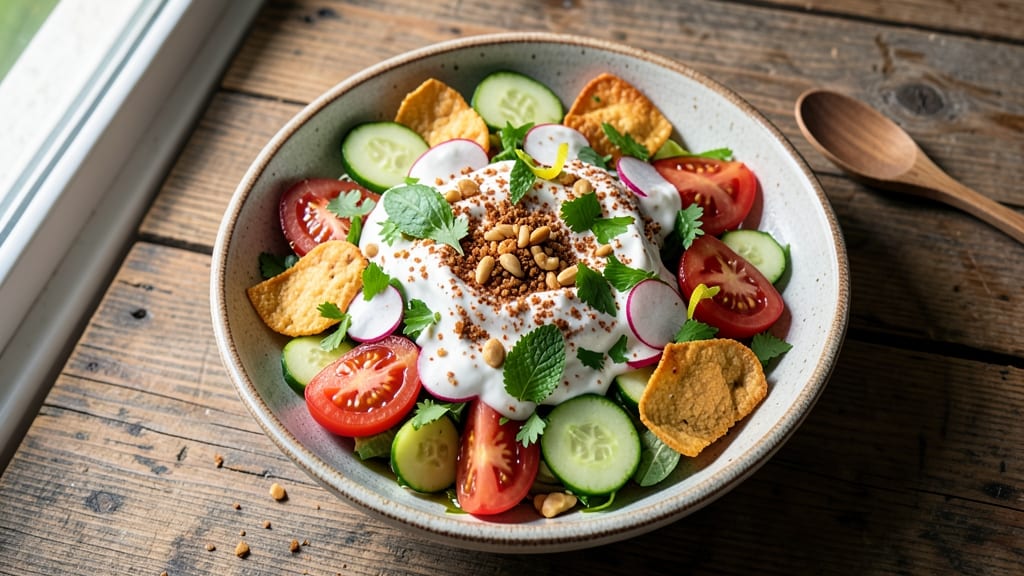
This fattoush salad recipe inspired by Yotam Ottolenghi brings the vibrant flavors of the Middle East to your table with crispy pita, fresh herbs, and a tangy sumac-lemon dressing.
The secret lies in achieving that perfect balance of textures—crunchy toasted bread, tender vegetables, and the bright acidity of the dressing—all while keeping the dish authentically bold yet approachable for home cooks.
I've adapted Ottolenghi's signature technique to ensure you get restaurant-quality results without the fuss. The pita chips are the star—crisped just enough to hold their shape while adding a satisfying crunch.
Meanwhile, the dressing, a zesty mix of sumac, lemon, and garlic, cuts through the richness of the bread and vegetables, creating harmony in every bite.
What makes this salad special is how it comes together: chopped cucumbers, tomatoes, and radishes provide freshness, while parsley and mint add layers of herbaceous brightness. The dressing ties everything together, ensuring each component shines without overpowering the others.
It's a dish that feels both celebratory and effortless—perfect for summer gatherings or a refreshing weeknight meal.
The beauty of this recipe is its adaptability. Swap in seasonal vegetables, adjust the dressing to your taste, or even use whole-grain pita for added texture. Once you master the technique, you'll find yourself reaching for this vibrant, herb-packed salad time and again. Let's get started!
Ingredients for fattoush salad recipe ottolenghi
Crispy pita, fresh herbs, and zesty dressing—this salad delivers Middle Eastern vibrancy with minimal effort.
| Ingredient | Amount | Notes |
|---|---|---|
| Pita Bread 🍞 | 1 package | Thinly sliced, store-bought or homemade |
| English Cucumbers 🥒 | 2 whole | Seedless, cut into 1-inch chunks |
| Roma Tomatoes 🍅 | 4 whole | Quartered, vine-ripened preferred |
| Red Radishes 🥕 | 1 lb | Thinly sliced, French or cherry variety |
| Fresh Parsley 🌿 | ½ cup | Chopped, flat-leaf preferred |
| Fresh Mint Leaves 🍃 | ¼ cup | Chopped, tender stems included |
| Red Onion 🧅 | 1 whole | Thinly sliced, white or yellow works too |
| Sumac 🌶️ | 2 tbsp | Ground, Middle Eastern specialty store |
| Fresh Lemon Juice 🍋 | ½ cup | From 2-3 lemons, freshly squeezed |
| Extra-Virgin Olive Oil 🫒 | ¾ cup | Light, fruity variety preferred |
| Garlic Cloves 🧄 | 4 cloves | Minced, fresh preferred |
| Diamond Crystal Kosher Salt 🧂 | 1 ½ tsp | For seasoning and dressing |
| Ground Black Pepper 🌶️ | ½ tsp | Freshly cracked preferred |
| Toasted Pine Nuts 🥜 | ¼ cup | Optional, for garnish |
The pita is non-negotiable—look for thin, soft varieties at Middle Eastern markets or the international aisle. Trader Joe's carries excellent pre-sliced options, but homemade works best. For extra crispiness, slice it yourself and toast in olive oil until golden. Radishes should be firm and vibrant; French heirloom types add the best crunch. Fresh herbs are a must—flat-leaf parsley and mint from the grocery store's produce section work, but farmers' markets have superior quality. Sumac is the secret weapon: find it in the spice aisle or Middle Eastern specialty stores like Spicewalla—it's worth the hunt for that signature tang.
No sumac? Substitute lemon zest plus a pinch of salt, though it won't be identical. Fresh herbs wilt fast—store them in damp paper towels in the fridge for up to 5 days. For the dressing, use light olive oil to avoid overpowering the bright flavors. The garlic can be roasted for a milder taste if you prefer. If pine nuts are too pricey, toasted walnuts or almonds work as garnish. The tomatoes and cucumbers should be crisp—vine-ripened tomatoes have the best flavor, but any variety works in a pinch. Don't skip the red onion; its sharp bite balances everything perfectly.
Prep the dressing last—it's best when freshly mixed. Store components separately: keep the pita chips in an airtight container for 2 days, veggies in the fridge for 3 days, and dressing for 5 days. The herbs should be tossed with a drizzle of olive oil to preserve freshness. For make-ahead meals, assemble everything the night before and store in the fridge—toss just before serving. This salad tastes even better the next day as flavors meld. Garnish with toasted nuts right before eating to keep them crisp.
Why You'll Love This Recipe
- No Chopping Chaos: I’ll be real—this salad only needs a knife for the pita and a quick dice of veggies. The radishes and cucumbers stay chunky, so I’m not fussing over tiny pieces. Honestly, it’s the kind of recipe where I can toss everything together while scrolling through my phone.
- Crunchy, Tangy Magic: That crispy pita toasted in olive oil? Chef’s kiss. Then the bright lemon dressing cuts through the richness, and the parsley—oh, the parsley—adds this fresh, almost herbal punch. It’s the kind of bite that makes you reach for seconds without even thinking.
- Weeknight to Picnic Ready: I’ve had this for lazy dinners, packed it in jars for lunch, and even served it at a potluck. The pita stays crispy for days, and the veggies hold up if you prep ahead. Between us? It’s my go-to when I don’t want to cook but still want something impressive.
- Budget-Friendly Crunch: Pita, cucumbers, tomatoes—these are the kind of ingredients that don’t break the bank. I can stretch one batch into two meals, and the leftovers? Still taste fresh the next day. Plus, it’s way cheaper than ordering in but just as satisfying.
Step-by-step instructions for Ottolenghi's fattoush salad
Here's how to assemble this vibrant, crunchy masterpiece with perfect crispy pita and bright, tangy dressing.
Prepare the Crispy Pita Chips
Preheat your oven to 375°F and line a baking sheet with parchment paper. Cut the 1 package pita bread into 1-inch squares—I like to use a pizza cutter for clean, even pieces. Arrange them in a single layer on the prepared sheet, leaving ½-inch gaps between each piece for even crisping.
Brush each piece lightly with 1 tablespoon of the extra-virgin olive oil—just enough to coat the surface without soaking through. Sprinkle with a pinch of diamond crystal kosher salt and ground black pepper for subtle seasoning. Bake for 8-10 minutes until the edges turn golden brown and crispy, flipping halfway through for even cooking. Watch closely—they crisp quickly and can burn if left too long.
Assemble the Fresh Vegetable Medley
While the pita crisps, prep all the vegetables for maximum freshness. Cut the 2 whole English cucumbers into 1-inch chunks and slice the 1 lb red radishes paper-thin using a mandoline or sharp knife. Quarter the 4 whole Roma tomatoes and thinly slice the 1 whole red onion—soak the onion slices in cold water for 5 minutes to mellow their sharpness, then drain well.
Chop the 0.5 cup fresh parsley and 0.25 cup fresh mint leaves into fine pieces, keeping the mint stems tender. Toss all the vegetables together in a large bowl, reserving ¼ cup of the chopped herbs for garnish later. The colors should be vibrant—this is where the salad gets its visual pop and fresh flavor.
Make the Sumac-Lemon Dressing
In a small bowl, whisk together the 0.5 cup fresh lemon juice, remaining 0.75 cup extra-virgin olive oil, 4 minced garlic cloves, 2 tbsp sumac, 1.5 tsp diamond crystal kosher salt, and 0.5 tsp ground black pepper. The sumac will give the dressing its signature tangy, citrusy depth—this is the flavor anchor of the dish.
Taste and adjust the balance: if it needs more brightness, add another 1 tablespoon lemon juice; if it's too sharp, a touch more olive oil will mellow it. The dressing should coat the back of a spoon but remain pourable—this ensures every bite gets that herby, zesty punch.
Combine and Garnish
Gently fold the crispy pita chips into the vegetable mixture, then pour the dressing over everything. Toss lightly—just enough to coat the vegetables and pita without crushing them. The pita should stay crisp, so avoid over-mixing. Let the salad sit for 10 minutes before serving to allow the flavors to meld.
For the final touch, sprinkle the reserved ¼ cup chopped herbs and 0.25 cup toasted pine nuts over the top. The pine nuts add a delightful crunch that contrasts beautifully with the crispy pita. Serve immediately while the pita chips are still at their peak crunchiness—this salad tastes best fresh out of the bowl.
Pro Tips For Making Fattoush Salad Recipe Ottolenghi
- TOAST PITA LOW AND SLOW: Toss the pita in olive oil and toast it in a 300°F (150°C) oven for 10-12 minutes—yes, lower heat than you’d think. I used to blast it at 400°F and end up with charred edges and dry centers that crumbled like sad breadcrumbs. The gentle heat ensures even crispiness without sacrificing that delicate crunch.
- CUT CUCUMBERS THIN AND DRY: Slice the English cucumbers paper-thin (⅛-inch max) and pat them dry with a kitchen towel before tossing with the dressing. The extra step removes excess moisture, which keeps the salad from turning soggy while amplifying that crisp, refreshing bite. (Trust me, your lettuce will thank you.)
- SALT THE TOMATOES: Sprinkle Roma tomatoes with a pinch of salt right after slicing, let them sit for 5 minutes, then rinse and drain. This draws out water, intensifies their flavor, and prevents the salad from getting waterlogged. I learned this after making a batch where the tomatoes just bled into the dressing.
- STORE PARSLEY IN ICE WATER: Before chopping, submerge the parsley stems in ice water for 10 minutes—it crisps up the leaves and makes them easier to handle. No wilting, no bitter stems, and the flavor stays bright longer. (Yes, even if you’re impatient like me, give it the 10 minutes.)
Troubleshooting this dish
Pita Too Soft?
If your pita chips turn out soggy instead of crispy, you likely didn’t bake them long enough or used too much oil. I’ve found that 350°F works better than 375°F for even crisping—just extend the bake time to 12-15 minutes.
For extra insurance, bake them on the middle rack where heat circulates best. And here’s a pro tip: Pat the pita dry with a paper towel before slicing to remove excess moisture. 🌡️
Dressing Too Bland?
Sumac is the star, but if yours tastes muted, it might be old. Fresh sumac has a bright, lemony punch—if it’s been sitting in your pantry for months, toast it in a dry pan for 1 minute to revive its flavor.
For extra zing, add ½ tsp ground cumin or ¼ tsp smoked paprika to the dressing. I also like a splash of pomegranate molasses (just 1 tsp) for depth—it’s a Middle Eastern secret weapon. 🍋
Herbs Wilting Fast?
Fresh herbs are key, but they can turn sad before you serve. To keep them crisp, store them in a damp paper towel inside a sealed container in the fridge. For the salad, add the herbs right before serving—they’ll stay vibrant longer.
If you’re prepping ahead, toss the chopped herbs with 1 tsp olive oil to preserve their color and flavor. Trust me, this trick extends their freshness by 2-3 days. 🌿
Onion Too Sharp?
The raw onion bite can overpower the salad if not handled right. Soak the slices in ice water for 10 minutes to mellow their sharpness, then drain well. For a milder flavor, try white onion instead of red—it’s naturally sweeter.
If you’re short on time, thinly slice the onion and toss it with ½ tsp sugar before adding to the salad. This balances the sharpness beautifully. 🧅
Pine Nuts Too Expensive?
Toasted pine nuts add luxury, but they’re pricey. Swap them for toasted walnuts or almonds—they’re budget-friendly and still add crunch. For a nut-free option, try toasted pumpkin seeds or even crumbled feta cheese for a salty contrast.
I’ve also used toasted sunflower seeds for a lighter texture. The key is keeping that crunchy element—it’s what makes the salad sing. 🥜
Salad Too Wet?
If your salad ends up watery, it’s likely from the tomatoes or cucumbers. Pat them dry with a paper towel before adding to the bowl. For extra insurance, squeeze out excess liquid from the cucumbers by placing them in a colander for 5 minutes.
If the dressing is the issue, reduce the olive oil slightly—sometimes ½ cup instead of ¾ cup keeps things balanced. And remember, less is more with dressings—you can always add more later. 💧
Nutrition facts
Frequently asked questions
Can I make fattoush without sumac?
Sumac gives that signature tang, but you can substitute with 1 tablespoon lemon zest plus ½ teaspoon salt for brightness. For extra depth, add ½ teaspoon ground cumin or a pinch of smoked paprika. The dressing will still taste vibrant—just slightly different.
How do I keep the pita chips crispy?
Bake them at 350°F for 12-15 minutes (not 375°F) on the middle rack for even crisping. Pat the pita dry before slicing and use ½-inch gaps between pieces on the baking sheet. Store them in an airtight container at room temp for up to 2 days.
What's the best way to store leftovers?
Keep components separate: store pita chips in an airtight container for 2 days, veggies in the fridge for 3 days, and dressing for 5 days. Toss everything together right before serving to maintain crispness. The flavors actually improve overnight as they meld!
Can I use whole pita instead of squares?
Yes! Brush whole pita rounds with oil, sprinkle with salt, and bake at 375°F for 5-6 minutes per side until golden. Break into irregular pieces when serving—this adds rustic charm. Just watch them closely to prevent burning.
What vegetables can I substitute?
Swap in seasonal produce: try zucchini (diced) or bell peppers (thin strips) for cucumbers, or green beans (blanched) for crunch. For tomatoes, cherry tomatoes (halved) work perfectly. The key is balancing textures—keep some soft (tomatoes) and some crisp (radishes, cucumbers).