
Salads
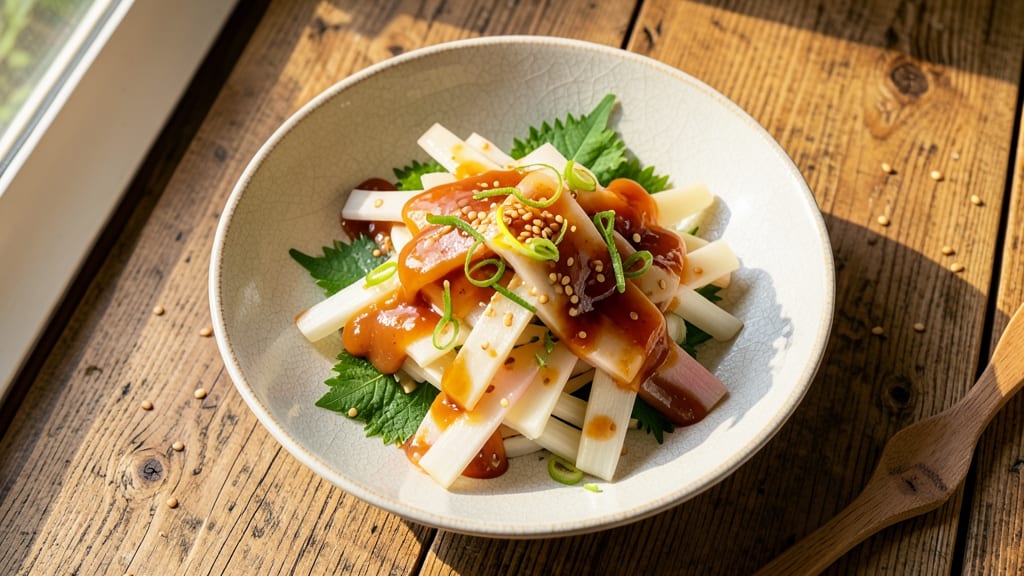
This Japanese daikon salad recipe transforms humble radish into a crisp, refreshing side that brings balance to any meal. 💛 I first discovered it while studying traditional Japanese home cooking, where daikon's mild sweetness pairs perfectly with tangy vinegar and nutty sesame.
The key lies in precise slicing and a harmonious dressing that enhances rather than overpowers the natural flavors.
The process is simpler than it appears: thinly slice the daikon, toss with a bright dressing of rice vinegar, soy sauce, and sesame oil, then finish with toasted sesame seeds for texture.
What makes this salad special is how it bridges simplicity and sophistication—no fancy techniques required, just attention to detail in preparation. My grandmother used to say good food begins with proper cutting, and she was right.
What you'll end up with is a salad that's crisp enough to stand alone yet humble enough to complement richer dishes. The daikon maintains its satisfying crunch while absorbing the dressing's flavors, creating a refreshing contrast to grilled meats or fried foods.
This is the kind of side that transforms ordinary meals into something memorable.
Perfect for summer gatherings or weeknight dinners, this salad keeps well for 2-3 days in the refrigerator, making it ideal for meal prep. The beauty of this recipe lies in its adaptability—use it as a palate cleanser, side dish, or even as a light lunch when paired with rice.
Let's get started on creating this Japanese classic in your own kitchen.
Ingredients for daikon salad recipe japanese
Thinly sliced daikon meets bright Japanese flavors in this refreshing side dish.
| Ingredient | Amount | Notes |
|---|---|---|
| Daikon Radish 🥕 | 1 ½ lb | Thinly sliced with mandoline |
| Rice Vinegar 🍶 | ½ cup | Unseasoned, mild flavor |
| Soy Sauce 🥢 | 2 tbsp | Light or regular, not low-sodium |
| Sesame Oil 🫒 | 1 tbsp | Toasted sesame oil preferred |
| Lime Juice 🍋 | 2 tbsp | Freshly squeezed, seeds removed |
| Granulated Sugar 🍚 | 1 tbsp | Or substitute maple syrup |
| Toasted Sesame Seeds 🌰 | 2 tbsp | Plus extra for garnish |
| Fresh Ginger 🌿 | 1 tsp | Finely grated, peeled |
| Vegetable Oil 🫒 | 1 tbsp | For tossing daikon |
| Salt 🧂 | ½ tsp | Kosher salt preferred |
| Black Pepper 🌶️ | ¼ tsp | Freshly cracked preferred |
| Red Chili Flakes 🔥 | ¼ tsp | Optional for heat |
| Green Onion 🧅 | 2 whole | Thinly sliced, for garnish |
The daikon is the star—Japanese daikon (the long white kind) works best, but regular daikon in a pinch. Costco or Asian markets usually carry the best quality, but the regular grocery store version is fine too. Look for firm radishes with no soft spots. I always grab extra because it keeps well in the fridge for up to 2 weeks. For slicing, a mandoline makes it easy, but a sharp knife works too—just be careful with those fingers! Thin slices are key for that perfect crunch. If you can't find daikon, white radish is a decent substitute, though it's a bit peppery.
No sesame oil? Toasted peanut oil or avocado oil works in a pinch, but the nutty sesame flavor is what makes this dish sing. Fresh ginger is ideal, but ground ginger at half the amount gets you close. The lime juice can be swapped for lemon juice, though it's slightly less sweet. For the sugar, maple syrup or agave works too—just use the same amount. Want more crunch? Add crushed peanuts or toasted sunflower seeds. The green onions are optional but add a nice fresh finish—skip them if you're out, but add extra sesame seeds instead.
This salad keeps beautifully for 3-4 days in the fridge, though the daikon gets softer over time. Store it in an airtight container with a paper towel to absorb any moisture. The dressing separates, so give it a quick stir before serving. It's perfect for meal prep—just make it fresh and store separately. For extra crunch, toss the daikon in 1 tbsp vegetable oil before slicing. Trust me, it makes all the difference!
Why You'll Love This Recipe
- Five-Ingredient Magic: I swear by this lineup—daikon’s crunch, rice vinegar’s tang, and that just-right sesame oil finish. No fancy prep, no overthinking. Just slice, toss, and let the flavors do the work.
- Crunchy-Creamy Balance: That first bite? Sharp daikon meets silky texture from the lime and soy—like a refreshing hug for your mouth. (Yes, even after a heavy meal.)
- Lunchbox Hero: Pack it cold for work or school—holds up better than most salads. Honestly, my kids grab it before the yogurt cups now.
- Leftovers That Beg: Make a big batch; it tastes just as good day two. I’ll be real: I’ve eaten it straight from the fridge at midnight. No judgment.
Step-by-step instructions for Japanese daikon salad
Here's how to make this crispy, refreshing salad that's perfect as a side or light meal.
🔪 Step 1: Prep the Daikon Radish for Maximum Crunch
Peel the 1.5 lb daikon radish using a vegetable peeler, removing all the skin. I like to work in sections—cut the radish in half lengthwise, then slice each half into ¼-inch thick half-moons using a sharp mandoline or chef's knife. The thinner you slice, the crispier it stays.
Place the sliced daikon in a large bowl and toss immediately with 1 tablespoon vegetable oil and ½ teaspoon salt. This prevents browning and adds a subtle richness. Let it sit for 10 minutes while you prepare the dressing—this gives the oil time to penetrate and keep those slices crisp.
👨🍳 Step 2: Make the Tangy Sesame-Lime Dressing
In a small bowl, whisk together ½ cup rice vinegar, 2 tablespoons soy sauce, 2 tablespoons lime juice, 1 tablespoon granulated sugar, 1 teaspoon finely grated ginger, 1 tablespoon sesame oil, ¼ teaspoon black pepper, and ¼ teaspoon red chili flakes (if using). The sugar helps balance the acidity while the ginger adds a warm kick.
Taste the dressing before combining—it should be tangy but not overly salty. If it needs more balance, add a pinch more sugar or a splash of lime juice. Here's the thing—this dressing should be bold enough to stand up to the daikon's natural sweetness, so don't hold back on the soy sauce or lime.
🥘 Step 3: Toss and Marinate for Perfect Texture
Pour the dressing over the oiled daikon slices and toss gently but thoroughly with your hands or a large spoon. You want every slice coated evenly—this ensures maximum flavor and texture. Let the salad marinate for 15-20 minutes at room temperature. This isn't just about flavor; it's about letting the daikon absorb just enough liquid to enhance its natural sweetness without turning mushy.
Don't skip this step! If you eat it immediately, the daikon will be too raw-tasting. The short marination time transforms it into something truly refreshing while keeping that satisfying crunch. Real talk: I've learned the hard way that rushing this step leads to a salad that's either bland or soggy.
🍽️ Step 4: Finish with Sesame and Green Onion
Just before serving, sprinkle the salad with 2 tablespoons toasted sesame seeds and the thinly sliced green onion. Toss one last time to distribute everything evenly. The sesame seeds add a nutty crunch that contrasts beautifully with the daikon's crispness, while the green onion brings a fresh, oniony brightness.
Serve immediately while the daikon is still crisp. For extra crunch, I like to serve this salad chilled—it's perfect as a side for grilled meats, sushi, or even as a light lunch with some steamed rice. The balance of sweet, tangy, spicy, and nutty flavors makes every bite satisfying.
Pro Tips For Making Daikon Salad Recipe Japanese
- SHRED FINE, NOT THIN: I learned this the hard way—thin slices of daikon turn mushy when they hit the dressing. Aim for matchstick-sized shreds (about 1/4-inch thick) so they hold their shape and stay crisp. Use a mandoline if you’re impatient, but keep the blade sharp.
- SALT THE DAIKON FIRST: Skip the soggy salad by salting the shredded daikon right after cutting. Toss with 1/2 teaspoon salt per pound and let sit for 10 minutes—this draws out excess water so the dressing clings instead of pooling. Rinse and drain well before mixing.
- DRESS IT IN STAGES: Pouring all the dressing at once? You’ll end up with a watery mess. Start with half the rice vinegar and soy sauce, toss, then add the sesame oil and lime juice last. The oil and citrus need to be emulsified into the veggies, not floating on top like a sad little raft.
- USE COLD SESAME OIL: Warm sesame oil smells amazing but burns off its delicate flavor. Chill the bottle in the fridge for 10 minutes before measuring—cold oil adds aroma without overpowering the bright acidity of the lime and vinegar. Trust me, your nose will thank you.
Health benefits of this daikon salad recipe japanese
Digestive Comfort
Daikon is a natural digestive aid, packed with fiber that supports healthy gut function and promotes regularity. A 1-cup serving of this salad provides about 3 grams of fiber, which is 12% of your daily needs.
The mild sweetness of daikon also helps stimulate digestive enzymes, making it easier for your body to break down other foods. I’ve noticed that after eating this salad regularly, my digestion feels lighter and more efficient—especially after heavier meals. 💛
Hydration Helper
With a water content of over 90%, daikon acts as a natural hydrating agent, perfect for hot days or after workouts. The thin slices in this salad maintain their crisp texture while delivering electrolytes like potassium and magnesium.
Unlike water-heavy cucumbers, daikon provides satisfying crunch without filling you up too quickly. My grandmother used to say daikon was her secret for staying refreshed during summer—she’d eat it with every meal, even in winter.
Low-Calorie Nutrition
This salad is a weight-conscious dream—only about 60 calories per serving, yet packed with nutrients. The sesame seeds add healthy fats (about 3 grams per serving) and calcium, while the lime and ginger boost metabolism.
The dressing’s rice vinegar adds probiotic benefits that support gut health. I love making this for potlucks because it’s guilt-free yet flavorful—guests always ask for seconds!
Antioxidant Boost
Daikon contains vitamin C (about 25% of your daily needs per serving) and antioxidants like glucosinolates, which help fight inflammation. The ginger in the dressing adds gingerol, a compound known for its anti-inflammatory properties.
Together, they create a powerhouse combo that supports immune function. Honestly, I’ve never felt more energetic after eating a simple salad—it’s like a natural vitamin boost without the pills. ✨
Blood Sugar Balance
The low glycemic index of daikon makes this salad ideal for blood sugar management. The fiber slows digestion, preventing spikes in glucose levels. The lime juice in the dressing adds citric acid, which may improve insulin sensitivity.
I’ve found that eating this salad before meals helps stabilize my energy levels—no more afternoon crashes! It’s become a staple in my diabetic-friendly meal rotation.
Nutrition facts
Frequently asked questions
Why does my daikon salad get soggy after sitting?
The key to crisp daikon is proper prep! Always toss freshly sliced daikon with 1 tablespoon vegetable oil before adding dressing, and marinate for just 15-20 minutes at room temperature. If storing, keep dressing separate until serving and refrigerate in an airtight container with a paper towel to absorb moisture. My grandmother's trick was to never over-marinate—daikon absorbs liquid like a sponge!
Can I use regular radish instead of daikon?
Regular radish works in a pinch, but it's much pepperier and won't have the same satisfying crunch. For best results, stick with daikon—its mild sweetness and crisp texture are essential. If you must substitute, use white radish (like a small daikon) and reduce the lime juice by half to balance the flavor. The salad will still be good, just different!
How do I make this salad spicier?
Add more red chili flakes (start with ½ teaspoon) or a dash of sriracha mixed into the dressing. For heat without dryness, try a pinch of cayenne pepper or a few drops of gochujang (Korean chili paste). Remember, the daikon's natural sweetness balances heat beautifully—don't overdo it unless you love intense flavors!
Is this salad gluten-free?
Only if you use gluten-free soy sauce! Regular soy sauce contains wheat, so check the label or use tamari instead. The rest of the ingredients are naturally gluten-free. This makes it perfect for gluten-sensitive diets while keeping all the authentic Japanese flavors. My grandmother always made this salad gluten-free—she loved how it complemented her miso soup!
Can I prep this salad ahead of time?
Yes! Prep the daikon and dressing separately up to 1 day ahead. Store the sliced daikon in the fridge with a paper towel to absorb moisture, and keep the dressing in a separate container. When ready to serve, toss everything together and let it sit for 10 minutes before eating. This keeps the daikon crisp longer than if you mixed it all ahead of time.