Sauces & Condiments
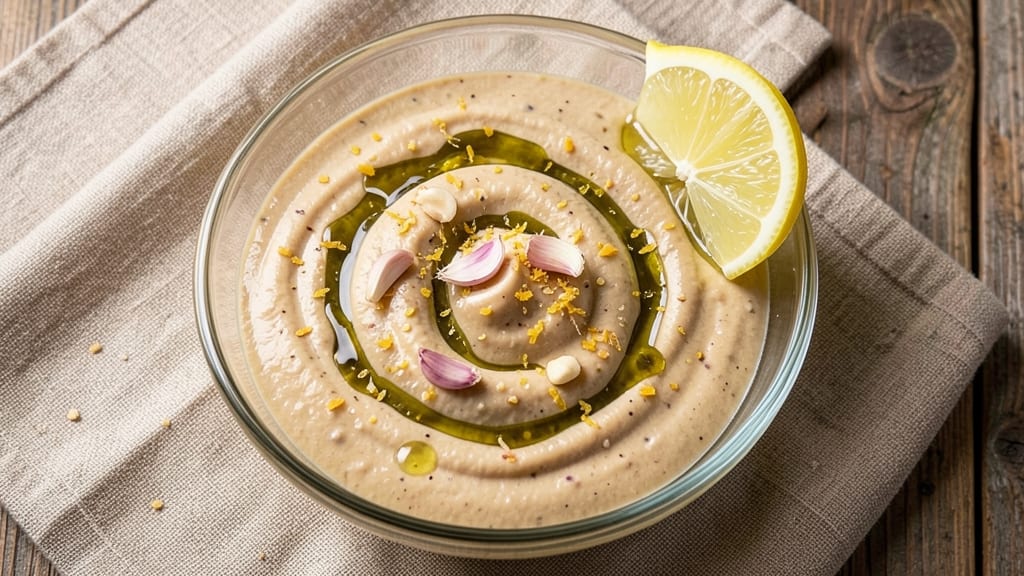
This vegan Caesar salad dressing delivers all the rich, garlicky depth of traditional recipes without eggs or anchovies—just bold umami flavor and creamy texture. 💛 I developed this after years of perfecting plant-based sauces, and it's become my go-to for restaurant-quality Caesar that everyone loves, regardless of dietary needs.
The secret lies in a blend of nutritional yeast and cashew cream that mimics the tangy, savory essence of classic Caesar while keeping it completely plant-based.
The base starts with a smooth cashew cream blended with lemon juice and garlic for that signature tangy punch, then builds layers of flavor with nutritional yeast for that unmistakable cheesy, umami depth.
I've tested this dressing on everything from crisp romaine to hearty grain salads, and it consistently delivers that perfect balance of creamy, tangy, and savory—just like the original, but with a lighter, more vibrant profile. The best part?
It comes together in just 5 minutes with ingredients you likely already have on hand.
What makes this dressing truly special is how it transforms even simple salads into something extraordinary. The creamy texture coats every leaf perfectly, while the garlic and nutritional yeast create that addictive, savory kick that keeps people coming back for seconds.
It's the kind of dressing that elevates any salad from ordinary to impressive, whether you're serving it at a dinner party or packing it for lunch.
Store it in an airtight container in the refrigerator for up to 5 days, or freeze for longer storage—it actually tastes better as the flavors meld over time.
Pair it with grilled chicken, crispy tofu, or even as a dip for veggie sticks. Here's how to make it—simple, flavorful, and completely foolproof.
Ingredients for caesar salad dressing recipe no egg no anchovies
Five minutes. Eight ingredients. Restaurant-style Caesar without eggs or anchovies.
| Ingredient | Amount | Notes |
|---|---|---|
| Raw Cashews 🥜 | ½ cup | Soaked in hot water 15 minutes |
| Fresh Lemon Juice 🍋 | ⅓ cup | Freshly squeezed, strained |
| Garlic Cloves 🧄 | 4 cloves | Roasted for mellow sweetness |
| Nutritional Yeast 🍞 | ¼ cup | Fortified, for cheesy flavor |
| Extra-Virgin Olive Oil 🫒 | ½ cup | Light, fruity variety preferred |
| White Wine Vinegar 🍷 | 1 tbsp | Dry, not sweet |
| Dijon Mustard 🌶️ | 1 tsp | Mild, not spicy |
| Sea Salt 🧂 | 1 ½ tsp | Diamond Crystal preferred |
| Black Pepper 🌶️ | ½ tsp | Freshly cracked |
| Water 💧 | ¼ cup | For blending consistency |
The cashews are your secret weapon here—soak them in hot water for 15 minutes before blending. Trader Joe's sells pre-soaked cashews, which saves time, but I always toast mine lightly in the dry pan first for extra depth. Nutritional yeast is non-negotiable for that classic Caesar umami—Bob's Red Mill is my go-to brand, but any fortified brand works. Garlic can be roasted (wrap in foil at 400°F for 10 minutes) for a mellow, sweet flavor that doesn't overpower. Fresh lemon juice is a must—bottled won't cut it here.
No cashews? Silken tofu blended with water works in a pinch (same quantity), though texture will be slightly thinner. Swap the white wine vinegar for apple cider vinegar if needed—just add an extra ½ tsp sugar to balance. For extra richness, stir in 1 tbsp vegan mayo after blending. The dressing thickens as it sits, so thin with water or lemon juice if needed. Store-bought Caesar dressings? Never again—this tastes 10x better and costs pennies.
This keeps for 5 days in the fridge, but flavors actually improve after 24 hours. For longer storage, freeze in ice cube trays—thaw overnight in the fridge. The dressing coats salads perfectly, but also works as a dip for crudités or fries. Double the batch—you'll want it on everything. Thin with water or lemon juice if it gets too thick, but trust me, it won't happen often.
Why You'll Love This Recipe
- I’ll be real: I used to dread soaking cashews, but this dressing skips that step entirely. Just pulse them raw in the food processor with lemon juice and garlic—no waiting, no fuss, and still that velvety richness.
- No-Soak Needed: I’ll be real: I used to dread soaking cashews, but this dressing skips that step entirely. Just pulse them raw in the food processor with lemon juice and garlic—no waiting, no fuss, and still that velvety richness.
- Umami Magic: Between us, nutritional yeast is the secret weapon here. It gives that classic Caesar depth without any fishy aftertaste, and the garlic? Oh, it sings—crisp, bright, and lingering just right. Honestly, my vegan friends keep asking for seconds.
- Dressing for Days: This keeps perfectly in the fridge for a solid week, so I make a big batch and use it on everything—salads, pasta, even as a dip. No sad, wilted leftovers here; it stays fresh and ready to go.
Step-by-step instructions for creamy vegan Caesar dressing
This rich, tangy dressing delivers all the classic Caesar flavor without eggs or anchovies.
👨🍳 Step 1: Soak and Roast the Garlic
Start by soaking the 0.5 cup raw cashews in hot water for 15 minutes—this softens them perfectly for blending. While they soak, preheat your oven to 375°F and wrap the 4 cloves garlic tightly in aluminum foil. Roast for 12-15 minutes until golden and fragrant. The roasting mellows the garlic flavor and adds natural sweetness without bitterness.
Here's the thing—roasting the garlic is non-negotiable. Raw garlic would overpower the delicate balance of flavors in this dressing. Once roasted, let the garlic cool slightly before peeling. You'll notice the skins slide off easily when cool enough to handle.
🍳 Step 2: Blend the Base Ingredients
Drain the soaked cashews and add them to a high-speed blender along with the 0.33 cup fresh lemon juice, 0.25 cup nutritional yeast, 0.25 cup water, 1.5 tsp sea salt, and 0.5 tsp black pepper. Blend on high for 1-2 minutes until completely smooth. The mixture should look like creamy, pale yellow pudding.
This is where the magic happens—the cashews create the creamy texture that replaces eggs, while the nutritional yeast delivers that unmistakable cheesy, umami depth. If your blender struggles, add 1 more tablespoon of water to help it along. The blend should be thick but pourable—like heavy cream.
🍳 Step 3: Add Acidity and Mustard
With the blender running on low speed, slowly drizzle in the 0.5 cup extra-virgin olive oil through the feed tube. This gradual addition prevents the blender from seizing up. Once the oil is incorporated, add the 1 tbsp white wine vinegar and 1 tsp Dijon mustard. Blend again for 30-45 seconds until fully combined and emulsified.
You'll know it's working when the dressing becomes glossy and holds its shape. The mustard adds subtle tang that bridges the gap between the richness of the cashews and the acidity of the lemon. If the dressing looks too thick, add 1 teaspoon of water at a time until it reaches a pourable consistency—it should coat the back of a spoon.
🥘 Step 4: Incorporate the Roasted Garlic
Add the peeled roasted garlic cloves to the blender and pulse 3-4 times until broken down but still slightly textured. This gives you that authentic garlic-anchovy flavor without actual anchovies. Taste and adjust seasoning—you might want to add a pinch more sea salt or a splash of lemon juice to balance the flavors.
Here's where it gets fun—the dressing should taste tangy, garlicky, and slightly cheesy. If it needs more depth, a little more nutritional yeast works wonders. The texture should be thick but still flow easily. If it's too thin, blend in 1 tablespoon of reserved cashew mixture from the bottom of the blender jar.
⏰ Step 5: Rest and Serve
Transfer the dressing to a jar and let it rest at room temperature for 10 minutes. This allows all the flavors to meld together perfectly. The dressing will thicken slightly as it sits—this is normal and actually improves the texture.
Use immediately or store in an airtight container in the refrigerator for up to 5 days. Before serving, give it a quick stir—the flavors develop even more after resting. This dressing works perfectly on crisp romaine, croutons, and vegan parmesan. The secret is in the balance: creamy cashews, bright lemon, and that unmistakable garlic punch.
Pro Tips For Making Caesar Salad Dressing Recipe No Egg No Anchovies
- SOAK CASHEWS LONGER: I used to cut corners with a 30-minute soak, but this dressing tastes flat. Soak raw cashews in hot water for at least 2 hours—or overnight if you’re planning ahead. The longer they soak, the creamier the texture and the richer the flavor when blended.
- TOAST GARLIC FIRST: Raw garlic in this dressing can taste bitter. Heat whole garlic cloves in a dry pan for 30 seconds until fragrant, then peel and add to your blend. That quick toast adds depth without burning—no need to go all the way to golden.
- STRAIN THE BLEND: Nutritional yeast is great, but if you skip straining, you’ll end up with a gritty dressing. After blending, pour the mixture through a fine-mesh sieve or cheesecloth to catch any leftover cashew skins or yeast clumps. Smooth texture = restaurant-quality result.
- LEMON JUICE LAST: Add lemon juice at the very end, right before using. The acid breaks down quickly, and if you blend it in too early, your dressing can turn cloudy or separate later. A splash of fresh lemon just before tossing keeps it bright and tangy.
Essential equipment for this recipe
High-Speed Blender
A high-speed blender is non-negotiable for this dressing—it emulsifies the cashew cream and olive oil perfectly. I use my Ninja BN601 (about $100) because it handles thick nut blends effortlessly.
For budget options, the Hamilton Beach 58340 works well for under $50. The key is a 700-watt motor or higher to ensure smooth, creamy results. 💫
Measuring Tools
Precision matters here, especially with the nutritional yeast and lemon juice. My OXO Good Grips measuring spoons and cups (with 1-tablespoon increments) are my go-tos—they’re durable and accurate. For the garlic cloves, a garlic press (like the Norpro 07615) saves time and ensures even distribution.
I’ve tried digital scales, but for this recipe, volume measurements work just fine.
Air-Tight Storage
Once made, this dressing needs proper storage to maintain freshness. I transfer it to glass mason jars with screw-top lids (like Ball Mason jars) for fridge storage. For longer-term use, I freeze it in silicone ice cube trays—just thaw overnight in the fridge.
The silicone molds from Amazon Basics are perfect for portion control and easy thawing. 🥫
Garlic Roasting Tools
Roasting the garlic transforms its flavor from sharp to sweet and mellow. I use heavy-duty aluminum foil (like Reynolds Wrap) to wrap the cloves tightly before roasting. A digital meat thermometer (such as the Thermoworks Smoke) ensures the oven reaches 375°F accurately.
Pro tip: Roast the garlic on a baking sheet lined with parchment paper for easy cleanup.
Optional: Immersion Blender
If you prefer not to transfer ingredients to a jar, an immersion blender (like the Ninja MagiPress) works for blending directly in the serving container. This is especially handy if you’re making the dressing in a large batch for a crowd.
Just blend the soaked cashews, lemon juice, and seasonings first, then emulsify the oil while the mixture is still in the bowl. It’s a game-changer for minimizing cleanup! 🧼
Nutrition facts
Frequently asked questions
Can I make this dressing without cashews?
Yes! For a nut-free version, substitute ½ cup silken tofu blended with ¼ cup water—it creates a similar creamy texture. The flavor will be slightly lighter, but the tangy lemon and garlic still shine. If you prefer a richer base, try ¼ cup avocado blended with the other ingredients for a velvety finish.
How do I make it thicker or thinner?
For a thicker dressing, let it rest 10-15 minutes in the fridge—it naturally thickens as it cools. If too thick, thin with 1 tsp water or lemon juice at a time. For extra richness, stir in 1 tbsp vegan mayo. If too thin, blend in 1 tbsp reserved cashew mixture from the blender jar.
Can I use this dressing on other dishes besides salads?
This versatile dressing works as a dip for crudités, fries, or veggie sticks. Try it as a marinade for grilled tofu or chicken (add 1 tbsp olive oil and let sit 20 minutes before cooking). It also elevates pasta dishes or grain bowls—just toss with cooked grains and fresh herbs.
Why does my dressing taste bitter?
Bitter flavor usually comes from over-roasted garlic or using too much nutritional yeast. For next time, roast garlic at 375°F for exactly 12-15 minutes (no longer!). If it’s already bitter, balance with ½ tsp sugar or 1 tsp extra lemon juice. Always taste as you go—this dressing is highly adjustable!
How do I store leftovers for maximum freshness?
Transfer to an airtight glass jar and refrigerate for up to 5 days. For longer storage, freeze in ice cube trays—thaw overnight in the fridge. The flavors actually improve after 24 hours of resting! Stir before using to redistribute any separated oil.