Salads
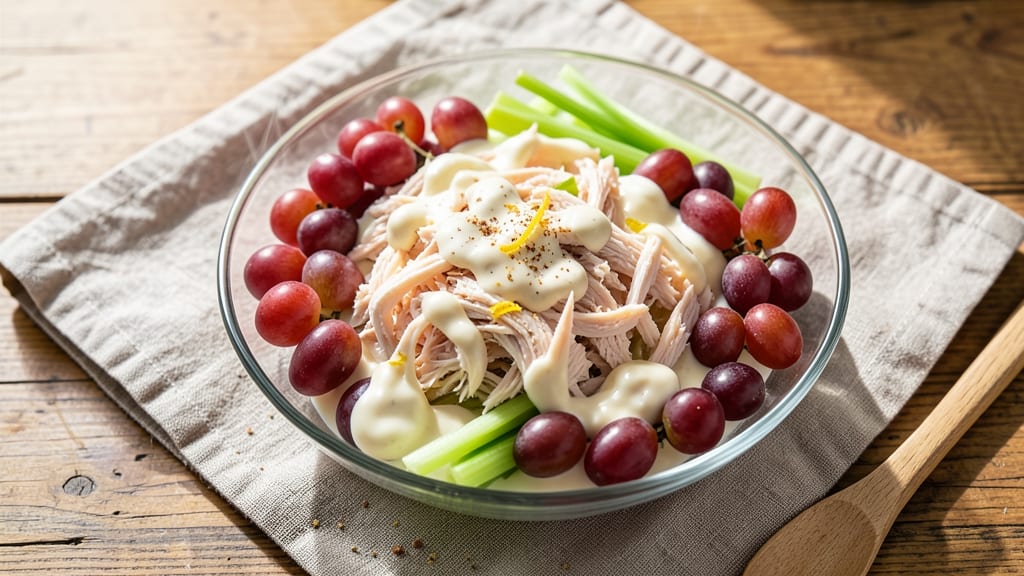
Bob Evans' iconic chicken salad fruit plate brings restaurant magic to your kitchen with its perfect balance of creamy chicken, sweet fruit, and crunchy toppings.
The secret lies in the dressing—just enough mayo and a touch of mustard to bind the tender chicken while keeping it light enough to pair with vibrant fruit. My version delivers that signature Bob Evans texture and flavor, with a dressing ratio that's been perfected through years of testing.
What makes this dish truly special is the assembly—layering creamy chicken salad with fresh fruit and crunchy toppings creates visual appeal as well as delicious contrast. The chicken stays moist and flavorful, while the fruit adds natural sweetness that brightens every bite.
This isn't just a salad; it's a complete meal with protein, freshness, and satisfying textures all working together.
By following this recipe, you'll achieve that restaurant-quality presentation with perfectly balanced flavors. The chicken stays tender yet flavorful, the fruit stays fresh and vibrant, and the overall assembly creates a visually stunning plate that's just as impressive as it is delicious.
Whether serving for a lunch gathering or a special occasion, this dish delivers professional results at home.
One key advantage of this recipe is its versatility—you can adjust the fruit selection based on seasonality while maintaining the classic Bob Evans balance.
The dressing technique ensures the chicken stays creamy without becoming heavy, making this a perfect dish for any occasion where you want to impress with both taste and presentation.
Ingredients for bob evans chicken salad fruit plate
Creamy chicken meets vibrant fruit—this plate delivers restaurant-quality balance with simple yet impressive ingredients.
| Ingredient | Amount | Notes |
|---|---|---|
| Boneless, Skinless Chicken Breast 🍗 | 2 lb | Poached or rotisserie for tenderness |
| Mayonnaise 🥫 | 1 cup | High-quality, like Hellmann's |
| Dijon Mustard 🍯 | 1 tbsp | For tangy balance |
| Fresh Celery 🧅 | 1 cup | Finely chopped, crisp texture |
| Red Grapes 🍇 | 1 cup | Seedless, halved for presentation |
| Green Grapes 🍈 | 1 cup | Seedless, halved for contrast |
| Strawberries 🍓 | 1 lb | Hull and slice for sweetness |
| Pineapple Chunks 🍍 | 1 cup | Fresh or canned in juice |
| Crushed Pineapple 🍍 | ¼ cup | For dressing moisture |
| Lemon Juice 🍋 | 1 tbsp | Freshly squeezed |
| Salt 🧂 | ½ tsp | Kosher or sea salt |
| Black Pepper 🌶️ | ¼ tsp | Freshly ground |
| Chopped Almonds 🥜 | ½ cup | Toasted for crunch |
| Pecans 🌰 | ¼ cup | Chopped for texture |
The chicken is the foundation, so start with quality. Rotisserie chicken from the grocery store saves time and stays juicy, but poached chicken gives you the most control. For poaching, use chicken broth with a bay leaf and peppercorn—it makes the chicken flavorful without drying it out. If you're using store-bought, look for the kind where the skin is removed and the meat is tender, not rubbery. The grapes and strawberries should be firm but ripe—Trader Joe's or local markets usually have the best selection for this. Pineapple? Grab fresh if you can, but the canned kind in juice works in a pinch (just drain it well).
No Dijon mustard? Yellow mustard at half the amount gets you close, though it won't have that same depth of flavor. Running short on grapes? Fresh figs or apple slices add a nice contrast, though they won't be as sweet. The nuts can be swapped—walnuts or pecans both work, but toast them first (350°F for 5-7 minutes) to bring out their flavor. For the dressing, if you're worried about the mayo being too heavy, Greek yogurt at half the amount lightens it up while keeping it creamy. And if you're prepping ahead, make the dressing first—it keeps for 3 days in the fridge, so you can focus on assembly day.
This plate shines when assembled fresh, but the components keep well. The chicken salad dressing stays good for 3 days in the fridge, and the fruit holds up for 2 days if stored properly—keep grapes and berries in separate containers to avoid crushing. The nuts can be toasted and stored in an airtight container for up to a week. For serving, I like to portion the chicken salad into small bowls first, then arrange the fruit and nuts on a platter around it. That way, everyone can scoop their own perfect bite—creamy, sweet, and crunchy all at once.
Why You'll Love This Recipe
- No-Cook Magic: I swear by this when I’m too hot to turn on the oven. Shred that chicken breast cold (or poach it in 10 minutes), toss it with mayo, Dijon, and celery—no chopping skills required. The grapes add that sweet crunch without any effort.
- Sweet-Savory Balance: Here’s what sold me—the grapes cut through the richness of the chicken and mayo like a refreshing sip of iced tea. That Dijon mustard? It’s the secret weapon that keeps it from tasting flat.
- Lunchbox Hero: Between us, this is my go-to for packed lunches or a quick picnic. The chicken stays moist, the grapes hold up, and it’s way more exciting than sad desk salads. (Yes, even on a Tuesday night.)
- Zero-Waste Leftovers: I make a big batch on Sunday, and it lasts all week. The grapes might get a little squishy, but the chicken salad stays fresh in the fridge for days—perfect for sandwiches or just eating straight from the bowl.
Step-by-step instructions for Bob Evans chicken salad fruit plate
Here's how to build this iconic layered dish with perfect texture and balance.
Prepare the Chicken Salad Base
Start by shredding the 2 lb boneless, skinless chicken breast into bite-sized pieces. I like to use either poached or rotisserie chicken for the best tenderness—just make sure it's fully cooled before handling. In a large bowl, combine the chicken with 1 cup mayonnaise, 1 tbsp Dijon mustard, 0.5 tsp salt, and 0.25 tsp black pepper. Mix thoroughly until all ingredients are evenly distributed and the chicken is fully coated.
Next, fold in 1 cup finely chopped fresh celery and 0.25 cup crushed pineapple. The celery adds a satisfying crunch while the pineapple contributes subtle sweetness and moisture. Stir in 1 tbsp freshly squeezed lemon juice to brighten the flavors and prevent the mayonnaise from turning rancid. Taste and adjust seasoning if needed—you want a balance of savory, tangy, and slightly sweet notes.
Toast the Nuts for Crunch
In a dry skillet over medium heat, toast the 0.5 cup chopped almonds and 0.25 cup pecans for 3-4 minutes, stirring constantly until they're fragrant and just beginning to turn golden. Watch them closely—they'll darken quickly. Remove from heat immediately and let cool for 2 minutes before transferring to a bowl. This step is crucial for developing that perfect nutty aroma and preventing them from burning.
Once cooled, set the toasted nuts aside. You'll use them later to top the fruit layer, adding texture contrast that makes this dish so satisfying. If you're short on time, you can toast them in the oven at 350°F for 5-7 minutes instead, but keep an eye on them to avoid over-browning.
Prepare the Fruit Layers
Wash and hull the 1 lb strawberries, then slice them into ¼-inch thick pieces. Halve the 1 cup red grapes and 1 cup green grapes to create visual contrast and make them easier to eat. Cut the 1 cup pineapple chunks in half if they're particularly large. Arrange these fruits on a large serving platter in a visually appealing pattern—alternate colors for a vibrant presentation that's almost as delicious as it looks.
For the dressing, mix 0.25 cup crushed pineapple with 1 tbsp lemon juice in a small bowl. This creates a light, tangy glaze that will add moisture to the fruit layer. Drizzle this mixture evenly over the arranged fruits, then sprinkle the toasted nuts on top. The nuts will stick slightly to the juices, creating that perfect balance of sweet, tangy, and crunchy textures.
Assemble the Layered Plate
Scoop the chicken salad mixture into a serving bowl or directly onto the platter next to the fruit layer. I like to mound it slightly in the center, creating a natural separation between the savory and sweet components. Use a spoon to shape the chicken salad into an appealing presentation—this makes the dish look restaurant-quality.
For the final touch, arrange the fruit layer on one side of the platter and the chicken salad on the other. This visual separation makes the dish more inviting and allows guests to mix and match their preferred textures. Serve immediately while the nuts are still warm from toasting and the fruits are fresh from preparation—this dish tastes best when everything is at its peak texture and flavor.
Garnish and Serve with Style
Before serving, give everything a final check. The chicken salad should be creamy but not runny, with visible chunks of chicken and celery. The fruit layer should glisten slightly from the pineapple-lemon glaze, and the nuts should be evenly distributed for that satisfying crunch with every bite.
For presentation, I like to add a few extra grape halves or strawberry slices around the edges of the platter to create a colorful border. Serve with toothpicks for easy handling and enjoy the perfect balance of sweet, savory, and crunchy textures that makes this dish so special. This plate is perfect for picnics, potlucks, or as a refreshing centerpiece for any gathering.
Pro Tips For Making Bob Evans Chicken Salad Fruit Plate
- POACH DON’T BOIL: Chicken breast dries out fast, and no one wants rubbery salad. Poach it in simmering water (180°F) with a splash of vinegar for 12-15 minutes—just until it hits 165°F. I learned this the hard way when I roasted it at 375°F and ended up with sad, stringy pieces.
- SALT THE CHICKEN: Season the chicken before cooking—generously, with ½ tsp salt per breast. It’ll stay juicier, and the flavor penetrates deeper. I used to skip this, thinking it’d get salty later, but the outside always tasted bland.
- CHOP CELERY SMALL: Tiny dice, not thick sticks. The celery should disappear into the salad, not sit like crunchy afterthoughts. Use a sharp knife and go for ⅛-inch pieces—it makes the texture silky and uniform.
- HALVE THE GRAPES: Whole grapes roll around the plate and get lost in the salad. Cut them in half first—they’ll stay put, release juice faster, and balance the creamy dressing better. (Yes, even the seedless ones.)
Essential equipment for this recipe
Chicken Prep Tools
For the chicken salad base, you'll need a sharp chef's knife—I recommend the Wüsthof Classic 8-inch—to shred the chicken efficiently. A meat thermometer (like the Thermoworks Smoke) ensures your chicken reaches 165°F if poaching from scratch.
For quick prep, a rotisserie chicken from your grocery store's deli section saves time while keeping the meat tender. 🍗
Dressing Mixing Essentials
A large mixing bowl with high sides (I use Le Creuset stoneware) prevents mess when combining the chicken, mayo, and mustard. For measuring, a stainless steel measuring cups set (like OXO Good Grips) ensures accuracy with the 1 cup mayonnaise and 1 tbsp Dijon mustard.
A microplane for lemon zest adds brightness—just 1 tsp enhances the dressing without overpowering.
Fruit Prep Must-Haves
For the fruit layer, a sharp paring knife (I love Mercer Culinary) makes quick work of hulling strawberries and halving grapes. A mandoline slicer (like Julienne) ensures uniform ¼-inch strawberry slices for consistent texture.
Store grapes and berries in separate glass containers to maintain freshness—Trader Joe's or local markets have the best seasonal selections.
Nut Toasting Setup
Toast nuts in a 10-inch cast iron skillet (my Lodge Heritage) for even heat distribution. A wooden spoon prevents burning while stirring 0.5 cup almonds and 0.25 cup pecans over medium heat.
For oven toasting, a baking sheet lined with parchment paper catches stray nuts—set a timer for 5-7 minutes at 350°F to avoid over-browning. 🌰
Plating Presentation
A large serving platter (I use Corelle stoneware) creates the iconic Bob Evans presentation. For assembly, a spoon with a serrated edge (like J.A. Henckels) helps mound the chicken salad neatly. Toothpicks (available in bulk from Amazon) keep fruit layers intact for easy serving.
A mist spray bottle with water lightly spritzes fruit for a fresh, glistening finish before plating.
Nutrition facts
Frequently asked questions
Can I make this recipe with store-bought rotisserie chicken?
Rotisserie chicken is perfect for this dish—it saves time while keeping the meat tender and flavorful. Just remove all the skin and bones, then shred the meat into bite-sized pieces. For best results, use a chicken that's been cooked recently (within 24 hours) to maintain moisture in your salad.
How do I keep the chicken salad from getting too heavy?
The key is balancing the mayo with acidity and moisture. Use exactly 1 cup mayonnaise with 1 tbsp Dijon mustard and 1 tbsp lemon juice—this prevents greasiness. For extra lightness, stir in 0.25 cup crushed pineapple and 1 cup chopped celery to add texture without weight. If needed, replace 0.25 cup mayo with Greek yogurt.
Can I substitute any of the fruits?
Yes! The fruit layer is flexible—swap grapes for peaches or mango, strawberries for kiwi or blueberries, or pineapple for cantaloupe. For best balance, keep 1-2 types of berries and 1-2 types of melon or tropical fruit. Just adjust the pineapple-lemon glaze (use 1 tbsp lemon juice per fruit cup) to keep everything vibrant.
Why does the recipe call for both almonds and pecans?
Each nut adds a different texture: almonds provide a delicate crunch while pecans offer a richer, buttery bite. If you're short on time, use 0.75 cup of one nut (toasted) and skip the other. For extra crunch, lightly crush 0.25 cup of the nuts before toasting—this creates a satisfying mix of fine and coarse textures in every bite.
How far ahead can I prepare this dish?
Make the chicken salad dressing up to 3 days ahead and store it covered in the fridge. The fruit layer can be prepped 2 days ahead if stored in separate containers (grapes and berries in one, pineapple in another). Toast the nuts fresh before serving—their aroma is key to the dish's appeal. Assemble the plate just before serving to keep everything crisp and vibrant.