
Salads
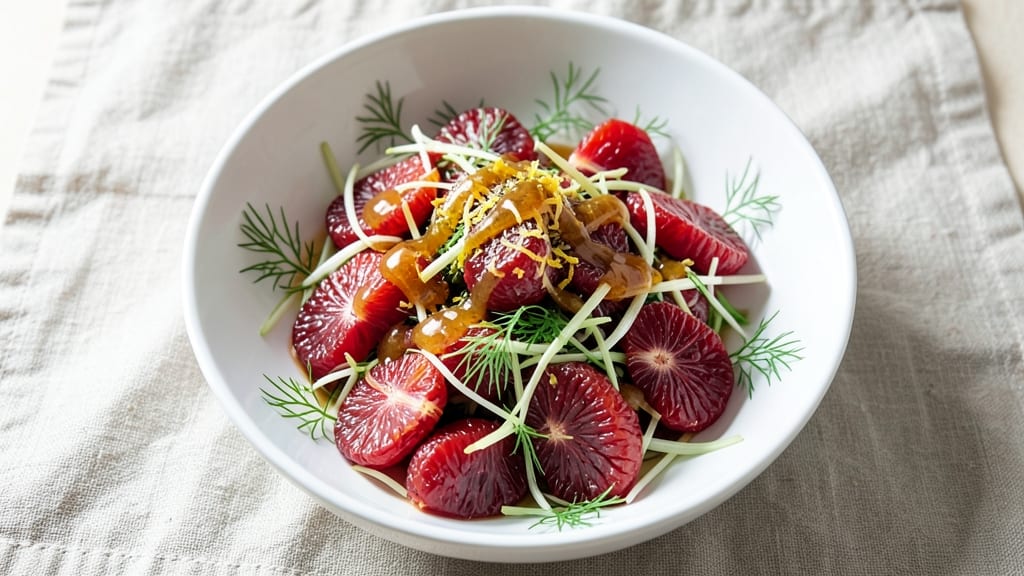
This blood orange and fennel salad recipe transforms simple ingredients into a vibrant dish that balances bright citrus sweetness with earthy anise crunch—perfect for spring and summer gatherings.
The star is the blood orange, whose ruby-red segments burst with tart-sweet flavor, while thinly shaved fennel adds a crisp, licorice-like texture that keeps every bite interesting.
What makes this salad truly special is how the flavors come together: the natural bitterness of fennel mellows against the citrus, while a light honey-mustard dressing ties everything into a cohesive, restaurant-worthy bite.
The secret to this salad lies in the preparation—thinly shaving the fennel (not slicing) creates delicate ribbons that hold their shape, and hand-segmenting the blood oranges ensures juicy, bite-sized pieces. No special equipment is needed, just a sharp knife and patience for even slices.
The dressing is where the magic happens: a mix of honey, Dijon mustard, and olive oil enhances the natural sweetness while adding a subtle tang that cuts through the richness of the fennel.
This isn’t just a salad; it’s a flavor experience that elevates any meal, whether served as a refreshing starter or a bold side dish.
Once assembled, the colors alone will impress—deep ruby oranges, pale green fennel, and a glossy dressing that glistens under the light. The texture is a perfect contrast: crisp fennel, juicy citrus, and a smooth dressing that coats every bite without overwhelming.
It’s the kind of dish that feels effortlessly elegant, yet comes together in under 20 minutes. Pair it with grilled fish, roasted chicken, or even as a standalone lunch, and you’ll have a salad that’s as visually stunning as it is delicious.
For those who love to customize, consider adding arugula for peppery bite, prosciutto for salty crunch, or pomegranate seeds for extra sweetness and texture. The beauty of this recipe is its flexibility—it’s simple enough for a weeknight but sophisticated enough for a dinner party.
Let’s get started on creating a salad that’s as memorable as it is refreshing.
Ingredients for blood orange and fennel salad
Bright citrus meets earthy crunch in this vibrant salad—just eight core ingredients transform into restaurant-worthy bites.
| Ingredient | Amount | Notes |
|---|---|---|
| Blood Oranges 🍊 | 2 whole | Hand-segmented for juicy pieces |
| Fennel Bulb 🥕 | 1 whole | Thinly shaved with mandoline or knife |
| Extra-Virgin Olive Oil 🫒 | ¼ cup | Light fruity variety preferred |
| Raw Honey 🍯 | 2 tbsp | Local honey enhances flavor |
| Dijon Mustard 🍯 | 1 tbsp | Mellow variety for subtle tang |
| Fresh Lemon Juice 🍋 | 1 tbsp | Brightens citrus flavors |
| Flaky Sea Salt 🧂 | ½ tsp | Diamond Crystal preferred |
| Freshly Ground Black Pepper 🌶️ | ¼ tsp | Freshly cracked for aroma |
| Baby Arugula 🌿 | 2 cups | For peppery bite (optional) |
| Pomegranate Seeds 🍇 | ¼ cup | For extra sweetness (optional) |
| Thinly Sliced Prosciutto 🥓 | 2 oz | For salty crunch (optional) |
Blood oranges are the star, so pick firm, heavy ones—the deeper the red, the sweeter the flesh. Whole Foods or specialty grocers often carry the best varieties, but regular supermarkets usually stock them in winter. Fennel should be crisp with no soft spots; the bulb is what you need, not the fronds. For the dressing, local honey adds complexity, but any raw honey works. The key is thinly shaving the fennel—use a mandoline for even ribbons, or carefully slice by hand if you're patient. If you can't find blood oranges, navel oranges with a squeeze of extra lemon work in a pinch, though they won't be as vibrant.
No fennel? Thinly sliced celery root or extra arugula adds a similar crunch, though the anise flavor will differ. Short on honey? Agave nectar or maple syrup at the same amount keeps things balanced. The Dijon mustard is non-negotiable—it adds that subtle tang that cuts through the sweetness. For the optional add-ins, arugula from the bulk bins stays crisp longer than pre-washed bags, and Costco or Trader Joe's often have the best prices on prosciutto. Pomegranate seeds can be frozen if you buy them fresh—just thaw before using. The dressing keeps for 5 days in the fridge, so make extra for other salads.
This salad shines when made fresh, but the dressing can be prepped 1 day ahead—store it separately until ready to toss. Fennel stays crisp for 3 days wrapped in damp paper towels in the fridge. Blood oranges keep 1 week at room temperature, but refrigerate after cutting. For a dinner party, assemble everything 30 minutes before serving—the flavors meld beautifully without wilting. The prosciutto, if using, can be layered on just before serving to prevent sogginess. Portion into individual bowls for easy serving at gatherings.
Why You'll Love This Recipe
- No Knife Skills Needed: This salad is ridiculously forgiving—I’ve made it with a butter knife and a steady hand when I’m in a rush. Thinly slice the fennel (no mandoline required) and just segment the blood oranges like you’re peeling a grapefruit. Ten minutes max, and you won’t even need a cutting board if you’re clever with your plate.
- Sweet-Savory Magic: The honey and Dijon mustard dressing cuts through the fennel’s sharpness while the blood oranges bring that bright, juicy pop. Honestly, it’s the kind of balance that makes you pause mid-bite—like when you realize you’re actually enjoying vegetables.
- Weeknight to Weekend: Throw it together for a quick lunch or dress up a charcuterie board for guests. I’ve served it alongside grilled fish (the citrus cuts through richness) and even as a side for steak—no one bats an eye. It’s my go-to when I need something that feels special but doesn’t scream “I slaved over this.”
Step-by-step instructions for blood orange and fennel salad
This vibrant salad balances sweet citrus, crisp fennel, and savory prosciutto in perfect harmony.
Prepare the Blood Orange Segments
Cut each of the 2 whole blood oranges in half crosswise, then carefully segment the flesh between membranes using a sharp knife. I like to leave the segments slightly attached to the membrane for easier handling. Place them in a medium bowl and set aside. The deep ruby color will start to intensify as you work, signaling freshness and peak flavor.
Use a fine-mesh strainer to press the remaining membranes and any juice from the oranges, collecting about 2 tablespoons of juice. Add this to the segments. The juice contains concentrated citrus oils that will enhance the dressing's brightness. If you prefer fewer seeds, you can strain the segments through a fine-mesh sieve, but I find the texture adds interesting contrast.
Shave the Fennel and Assemble Base Ingredients
Trim the base and fronds from the 1 whole fennel bulb, then cut it in half lengthwise. Using a sharp mandoline or chef's knife, shave the fennel into ⅛-inch thick slices, working quickly to prevent browning. Place the shaved fennel in a large mixing bowl.
Add the 2 cups baby arugula to the bowl with the fennel. The peppery bite of arugula complements the fennel's licorice notes beautifully. If using, add the 2 oz thinly sliced prosciutto and ¼ cup pomegranate seeds at this stage. The prosciutto adds a salty crunch while the pomegranate seeds contribute bursts of sweetness that mirror the blood oranges. Toss everything gently with your hands to distribute evenly.
Whisk the Dressing Ingredients
In a small bowl, whisk together the ¼ cup extra-virgin olive oil, 2 tablespoons raw honey, 1 tablespoon Dijon mustard, and 1 tablespoon fresh lemon juice. The honey should dissolve completely into the oil, creating a silky emulsion. Add the ½ teaspoon flaky sea salt and ¼ teaspoon freshly ground black pepper, whisking until fully combined.
Taste the dressing before adding it to the salad. It should balance sweet, tangy, and slightly peppery notes. If the honey flavor dominates, add a splash more lemon juice. If the mustard taste is too sharp, add another teaspoon of honey. The dressing should coat the back of a spoon without being overly thick—it will thin slightly when combined with the salad's juices.
Combine and Serve Immediately
Pour the dressing over the fennel and arugula mixture, tossing gently but thoroughly to coat all ingredients evenly. The blood orange segments should be distributed throughout rather than clustered together. Work quickly but carefully to avoid bruising the fennel or arugula leaves. The salad should look vibrant with deep ruby, pale green, and crimson colors.
Taste and adjust seasoning if needed. The blood oranges should provide natural sweetness, but if the salad tastes flat, add another pinch of salt or a squeeze of lemon. Serve immediately while the fennel is still crisp and the dressing clings beautifully to each ingredient. For best presentation, arrange the salad on a large platter and garnish with additional prosciutto curls or pomegranate seeds if desired.
Pro Tips For Making Blood Orange And Fennel Salad
- Slice Fennel Thin: Use a mandoline or sharp knife to shave the fennel into paper-thin slices—no thicker than 1/8 inch. Thick slices stay tough and chewy, and this salad demands delicate texture. (Yes, it takes 10 minutes, but your jaw will thank you later.)
- Peel Blood Oranges Right: Score the peel with a knife, then roll the fruit on the counter before peeling—it’s faster and keeps the segments intact. Skip the knife if you’re impatient, but you’ll end up with bitter pith and a mess of juice everywhere.
- Whisk Dressing Slow: Start the honey-mustard dressing with just 1 teaspoon of Dijon, then drizzle in olive oil while whisking steadily. Dumping everything in at once makes it clump like a gluey disaster. (Trust me, I’ve ruined three batches this way.)
- Add Salt to the Fennel: Toss the raw fennel slices with a pinch of flaky salt before assembling the salad. It draws out moisture, crisps the edges, and balances the sweetness of the blood orange. (I learned this from a chef who called it “the lazy chef’s secret.”)
Troubleshooting your blood orange and fennel salad
Fennel Browning Fast
If your fennel turns brown too quickly while shaving, it’s likely oxidizing. To prevent this, work in small batches and keep the cut fennel submerged in cold water until ready to use. I also recommend using a sharp mandoline or knife and working quickly—fennel should stay pale green.
If browning occurs, simply toss the fennel with a splash of fresh lemon juice to brighten it back up. 💫
Blood Oranges Too Seedy
If your blood oranges are packed with seeds, try this trick: slice the oranges crosswise, then carefully peel away the outer membrane before segmenting the flesh. For extra seed-free segments, strain the cut oranges through a fine-mesh sieve after segmenting.
If you prefer a bit of texture, leave the seeds in—they add a fun crunch that balances the crisp fennel. 🍊
Dressing Too Thick
A dressing that’s too thick can clump and coat ingredients unevenly. If this happens, thin it with 1 teaspoon of warm water or a splash of additional lemon juice. The dressing should coat the back of a spoon but still pour smoothly.
For a smoother emulsion, whisk the honey into the olive oil first before adding other ingredients. 🫒
Fennel Too Soft
If your fennel feels limp or soggy, it’s likely overcooked or stored improperly. To keep it crisp, store fennel in an airtight container with a damp paper towel wrapped around it.
For immediate crispness, chill the shaved fennel in the fridge for 10 minutes before assembling the salad. Avoid cutting fennel too thin—⅛-inch slices hold their shape best. 🥕
Salad Too Mild
If your salad lacks depth, boost the flavors by adding a pinch of red pepper flakes or a sprinkle of toasted pine nuts. For extra brightness, increase the lemon juice by ½ teaspoon or add a few drops of orange bitters.
A final touch of flaky salt right before serving can also elevate the dish. 🌶️
Prosciutto Too Soggy
If your prosciutto loses its crispness, add it to the salad just before serving. For extra crunch, lightly toast the prosciutto in a dry skillet over medium heat for 10 seconds per side before layering it on top.
Alternatively, use thinly sliced pancetta as a substitute—it holds up better to moisture. 🥓
Nutrition facts
Frequently asked questions
Can I substitute regular oranges for blood oranges in this salad?
You can use regular oranges, but the flavor and presentation will differ. Blood oranges have a unique tart-sweet balance that pairs perfectly with fennel's anise notes. For a similar effect, try navel oranges and add an extra ½ teaspoon lemon juice to enhance the citrus brightness. The deep ruby color is lost, but the texture and crunch remain excellent.
How do I keep the fennel crisp for longer?
Fennel loses crispness quickly, but these tricks help: Store whole fennel bulbs in the fridge wrapped in a damp paper towel for up to 5 days. For pre-shaved fennel, keep it submerged in ice water until ready to use. Chill the salad components separately for 10 minutes before assembling to maintain crunch. Avoid cutting too thin—⅛-inch slices hold up best.
What's the best way to segment blood oranges without so many seeds?
Slice the oranges crosswise, then carefully peel away the outer membrane before segmenting. For seed-free pieces, strain the segments through a fine-mesh sieve after cutting. If you prefer texture, leave seeds in—they add a pleasant contrast to the crisp fennel. Always use a sharp knife to minimize seeds while preserving the juicy flesh.
Can I make this salad ahead of time?
Prepare components separately: Shave fennel and store it in ice water, segment oranges (keep them dry), and make dressing ahead. Combine everything just before serving to prevent wilting. The dressing keeps for 5 days in the fridge, while fennel stays crisp for 3 days when stored properly. Assemble 30 minutes before serving for optimal texture and flavor.
What are good protein pairings for this salad?
This salad pairs beautifully with light proteins that complement its citrusy brightness. Try grilled shrimp skewers, seared chicken breast, or flaky salmon fillets. For vegetarian options, add toasted almonds or crumbled feta. The prosciutto in the salad already adds a salty element, so balance it with mild proteins like poached cod or quinoa.