
Salads
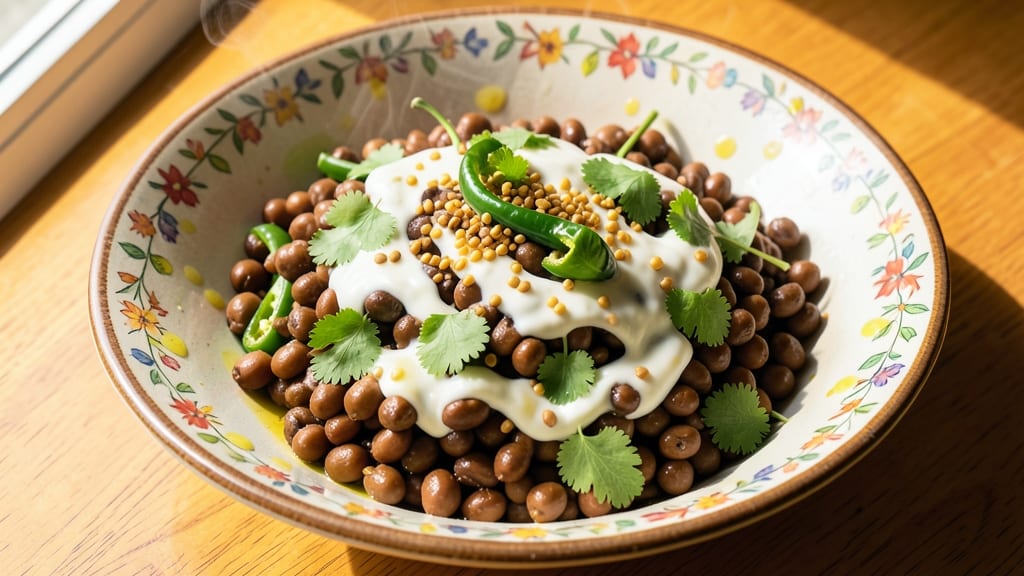
This Indian-style black-eyed peas salad recipe transforms humble chickpeas into a vibrant, protein-packed dish bursting with warm spices and cooling yogurt. The foundation lies in tempering mustard seeds and curry leaves—classic Indian flavor triggers that dance with tangy tamarind and fresh herbs.
What sets this apart is the yogurt dressing, where mint and cilantro blend with lemon juice to create a zing that cuts through the earthy chickpeas' richness.
Cooking begins with perfectly spiced chickpeas—tossed in turmeric, cumin, and garam masala before roasting until crispy at the edges. The secret to that signature Indian crunch comes from a light batter of chickpea flour, which creates a satisfying texture without overwhelming the dish.
Traditional Indian flavors shine through every bite, balancing heat, tang, and freshness in one harmonious salad.
What you'll end up with is a salad that's as nourishing as it is flavorful—ideal for meal prep or as a refreshing side. The yogurt dressing keeps it light enough for summer but hearty enough for winter, while the chickpeas provide plant-based protein.
This dish proves Indian flavors can elevate simple ingredients into something extraordinary, all while being completely vegetarian-friendly.
Optional vegan adaptations include substituting yogurt with coconut yogurt and using vegetable broth instead of water in the chickpea cooking process. Serve chilled or at room temperature, garnished with fresh cilantro and a sprinkle of toasted cumin for that final Indian touch.
Let's create this vibrant, flavor-packed salad that's perfect for any occasion.
Ingredients for black eyed peas salad indian
Transform humble chickpeas into a vibrant Indian-inspired salad with these carefully balanced ingredients.
| Ingredient | Amount | Notes |
|---|---|---|
| Dried Black Eyed Peas (Cowlpea) 🌱 | 1 ½ cups | Soaked overnight for best texture |
| Plain Yogurt (Vegetarian) 🥛 | ¾ cup | Full-fat preferred for creaminess |
| Fresh Cilantro Leaves 🌿 | ½ cup | Stems removed for dressing |
| Fresh Mint Leaves 🌿 | ¼ cup | Finely chopped for dressing |
| Lemon Juice 🍋 | ¼ cup | Freshly squeezed for tang |
| Mustard Seeds (Yellow) 🌶️ | 1 tbsp | Tempered for authentic flavor |
| Curry Leaves (Fresh) 🌿 | 10 whole | Dried works at half quantity |
| Garam Masala 🌶️ | 1 ½ tsp | Freshly ground preferred |
| Ground Cumin 🌿 | 1 tsp | Toasted for deeper aroma |
| Turmeric Powder 🧂 | ½ tsp | Bright yellow color indicator |
| Chickpea Flour (Besan) 🌾 | ¼ cup | For crispy batter coating |
| Tamarind Paste 🍈 | 1 tbsp | Adjust for tartness preference |
| Olive Oil 🫒 | ⅓ cup | Extra-virgin for best quality |
| Salt 🧂 | 1 tsp | Diamond Crystal preferred |
| Black Pepper 🌶️ | ½ tsp | Freshly cracked for heat |
The foundation begins with dried black-eyed peas—soaking them overnight ensures perfect texture. For the yogurt, full-fat Greek-style yogurt (like Fage) delivers the creamiest base, though plain whole-milk yogurt works equally well. Fresh herbs are non-negotiable: cilantro and mint from the grocery store's produce section should be vibrant green with no wilting. The mustard seeds and curry leaves are the flavor anchors—look for whole mustard seeds at Indian specialty stores or bulk bins for superior quality. Garam masala should be freshly ground; pre-ground blends lose potency quickly. Toast your cumin seeds in a dry pan for 30 seconds before grinding for deeper flavor—this makes all the difference.
No tamarind paste? Lemon juice plus 1 tsp sugar mimics the tang, though true tamarind has a distinct complexity. Running low on chickpea flour? Substitute with 2 tbsp all-purpose flour mixed with 1 tbsp water for a lighter batter. For the yogurt dressing, dairy-free yogurt (like Silk coconut yogurt) works beautifully for vegan adaptations. The olive oil should be extra-virgin—California or Italian varieties have the best fruity notes. If you can't find fresh curry leaves, dried works at half the quantity, though the flavor will be subtler. Pre-grated spices? Avoid them—they clump and lack freshness. Toast your whole spices before grinding for maximum aroma.
Store the spiced chickpeas in an airtight container for up to 5 days in the fridge, though they're best within 2 days for optimal crunch. The yogurt dressing keeps for 3 days—strain out excess liquid before storing. For meal prep, assemble the salad just before serving to maintain crispness. Freeze the chickpeas for up to 3 months if needed, but they'll be softer after thawing. Garnish with toasted cumin seeds and extra cilantro right before serving—this adds that restaurant-quality finish. The salad tastes even better the next day as flavors meld, making it perfect for weeknight prep or potlucks.
Why You'll Love This Recipe
- No-Soak Required: I swear by this—just rinse those dried peas, boil them for 20 minutes, and they’re done. No overnight soaking, no fuss, no waiting around. The texture stays firm and satisfying, not mushy, which is half the battle with dried legumes.
- Zesty Tang Twist: That lemon juice and yogurt combo? It’s the secret weapon. The yogurt cools down the peas while the lemon brightens everything—like a citrusy hug for your salad. My kids actually ask for seconds, and that’s saying something.
- Lunchbox Hero: Pack it cold for work or school, and it keeps for days. The herbs stay fresh longer than you’d think, and the yogurt dressing keeps it creamy without getting soggy. Honestly, it’s my go-to for meal prep because it’s hearty enough to fill you up but light enough to not weigh you down.
- Budget-Friendly Powerhouse: A cup of dried peas costs pennies, and yogurt stretches further than you’d imagine. I make this for potlucks, and people always assume it’s gourmet—no one bats an eye at the price tag. Plus, the leftovers taste just as good reheated or cold the next day.
Step-by-step instructions for spiced chickpea crunch salad
Transform simple black eyed peas into a vibrant, textured salad with bold South Indian flavors.
Prepare the Spiced Chickpea Base
Drain the soaked 1.5 cups dried black eyed peas (cowlpea) and rinse thoroughly. In a heavy-bottomed pot, combine the peas with 0.33 cup olive oil, 1 tsp ground cumin, 0.5 tsp turmeric powder, and 1 tsp salt. Heat over medium-high heat until the oil shimmers, then add 1 tbsp mustard seeds and 10 whole curry leaves. Cook for 30 seconds until the mustard seeds pop and curry leaves darken.
Add the peas and stir gently to coat in the spices. Pour in 1 cup water and bring to a boil. Reduce heat to low, cover, and simmer for 45-50 minutes until the peas are tender but not mushy, with just a slight bite remaining. The peas should hold their shape when pressed between fingers. Drain any excess liquid and set aside to cool slightly.
Create the Crispy Chickpea Flour Coating
In a small bowl, whisk together 0.25 cup chickpea flour (besan), 1 tbsp tamarind paste, 1.5 tsp garam masala, and 0.25 tsp black pepper. Gradually add 0.25 cup lemon juice while whisking to form a thick, smooth batter. The consistency should be like heavy cream - if too thick, add 1-2 teaspoons water to loosen.
Transfer the cooled peas to a shallow dish and pour the batter over them, tossing gently to coat evenly. Heat 0.165 cup olive oil (about half the remaining oil) in a non-stick skillet over medium heat. Working in batches, add the coated peas and fry for 2-3 minutes per side until golden brown and crispy. Transfer to a paper towel-lined plate to drain excess oil. The coating should be firm enough to hold when pressed gently.
Make the Yogurt-Mint Dressing
In a medium bowl, whisk together 0.75 cup plain yogurt, 0.5 cup chopped cilantro leaves, and 0.25 cup chopped mint leaves until fully combined. Stir in 0.25 cup lemon juice, remaining 0.165 cup olive oil, and 0.5 tsp black pepper. Taste and adjust seasoning with additional salt if needed - the dressing should be tangy with a bright herbal finish.
For extra depth, add 0.5 tsp garam masala and mix well. Cover and refrigerate for at least 15 minutes to allow flavors to meld. The dressing should thicken slightly and develop a vibrant green hue from the herbs. This cooling period is crucial for balancing the warm spices of the peas.
Assemble and Serve
Gently fold the crispy peas into the yogurt dressing, reserving 2 tablespoons of dressing for drizzling. Arrange on a serving platter and garnish with additional chopped cilantro and mint. For presentation, create a well in the center and drizzle with the reserved dressing. Serve immediately while the chickpea coating remains crisp.
This salad delivers a perfect contrast of textures - the crunchy chickpea flour coating against the cool, creamy yogurt base. The tamarind and lemon juice provide the necessary tang to cut through the richness of the yogurt and spices. For best results, serve within 2 hours of preparation to maintain the crisp texture of the coating.
Pro Tips For Making Black Eyed Peas Salad Indian
- SOAK THE PEAS RIGHT: DESCRIPTION: Skip the overnight soak—just cover dried black-eyed peas in warm water for 2 hours, then drain and rinse. I learned this the hard way: soaking too long makes them mushy when cooked, and no one wants a sad, waterlogged salad.
- STRAIN THE YOGURT WELL: DESCRIPTION: Drain plain yogurt in a cheesecloth for 15 minutes before mixing—this removes excess liquid and keeps your salad creamy, not soupy. (Yes, it’s tedious, but trust me, your dressing won’t separate later.)
- CHOP HERBS AT THE LAST MINUTE: DESCRIPTION: Hold off on chopping cilantro and mint until you’re ready to serve—otherwise, they’ll turn bitter and wilt in the yogurt dressing. Store them whole in a damp paper towel in the fridge until then.
- ACIDIFY THE YOGURT FIRST: DESCRIPTION: Mix lemon juice and a pinch of salt into the yogurt before adding anything else—this stabilizes it and prevents curdling when you toss in the peas. (I used to add it last, and half the time, the dressing would split.)
Common mistakes when making perfect results
Overcooking Chickpeas
Black-eyed peas are delicate—cooking them too long turns them mushy and destroys their natural crunch. I’ve ruined batches by simmering them beyond 45-50 minutes, which breaks down their texture. Always test doneness by pressing a pea between your fingers: it should hold its shape with a slight bite.
If they feel soft, they’re overdone. For extra insurance, start checking at 40 minutes—this salad’s magic lies in that perfect al dente texture. 🌱
Skipping the Tempering
The mustard seeds and curry leaves aren’t just flavor—they’re the soul of this dish. I once made the mistake of adding spices directly to the peas without tempering them first, and the result was bland. Heat the oil until it shimmers, then add the seeds and leaves.
They should sizzle and pop audibly—this releases their aromatic oils. If you rush this step, you’ll miss the deep, nutty complexity that makes this salad uniquely Indian. 🌶️
Uneven Chickpea Flour Coating
Uneven coating means some peas will be soggy while others stay crispy. The batter needs to be thick but pourable—like heavy cream. I’ve seen people use too much lemon juice, which thins it out, or not enough chickpea flour, making the coating crumbly.
For best results, whisk the batter until smooth, then toss the peas gently in a single layer. If the batter clumps, strain it through a fine-mesh sieve. This ensures every pea gets that perfect golden crust. ✨
Ignoring the Resting Time
Freshly fried chickpeas need to rest for 5 minutes before assembling the salad. This allows the coating to set and prevents the yogurt dressing from making them soggy. I’ve made this mistake and ended up with a sad, limp salad.
Let the peas cool slightly on a wire rack, then proceed. Patience here makes all the difference—your guests won’t even notice the wait! 💪
Overmixing the Dressing
Whisking the yogurt dressing too vigorously incorporates air, which makes it separate. I’ve turned bright green dressing into a lumpy mess by overworking it. Instead, gently fold the herbs and lemon juice into the yogurt with a spatula.
For extra insurance, let it sit for 15 minutes before using—this allows flavors to meld without risking curdling. A smooth, silky dressing elevates the entire dish. 🥛
Using Low-Quality Yogurt
Thin, tangy yogurt is key—store-bought brands with stabilizers can ruin the texture. I’ve used cheap yogurt that turned the dressing watery. Opt for full-fat, plain yogurt (like Fage or Stonyfield) for creaminess.
If you’re vegan, Silk coconut yogurt works beautifully but may need a pinch of salt to balance its mildness. Quality here makes the difference between a good salad and a great one. 🌿
Nutrition facts
Frequently asked questions
Can I use canned black-eyed peas instead of dried?
You can, but with adjustments! Drain and rinse 2 (15 oz) cans of black-eyed peas, then pat them very dry with a towel to remove excess moisture. Since canned peas are pre-cooked, reduce simmering time to just 10 minutes in the spiced oil to warm through. The texture will be slightly softer than dried, but still delicious. For extra crunch, increase the chickpea flour coating to 0.33 cup.
How do I make this salad vegan?
Easy swaps make this fully plant-based! Replace the yogurt with 0.75 cup coconut yogurt (like Silk) and add 1 tsp maple syrup to balance tanginess. For the chickpea flour coating, use 0.25 cup water instead of lemon juice in the batter. Garnish with toasted coconut flakes instead of yogurt drizzle. All other ingredients remain the same.
What's the best way to store leftovers?
Store components separately for maximum freshness! Keep the crispy chickpeas in an airtight container for up to 3 days (they'll lose crunch but still taste great). The yogurt dressing keeps 2 days in the fridge—strain out excess liquid before storing. Reassemble just before serving. For longer storage, freeze the chickpeas (without dressing) for up to 3 months—thaw overnight in the fridge.
Can I make this without chickpea flour?
For a gluten-free option, substitute with 0.33 cup all-purpose flour mixed with 1 tbsp water to make a paste. The texture will be slightly lighter but still crisp. Alternatively, use 0.25 cup ground almonds for nutty flavor. Just ensure the batter consistency remains thick enough to stick to the peas during frying.
Why does my dressing separate?
This happens when the yogurt is too cold or mixed too vigorously. Let the yogurt sit at room temperature for 10 minutes before using, then gently fold in herbs with a spatula (don't whisk). For extra stability, add 0.5 tsp xanthan gum to the dressing. If it separates after refrigeration, whisk briefly before using—it should recombine smoothly.