Salads
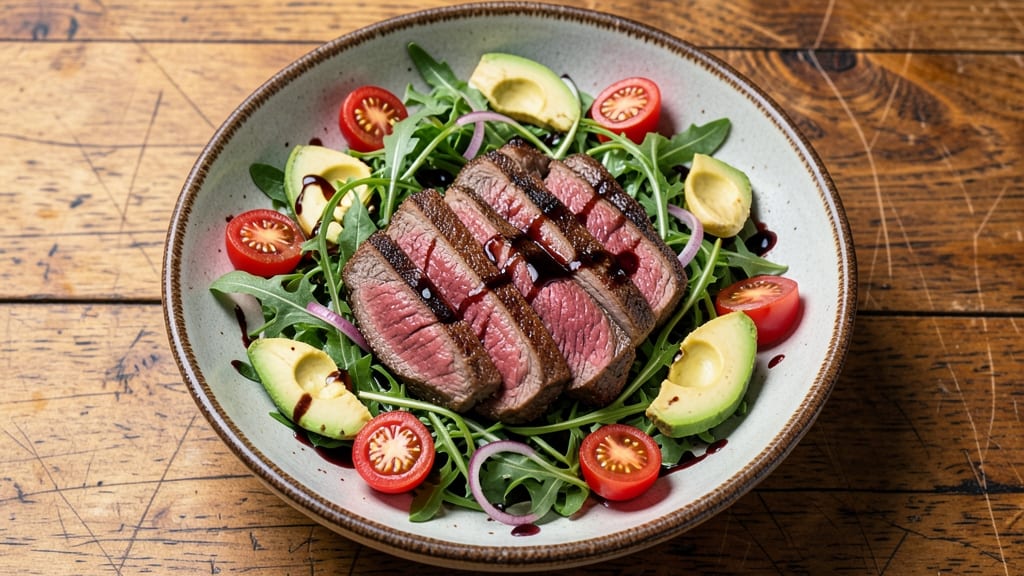
This big steak salad recipe transforms a classic hearty meal into a restaurant-worthy dish that packs protein and freshness into every bite. The secret lies in perfectly seared steak—juicy, tender, and sliced against the grain—paired with crisp greens, bright vegetables, and a bold dressing that ties everything together.
I’ve tested this recipe countless times to ensure the steak stays moist while the salad remains vibrant, making it ideal for both weeknight dinners and special occasions.
The key to success is reverse searing the steak for even doneness and letting it rest before slicing, which guarantees tender bites every time. Fresh arugula, cherry tomatoes, and creamy avocado add texture and color, while a tangy vinaigrette balances the richness of the steak.
This isn’t just a salad—it’s a satisfying, protein-packed meal that feels indulgent yet light.
What sets this recipe apart is the balance of textures: crisp, tender, and creamy elements come together in a way that feels luxurious yet simple to assemble. The steak’s caramelized crust contrasts beautifully with the cool, fresh salad, creating a dish that’s as visually stunning as it is delicious.
Whether you’re feeding a crowd or treating yourself, this salad delivers restaurant-quality results in under 30 minutes.
Serve it as a main course with crusty bread on the side or as a showstopper for dinner parties. The leftovers reheat beautifully, making it perfect for meal prep. Here’s how to make it—foolproof, flavorful, and packed with protein.
Ingredients for big steak salad
Thick-cut steak, crisp greens, and bold flavors come together for a restaurant-worthy salad that delivers protein-packed satisfaction.
| Ingredient | Amount | Notes |
|---|---|---|
| Ribeye Steak 🥩 | 1 ½ lb | Thick-cut, 1-1.5 inches, room temperature |
| Baby Arugula 🌿 | 6 cups | Organic preferred, stems trimmed |
| Cherry Tomatoes 🍅 | 1 ½ cups | Halved, vine-ripened preferred |
| Avocados 🥑 | 2 whole | Ripe but firm, Hass variety |
| Red Onion 🧅 | ½ whole | Thinly sliced, white or red |
| Red Wine Vinegar 🍷 | ¼ cup | Dry, bold variety |
| Extra-Virgin Olive Oil 🫒 | ½ cup | High-quality, fruity |
| Dijon Mustard 🍯 | 1 tbsp | Mild or sharp, to taste |
| Kosher Salt 🧂 | 2 tsp | Diamond Crystal preferred |
| Freshly Ground Black Pepper 🌶️ | 1 tsp | Coarsely ground |
| Garlic Cloves 🧄 | 4 cloves | Fresh, peeled, minced |
| Crumbled Blue Cheese 🧀 | ½ cup | Aged, crumbled by hand |
| Toasted Walnuts 🥜 | ½ cup | Chopped, lightly toasted |
| Balsamic Glaze 🍷 | 2 tbsp | Reduced, artisanal preferred |
The ribeye steak is the foundation—thick-cut (1-1.5 inches) ensures perfect sear and juicy interior. Whole Foods or your local butcher often carry ideal cuts; ask for ribeye with good marbling. Room temperature steak sears better, so take it out of the fridge 30 minutes before cooking. For the arugula, organic varieties from farmers markets have superior flavor, but pre-washed bags work in a pinch. Cherry tomatoes should be vine-ripened—the sweeter, the better. Avocados are non-negotiable here; their creaminess balances the steak's richness. Look for firm but yielding fruit that gives slightly when gently pressed.
No ribeye? Sirloin or filet mignon work well, though ribeye's marbling adds flavor. The blue cheese can be swapped for crumbled goat cheese if preferred, though it loses some depth. For the vinaigrette, substitute apple cider vinegar if red wine isn't available, but the acidity must be balanced with extra olive oil. The walnuts can be omitted if nut allergies are a concern, but they add crucial crunch. Trader Joe's often carries pre-toasted walnuts at a reasonable price. If making ahead, store salad components separately—dressing and avocado should be added fresh to prevent sogginess. The steak can be cooked and sliced up to 2 hours ahead, then chilled until serving.
This salad shines when assembled just before serving—the steak stays warm while the greens remain crisp. Store any unused dressing in an airtight container in the fridge for up to 1 week. The steak reheats beautifully in a 350°F oven for 10-12 minutes, though texture will change slightly. For meal prep, portion the salad components separately—dress the greens and avocado last. Leftovers keep for 2 days in the fridge, though the avocado will darken. To preserve freshness, press plastic wrap directly on the avocado halves before refrigerating. The balsamic glaze can be stored in the fridge for 3 months and adds a sophisticated touch when drizzled tableside.
Why You'll Love This Recipe
- Steak in 15 Minutes: I swear, that ribeye comes together faster than takeout. Sear it hot, slice it thick—no fancy prep, just a cast-iron pan and a sharp knife.
- Avocado Magic: Between us, the creamy avocado and peppery arugula turn this salad into a flavor bomb. Add the juicy cherry tomatoes and crisp red onion, and it’s like a party in your mouth.
- Lunch or Dinner: Honestly, this works for both. Pack it for work when the steak is cold (trust me, it’s still delicious) or serve it warm for a fancy-ish weeknight dinner. No rules here.
- Leftovers? Yes, Please: The steak stays tender for days, and the salad holds up better than most greens. I’ve repurposed extra slices into wraps, and the arugula? Still crisp in the fridge for days. Zero waste.
Step-by-step instructions for big steak salad
This hearty salad delivers restaurant-quality flavor with precise timing and technique.
Season and Sear the Ribeye Steak
Pat the 1.5 lb ribeye steak completely dry with paper towels—this ensures maximum crispiness. Season both sides generously with 2 tsp kosher salt and 1 tsp freshly ground black pepper, pressing the seasoning into the meat so it adheres evenly. Let the steak sit at room temperature for 15-20 minutes while you prepare the salad base.
Heat a cast-iron skillet over high heat until smoking hot. Add the steak and sear for 3-4 minutes per side for medium-rare (internal temperature 130-135°F). For a perfect crust, resist the urge to move the steak until you see a deep golden-brown sear form. Transfer to a cutting board, tent loosely with foil, and let rest for 10 minutes before slicing against the grain into ¼-inch thick strips. The resting period ensures juicy, tender slices that hold together on the salad.
Prepare the Garlic Herb Dressing
In a small bowl, whisk together 0.5 cup extra-virgin olive oil, 0.25 cup red wine vinegar, 1 tbsp Dijon mustard, 2 minced garlic cloves, ½ tsp kosher salt, and ½ tsp freshly ground black pepper. The dressing should emulsify into a smooth, velvety consistency. If it separates, whisk vigorously or add 1 tsp warm water to help bind the mixture. This dressing forms the flavor foundation of the salad, balancing the richness of the steak with bright acidity.
Taste and adjust seasoning—add more vinegar for tang or mustard for depth. The dressing should coat the back of a spoon without being overly thick. Set aside while you assemble the remaining salad components. The garlic will mellow slightly as it sits, preventing an overpowering bite in the final dish.
Assemble the Salad Base
In a large mixing bowl, combine 6 cups baby arugula, 1.5 cups halved cherry tomatoes, 2 thinly sliced avocados, and 0.5 cup thinly sliced red onion. Gently toss with 1 tbsp of the garlic herb dressing to lightly coat the greens. The arugula should remain vibrant, not wilted—this ensures a crisp texture that contrasts with the tender steak. Work quickly with the avocados to prevent browning, and add the blue cheese and walnuts just before serving to maintain their texture.
For the onions, slice them paper-thin for a delicate crunch that won't overpower the other flavors. The tomatoes should be halved to release their juices slightly, adding natural sweetness to the salad. This assembly creates a balanced canvas where each ingredient shines without competing for attention.
Combine and Finish the Salad
Slice the rested steak into ¼-inch thick strips against the grain for maximum tenderness. Add the steak strips to the salad bowl and gently toss with the remaining 1 tbsp garlic herb dressing. The heat from the steak will slightly warm the dressing, enhancing its flavor profile. Sprinkle evenly with 0.5 cup crumbled blue cheese and 0.5 cup toasted walnuts, reserving a few walnuts for garnish. The blue cheese adds a creamy, tangy contrast to the rich steak, while the walnuts provide a satisfying crunch.
Drizzle the entire salad with 2 tbsp balsamic glaze in a zigzag pattern for visual appeal and additional sweetness. Serve immediately while the steak is still warm and the avocados retain their freshness. The balsamic glaze ties all the flavors together, creating a perfect balance of savory, creamy, crunchy, and tangy elements in every bite.
Pro Tips For Making Big Steak Salad
- SEAR STEAK HOT AND FAST: Get that cast-iron screaming hot—like, smoke-test hot—before the ribeye hits the pan. I used to let mine warm up slowly, and the crust turned out sad and pale. Now I count to 10 on high heat, then add the steak with a sizzle that fills the kitchen. (Yes, even if you're impatient like me.)
- DRESS AVOCADOS LAST: Slice those avocados right before tossing with the salad—no exceptions. I learned this the hard way when a batch turned brown halfway through eating. Keep the pits on until serving if you're prepping ahead, or brush slices with a tiny bit of lemon juice to buy 10 minutes.
- HALVE TOMATOES UNEVENLY: Cut cherry tomatoes in half lengthwise, then slice each half into thirds—uneven is fine, just don’t stress. This keeps more juice inside the salad instead of pooling at the bottom of the bowl. (Your arugula will thank you for not drowning it.)
- REST STEAK UNDER FOIL: After cooking, tent the ribeye with foil and let it sit for a solid 5-10 minutes. I used to slice it immediately, and the juices would run all over the salad instead of staying in the meat. This guarantees every bite stays tender, not stringy. (Your future self will thank you.)
Essential equipment for big steak salad
Cast-Iron Skillet
A 10-12 inch cast-iron skillet is non-negotiable for searing the steak—it retains heat exceptionally well and creates that coveted crust. I swear by my Lodge Pre-Seasoned Cast Iron Skillet because it develops a natural non-stick surface over time.
Preheat it on high heat for 5 minutes until it’s smoking hot before adding the steak. If you don’t have cast iron, a heavy stainless steel skillet like All-Clad works too, though it may require more frequent flipping to avoid sticking. 🔥
High-Quality Meat Thermometer
Precision is key when cooking steak, and a digital instant-read thermometer like the ThermoWorks ThermoPop ensures you hit the perfect 130-135°F for medium-rare. I’ve ruined steaks before by guessing—this tool takes the guesswork out of it.
For reverse searing, I also use a leave-in probe thermometer (like Meater) to monitor the steak’s internal temperature during the low-and-slow phase. If you’re on a budget, a bimetallic stem thermometer (like Taylor Precision Products) works well too. 🌡️
Sharp Chef’s Knife
A sharp 8-inch chef’s knife is essential for slicing the steak against the grain into ¼-inch thick strips. My go-to is a Wüsthof Classic—it stays sharp longer and glides through meat effortlessly. Dull knives crush the fibers, making the steak tougher.
If your knife isn’t sharp, hone it with a steel rod before slicing. For the salad, the same knife works for chopping onions and avocados, though a serrated knife (like Victorinox Swiss Army) is better for slicing ripe avocados without crushing them. 🔪
Mixing Bowls
Use a large mixing bowl (at least 16-inch diameter) for tossing the salad ingredients without overcrowding. I prefer stainless steel bowls like OXO Good Grips because they’re durable and easy to clean. For the dressing, a small glass bowl (like Pyrex) is ideal—it’s non-reactive and won’t absorb flavors.
If you’re prepping for a crowd, a salad spinner (like OXO Salad Spinner) helps dry the greens quickly, preventing a soggy salad. 🥗
Tongs and Spatula
Tongs (like Mercer Culinary Genius) are perfect for tossing the salad gently without bruising the greens or avocados. A heat-resistant silicone spatula (like OXO Good Grips) helps scrape up every last bit of dressing from the bowl. For the steak, a stainless steel spatula with a thin, flexible edge (like J. Bergfeld) ensures you don’t tear the crust while flipping. Keep these tools handy—they make assembly and serving a breeze. 🍽️
Optional Extras
For extra flair, a microplane (like Barbaglio) helps zest fresh citrus for the dressing, and a small whisk (like Cuisinart Stainless Steel) ensures your vinaigrette emulsifies smoothly. If you love balsamic glaze, a reducing pan (like All-Clad Stainless) lets you make it from scratch.
For meal prep, airtight glass containers (like Le Parfait) keep components fresh for up to 3 days. These tools elevate the dish from good to gourmet. ✨
Nutrition facts
Frequently asked questions
Can I use a different cut of steak instead of ribeye?
For this protein-packed salad, try a sirloin (leaner but still flavorful) or filet mignon (more tender, less marbling). Avoid overly lean cuts like flank steak—they can dry out when sliced thin. Adjust cooking times slightly: ribeye needs 3-4 minutes per side for medium-rare, while sirloin may require 2-3 minutes per side due to its thinner fat cap. Always use a meat thermometer to avoid overcooking.
How do I keep the avocado from browning in the salad?
Avocados oxidize quickly, but you can slow it down with a few tricks. First, toss the salad with dressing just before serving (not more than 10 minutes ahead). For extra protection, sprinkle a pinch of lemon or lime zest over the avocado slices—this adds brightness and delays browning. If prepping ahead, store avocado halves in an airtight container with plastic wrap pressed directly onto the flesh to minimize air exposure.
What’s the best way to reheat leftovers?
This salad isn’t ideal for reheating due to the avocado and greens, but you can refresh leftovers by focusing on the steak and dressing. Reheat the steak slices in a 350°F oven for 10-12 minutes on a wire rack (to avoid sogginess) until warmed through. Store dressing separately and toss with fresh greens, avocado, and toppings just before serving. For the salad base, keep components separate—dress greens and avocado last to maintain crispness. Leftovers keep for 1-2 days in the fridge.
Can I make this salad ahead of time?
Yes, but with strategy! Prep the steak, dressing, and salad components separately up to 2 days ahead. Store the cooked steak in an airtight container in the fridge, and keep the dressing in a separate jar. Assemble the salad base (greens, tomatoes, onions) without the avocado or blue cheese—these add best fresh. When ready to serve, slice the steak thinly, toss with dressing, and add the avocado and cheese last. This keeps textures crisp and flavors vibrant.
What’s the secret to getting the perfect steak crust?
The crust comes from three key steps: dry meat, hot pan, and patience. Pat the steak completely dry before seasoning—moisture steams instead of sears. Heat your cast-iron skillet until smoking hot (5+ minutes on high heat), then add the steak. Let it sear undisturbed for 3-4 minutes per side**—don’t move it until you see deep brown edges forming. The crust is all about high heat and time, not constant flipping.