Salads
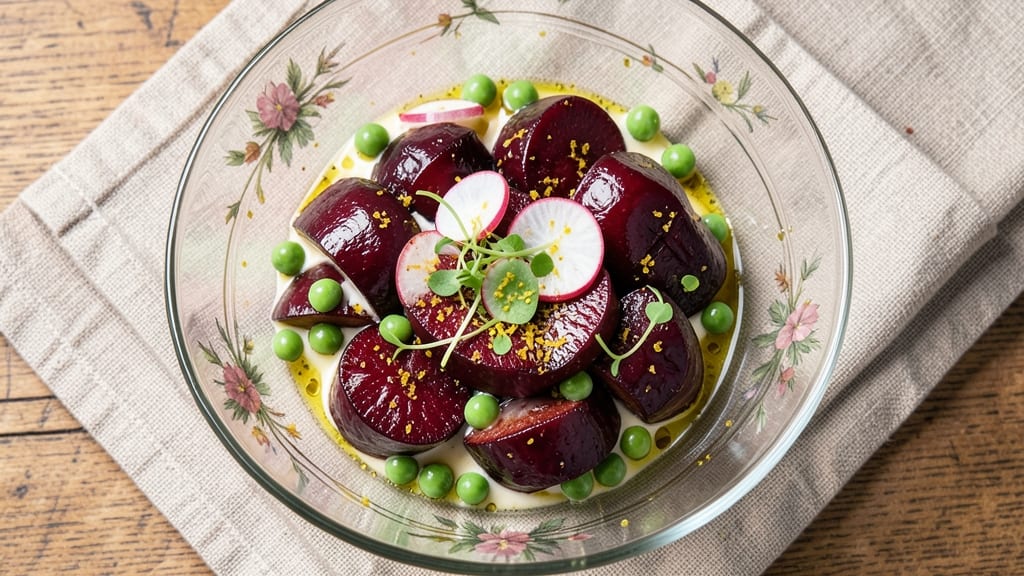
The beet and pea salad recipe transforms humble ingredients into a vibrant, nutrient-packed dish that balances earthy sweetness with bright, herby freshness. Roasted beets add natural depth while fresh peas bring crisp texture—perfect for a meal that’s as satisfying as it is visually striking.
This salad proves plant-based eating can be hearty, flavorful, and completely filling.
What sets this recipe apart is the thoughtful layering of flavors: tangy lemon zest brightens the earthy beets, toasted walnuts add crunch, and fresh herbs like mint or parsley elevate every bite. The dressing—a simple blend of olive oil, apple cider vinegar, and Dijon—ties everything together without overpowering.
It’s a dish that works as a light lunch or a substantial side, especially when paired with grilled fish or crusty bread.
Preparation is straightforward yet rewarding: roast the beets until tender and caramelized, steam or boil the peas for just enough time to maintain their snap, then combine with the dressing and toppings.
The result is a salad with rich, velvety beets, crisp, vibrant peas, and textural contrast that keeps every bite interesting. Plus, it’s packed with fiber, plant-based protein, and antioxidants—making it as good for you as it is delicious.
For extra depth, consider adding toasted seeds or a sprinkle of vegan feta, while non-vegan versions can incorporate goat cheese or crumbled blue cheese. The possibilities are endless, but the core recipe delivers a bold, balanced flavor that stands on its own. Ready to elevate your salad game?
Ingredients for beet and pea salad
Roasted beets and bright peas create a vibrant, nutrient-rich salad with bold flavors and perfect texture contrast.
| Ingredient | Amount | Notes |
|---|---|---|
| Medium Beets 🍠 | 2 whole | With tops removed, roasted whole |
| Fresh Peas 🌱 | 1 ½ cups | Frozen works, thawed and drained |
| Extra-Virgin Olive Oil 🫒 | ½ cup | For roasting and dressing |
| Apple Cider Vinegar 🍏 | 2 tbsp | Raw, unfiltered preferred |
| Dijon Mustard 🌶️ | 1 tbsp | High-quality for tangy depth |
| Fresh Lemon Zest 🍋 | 1 tsp | From organic lemons |
| Fresh Lemon Juice 🍋 | 2 tbsp | Freshly squeezed |
| Toasted Walnuts 🌰 | ½ cup | Chopped, skin-on preferred |
| Fresh Mint Leaves 🌿 | ¼ cup | Finely chopped, stems removed |
| Fresh Parsley Leaves 🌿 | ¼ cup | Finely chopped, flat-leaf preferred |
| Sea Salt 🧂 | 1 tsp | Diamond Crystal preferred |
| Freshly Ground Black Pepper 🌶️ | ½ tsp | Coarsely ground |
| Maple Syrup 🍁 | 1 tbsp | Grade B for depth |
The beets are the heart of this dish—choose medium-sized, vibrant beets with no soft spots. Whole Foods or local farmers' markets often carry the freshest varieties, but any grocery store's organic section works. Roasting them whole preserves their moisture and intensifies their natural sweetness. For even cooking, scrub them thoroughly and trim the tops, leaving about 1/4 inch of stem. If you're short on time, pre-cut beets from the Trader Joe's frozen section work beautifully too, though they won't have the same caramelized texture. The peas should be bright green and firm—fresh or frozen both work, but avoid canned peas with added salt or preservatives.
No fresh mint or parsley? Substitute with cilantro or basil, though the flavor profile will shift slightly. For the walnuts, pecans or almonds work in a pinch, but they lack the same earthy richness. The maple syrup can be swapped for agave nectar or date syrup if preferred, though maple adds a subtle complexity. If you're missing Dijon mustard, whole-grain mustard thinned with water provides a similar texture. For the dressing, always taste as you go—the ratio of vinegar to oil can vary based on your beets' natural sweetness. Organic apple cider vinegar from Bragg or Texas Pete adds subtle fruit notes that complement the beets beautifully.
Roasted beets keep well in the fridge for 5-6 days when stored in an airtight container with a paper towel to absorb moisture. Toasted walnuts stay fresh for up to 2 weeks in a sealed container in a cool, dark place. For the dressing, store it separately and shake before using—it keeps for 1 week in the fridge. This salad tastes even better the next day as the flavors meld. Portion into individual containers for easy grab-and-go lunches, or double the recipe for meal prep. The herbs can be prepped ahead and stored in the fridge for 3 days, though they'll lose some vibrancy over time.
Why You'll Love This Recipe
- No Boiling Beets: I roast mine whole with olive oil and salt—crispy skin, tender center, zero fuss. The oven does all the work while you chop peas (or buy frozen, no judgment).
- Sweet-Tangy Magic: That apple cider vinegar and Dijon combo? It cuts through the earthy beets and makes the peas taste like spring exploded. Honestly, the dressing is the real MVP here.
- Lunchbox Hero: Pack it in jars or containers—beets stay crisp at the bottom, peas on top, and that dressing clings like glue. My kids eat it cold, my husband eats it at work, and I eat it because it’s that good.
- Budget Brightener: Fresh peas are pricey? Swap in frozen—same texture, same flavor, half the cost. Beets last forever, and olive oil stretches further than you’d think. A $10 bag of ingredients feeds four for days.
Step-by-step instructions for beet and pea salad
Transform simple ingredients into a vibrant, flavor-packed salad with this precise method.
Roast the Beets Until Tender
Preheat your oven to 400°F. Wrap each of the 2 whole medium beets tightly in aluminum foil, ensuring no gaps remain. Place them directly on the oven rack or a baking sheet and roast for 45-60 minutes until completely tender when pierced with a fork.
The foil traps steam, which helps soften the beets evenly. When done, the beets should feel soft all the way through but still hold their shape. Let them cool slightly before handling—they'll be hot. I like to let them sit for 10 minutes before peeling, as the skins will slip off more easily when warm.
Prepare the Peas and Toast the Walnuts
While the beets roast, prepare the 1.5 cups fresh peas by thawing them if using frozen, then draining any excess liquid. Spread the 0.5 cup toasted walnuts on a baking sheet and toast in the same oven for 5-7 minutes until fragrant and lightly golden. Watch them closely—they'll darken quickly.
Toasted walnuts add a satisfying crunch and nutty depth to the salad. If you're using pre-toasted walnuts, skip this step but warm them briefly in a dry skillet over medium heat for 1-2 minutes to enhance their aroma. Chop the walnuts into small pieces for even distribution in the salad.
Create the Vinaigrette Dressing
In a medium bowl, whisk together the 0.5 cup extra-virgin olive oil, 2 tablespoons apple cider vinegar, 1 tablespoon Dijon mustard, 1 tablespoon maple syrup, 2 tablespoons fresh lemon juice, and 1 teaspoon fresh lemon zest. Season with 1 teaspoon sea salt and 0.5 teaspoon freshly ground black pepper.
This dressing balances sweet, tangy, and herby flavors perfectly. Taste as you go—you might want to adjust the vinegar for more acidity or the maple syrup for extra sweetness. The dressing should coat the back of a spoon smoothly but still have body. Let it sit for 5 minutes to allow the flavors to meld before using.
Assemble and Serve the Salad
Peel the cooled beets and cut them into ½-inch cubes. In a large bowl, combine the beets, prepared peas, chopped walnuts, 0.25 cup fresh mint leaves, and 0.25 cup fresh parsley leaves. Pour the dressing over the mixture and gently toss until everything is evenly coated.
Taste and adjust seasoning if needed—you might want to add a pinch more salt or a splash of lemon juice for brightness. Serve immediately for the best texture and flavor contrast. The warm beets and peas paired with the cool dressing create a delightful temperature play, while the toasted walnuts add a satisfying crunch with every bite.
Pro Tips For Making Beet And Pea Salad
- PEEL BEETS AFTER COOKING: I learned this the hard way—raw beets stain like war paint. Roast them whole (400°F for 45-55 minutes), then let cool before peeling. The skins will slide off effortlessly, and you’ll save time scrubbing.
- USE FROZEN PEAS (NO ONE NOTICES): Fresh peas are great, but frozen work just as well—no shelling, no wilting. Toss them straight from the freezer into the salad; they’ll thaw and soften perfectly while you mix everything else.
- WHISK THE DRESSING FIRST: Combine vinegar, mustard, and olive oil in a small bowl and whisk vigorously before adding salt. This emulsifies the dressing instantly, so it clings to the beets and peas instead of pooling at the bottom.
- SALT THE BEETS WHILE ROASTING: Toss the beets with 1 teaspoon of salt before roasting. It crisps the skins slightly and seasons them deeply—no need to add extra salt later, and the flavor stays balanced even after chilling.
Regional styles of this dish
French Spring Variation
In France, this salad becomes a springtime classic called Salade de Betteraves et Petits Pois à la Menthe. The key difference? Swap the walnuts for toasted hazelnuts and add thinly sliced radishes for a peppery crunch.
French cooks often finish with a drizzle of walnut oil instead of olive oil, and a sprinkle of fleur de sel for that signature coastal touch. 🌱
German Hearty Twist
Germans take this salad in a heartier direction, calling it Rote-Bete-Pisensalat. They traditionally add diced apples (like Braeburn or Granny Smith) and crumbled vegan marzipan (for sweetness) along with the peas and beets.
The dressing gets a deeper kick with 1 teaspoon caraway seeds lightly toasted and ground into the vinaigrette. This version shines as a side for sausages or roasted meats. 🌰
Scandinavian Winter Version
Up north, this salad becomes a winter staple with roasted beetroot and pea salad with dill. Swap mint for fresh dill (about 0.3 cup chopped) and add 1 tablespoon aquavit or vodka to the dressing for a Nordic twist.
Serve warm with crispy rye bread and a side of smoked salmon for a cozy Scandinavian meal. The aquavit adds a subtle herbal depth that complements the beets beautifully. ❄️
Italian Rustic Adaptation
In Italy, this salad transforms into Insalata di Barbabietole e Piselli con Noci. Italians use pecorino cheese (vegan option: vegan pecorino or nutritional yeast) crumbled on top and finish with sun-dried tomatoes (about 2 tbsp chopped) for a Mediterranean flair.
The dressing gets a splash of white wine vinegar instead of apple cider, and they often add a pinch of red pepper flakes for a subtle heat. 🍅
Middle Eastern Warm Salad
For a warm salad version, Middle Eastern cooks serve this as Warm Beet and Pea Salad with Tahini. After roasting, the beets are sliced and lightly tossed with 2 tbsp tahini, 1 tbsp lemon juice, and a pinch of cumin.
Warm the peas with the beets and top with toasted pine nuts and chopped cilantro. This version is often served with warm pita bread and a side of hummus. The tahini adds a creamy richness that balances the earthy beets perfectly. 🌿
Nutrition facts
Frequently asked questions
Can I use canned peas instead of fresh or frozen?
Yes, but drain and rinse them thoroughly to remove excess sodium. Canned peas work in a pinch, though they lack the fresh snap of frozen or fresh peas. For best flavor, choose low-sodium or no-salt-added varieties. The texture will be slightly softer, so consider adding a pinch more salt to the dressing to balance flavors.
How do I make this salad ahead of time?
Roast the beets and toast the walnuts first, then store them separately in the fridge for up to 3 days. Assemble the salad just before serving to keep the peas crisp. The dressing can be made ahead and stored in a separate container—shake well before using. For best texture, hold off on adding the peas until serving.
What if my beets turn out mushy?
Over-roasting causes mushy beets. Check doneness at 45 minutes—they should pierce easily with a fork but still hold shape. If they're too soft, try roasting at 375°F instead of 400°F next time. For extra structure, add 1/4 cup diced cucumber or bell pepper to the salad for crunch.
Can I make this salad nut-free?
Swap the walnuts for toasted pumpkin seeds or crispy fried shallots for crunch. For extra protein, add 1/2 cup chickpeas (roasted with olive oil and salt). The texture contrast will still shine—just adjust the dressing slightly if using chickpeas (they absorb more moisture).
Why does my dressing taste too sweet?
Adjust the balance by adding 1/2 teaspoon more Dijon mustard or 1 extra tablespoon apple cider vinegar. The maple syrup should complement, not overpower—the dressing should taste like a harmony of sweet, tangy, and herby notes. Taste as you whisk, and remember you can always add more acidity later.