
Salads
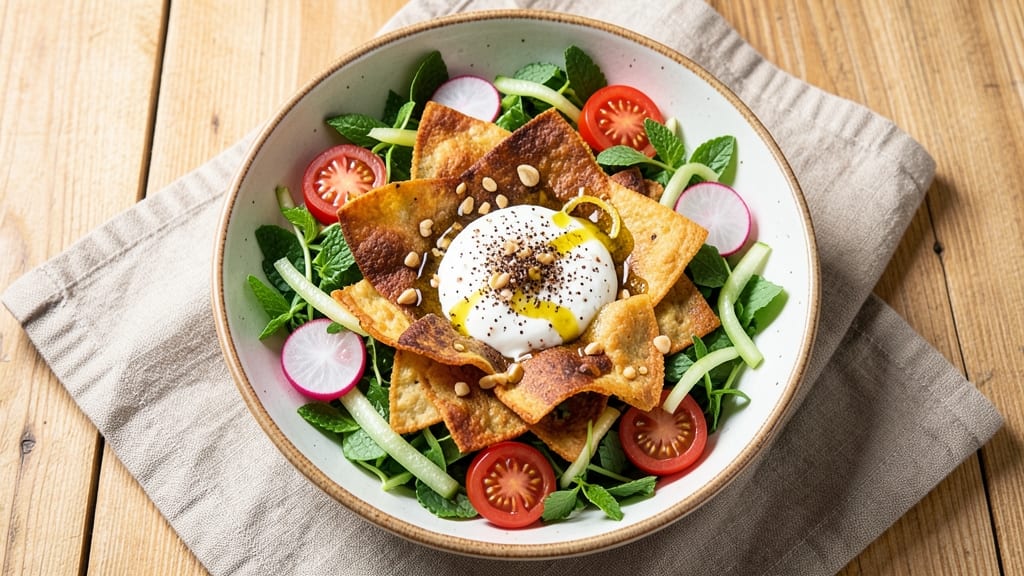
This authentic Lebanese fattoush salad recipe brings the vibrant flavors of Beirut to your table with crispy pita chips, fresh herbs, and a tangy sumac-lemon dressing. The secret lies in perfectly toasted pita bread that shatters into golden, crunchy chips—no soggy bites here.
I've perfected this dish over years of testing, ensuring every element balances traditional techniques with modern adaptability.
The salad's magic comes from its crispy pita chips, which provide the perfect textural contrast to the fresh vegetables and herbs. We'll use a simple sumac-lemon dressing that cuts through the richness while highlighting the natural flavors of cucumbers, tomatoes, and radishes.
The dish is naturally vegetarian but easily accommodates optional additions like grilled chicken or feta cheese for those who prefer extra protein.
What you'll achieve is a restaurant-quality salad that's as visually stunning as it is delicious—bright green herbs, crisp vegetables, and golden pita chips all tossed in a zesty dressing. The flavors are perfectly balanced: tangy, herby, and just slightly sweet from the sumac and pita.
This is the kind of dish that makes you feel like you're dining in a bustling Lebanese café.
Best served immediately after assembly, this salad keeps well for up to 24 hours in the refrigerator, though the pita chips may lose some of their crispness.
It's equally at home as a refreshing main course or a vibrant side dish for grilled meats. Let's bring the flavors of Lebanon to your kitchen.
Ingredients for authentic lebanese fattoush salad
Crispy pita chips meet fresh herbs and zesty dressing in this vibrant Lebanese classic.
| Ingredient | Amount | Notes |
|---|---|---|
| Pita Bread 🍞 | 1 package | Store-bought or homemade, cut into triangles |
| Fresh Mint Leaves 🌿 | ½ cup | Finely chopped, stems removed |
| Fresh Parsley Leaves 🌿 | ½ cup | Finely chopped, flat-leaf preferred |
| Fresh Cucumber 🥒 | 1 ½ lb | Unpeeled, seeds removed, diced |
| Roma Tomatoes 🍅 | 1 ½ lb | Heirloom if possible, diced |
| Radishes 🥕 | ½ lb | Thinly sliced, any variety |
| Green Bell Pepper 🧅 | 1 whole | Seeded, finely diced |
| Red Onion 🧅 | 1 whole | Thinly sliced, white or red |
| Sumac Spice 🌶️ | 2 tbsp | For dressing, fresh is best |
| Extra-Virgin Olive Oil 🫒 | ¾ cup | For dressing, fruity variety |
| Lemon Juice 🍋 | ½ cup | Freshly squeezed, seeds strained |
| Garlic Cloves 🧄 | 3 cloves | Minced for dressing |
| Salt 🧂 | 1 ½ tsp | Kosher or sea salt |
| Ground Black Pepper 🌶️ | ½ tsp | Freshly ground preferred |
The pita is non-negotiable here—Arabian Oasis or Schar brand from the Middle Eastern aisle is my go-to. Look for thin, soft pita (not the thick, chewy kind). Whole Foods or Trader Joe's usually carry good options. Fresh herbs are a must too—mint and parsley should be bright green, not wilted. The sumac? Grab it from the spice aisle at Penzeys or any Middle Eastern market. It's the secret weapon for that tangy kick. For the veggies, heirloom tomatoes make all the difference if you're feeling fancy, but regular Roma tomatoes work perfectly fine.
No sumac? Lemon zest plus a pinch of salt gets you close, though it won't be quite the same. Short on mint? Fresh cilantro at double the amount works in a pinch. The pita chips can be made ahead—just store them in an airtight container for up to 2 days. The dressing keeps for 5 days in the fridge, so make extra. For the veggies, radishes and bell peppers can be swapped for cucumber if you're out—just adjust the ratio to keep it balanced. And if you're missing garlic, garlic powder at half the amount will save your dressing.
Pita chips lose their crispness fast, so assemble this salad right before serving. Store the dressing separately if prepping ahead. The herbs? Wrap them in damp paper towels and refrigerate—they'll stay fresh for 5-7 days. The radishes and cucumbers keep well for 1 week in the fridge, but the tomatoes? Use them within 3 days for peak flavor. This salad is best eaten fresh, but if you must reheat, microwave the chips for 10 seconds to revive their crunch.
Why You'll Love This Recipe
- No-Fuss Assembly: I swear, this salad takes less effort than deciding what to eat. Toss the pita into hot oil for 30 seconds—that’s the longest step—and boom, you’ve got crispy, shatterable pieces. The rest? Just chopping cucumbers and tomatoes while you wait for the pita to puff up.
- Herb-Packed Punch: Between the bright parsley, cool mint, and that tangy sumac, every bite feels like a little flavor explosion. Honestly, the garlic-yogurt dressing ties it all together so well, I’ll eat it straight from the bowl—no shame.
- Weeknight Workhorse: This is my go-to when I’m too tired to cook but still need something fresh. Serve it alongside grilled chicken for a full meal, or just pile it high as a side for any dinner. Even my picky-eating teen asks for seconds.
- Budget-Friendly Staple: Pita, cucumbers, and herbs? Those are pantry basics that won’t break the bank. A single batch stretches for three meals—perfect for lunches or when unexpected guests drop by. (Yes, even on a Tuesday night.)
Step-by-step instructions for authentic Lebanese fattoush salad
Here's how to bring Lebanon's vibrant flavors to life with crispy pita chips and fresh garden vegetables.
Prepare the Crispy Pita Chips
Preheat your oven to 375°F and line a baking sheet with parchment paper. Cut the 1 package pita bread into triangles, keeping them about ½-inch thick. Arrange them on the prepared sheet in a single layer, leaving about ½-inch space between each piece.
Brush each triangle lightly with about 1 teaspoon of the 0.75 cup extra-virgin olive oil (you'll use about half of it total). Sprinkle with a pinch of the 1.5 tsp salt and 0.5 tsp ground black pepper. Bake for 8-10 minutes until the edges are golden brown and crispy, flipping halfway through. Watch closely—they crisp up quickly!
Remove from the oven and let cool completely on a wire rack. The chips should be crunchy enough to hold their shape when stacked. If they soften as they cool, return them to the oven for 1-2 minutes to restore crispness. These chips are the heart of your fattoush, so don't skip this step!
Chop All Vegetables for Maximum Freshness
While the pita chips cool, prepare all your vegetables. Dice the 1.5 lb fresh cucumber into ½-inch pieces, removing seeds first by cutting lengthwise and scooping out the center. Cut the 1.5 lb Roma tomatoes into similar-sized pieces, removing any cores. Thinly slice the 0.5 lb radishes and the 1 whole green bell pepper, removing seeds and membrane first.
Slice the 1 whole red onion into thin rings, separating them so they don't stick together. Chop the 0.5 cup fresh mint leaves and 0.5 cup fresh parsley leaves finely, removing stems first. The key here is even sizing—this ensures every bite has that perfect balance of textures and flavors. I like to work quickly so the herbs stay vibrant and fresh.
Make the Sumac-Lemon Dressing
In a small bowl, whisk together the remaining 0.375 cup extra-virgin olive oil (about half of what you started with), 0.5 cup lemon juice, and 3 minced garlic cloves. Add the 2 tbsp sumac spice and whisk vigorously until it dissolves completely. This tangy, citrusy dressing is what makes fattoush truly special—don't be shy with the lemon!
Taste and adjust seasoning with the remaining 1 tsp salt and 0.25 tsp ground black pepper (you've already used half of each). The dressing should be bright, slightly tangy, and just a touch spicy from the sumac. If you prefer it thicker, let it sit for 5 minutes before using—the sumac will settle slightly.
Assemble the Salad with Perfect Layering
In a large serving bowl, combine all the chopped vegetables and herbs. Gently toss everything together with your hands or a large spoon, being careful not to crush the radishes or tomatoes. Add the crispy pita chips and toss again, just until the chips are evenly distributed throughout the salad.
Drizzle about ⅓ of the dressing over the salad and toss gently to coat everything evenly. The chips should be lightly dressed but still hold their crispness. Let the salad sit for 10 minutes before serving—this allows the flavors to meld together beautifully. The radishes will soften slightly, the herbs will release their aromas, and the pita chips will stay perfectly crunchy.
Serve Immediately with Extra Dressing
Divide the fattoush among plates, topping each serving with a generous drizzle of the remaining dressing. I like to serve it with a few extra pita chips on the side for those who want more crunch. The salad should be vibrant with colors—bright green herbs, red tomatoes, purple radishes, and the golden pita chips.
Each bite should deliver that perfect combination of textures: crispy pita, juicy vegetables, and fresh herbs all tied together by the tangy sumac dressing. Serve immediately while the chips are still at their crispy best. This salad keeps well for 2 hours if stored properly, but the chips will lose some of their crunch over time.
Pro Tips For Making Authentic Lebanese Fattoush Salad
- TOAST PITA IN BATCHES: I used to pile all the pita on the pan at once, and half the batch ended up soggy while the edges burned. Instead, toast 2-3 pieces at a time over medium-high heat for 30 seconds per side—just until golden and crisp. The heat should be hot enough to see a few black spots on the edges, but pull them before they fully char.
- SALT THE CUCUMBER WATER: This isn’t just about drainage—it’s about flavor. After slicing cucumbers, sprinkle the water they sit in with a pinch of salt (about ½ tsp per cup) and let them soak for 5 minutes. The salt pulls out bitterness and makes the cucumbers taste fresher, like they’ve been sitting in the market all day instead of your kitchen.
- CHOP HERBS AT THE LAST MINUTE: I learned this the hard way—chopping mint and parsley too early turns them brown and wilted by the time you assemble the salad. Wait until you’re ready to toss everything together, then give them a rough chop (about ½-inch pieces) right over the bowl. The herbs stay vibrant, and the scent hits you like a fresh breeze when you mix it all.
- USE ROMA TOMATOES, NOT SLICED ONES: Pre-sliced tomatoes from the grocery store are often mealy and waterlogged, which ruins the texture of fattoush. Buy whole Roma tomatoes, halve them, and squeeze out the seeds before chopping. The flesh stays firm, and the salad holds together better—no sad, mushy bites here. (Yes, even if you’re impatient like me.)
Creative variations of authentic lebanese fattoush salad
Mediterranean Variations
Swap the sumac for za'atar and add toasted pine nuts for a Greek-inspired twist. Use feta cheese crumbles instead of labneh, and toss in cherry tomatoes for extra sweetness. The za'atar gives a nutty, earthy depth that pairs beautifully with the lemon dressing. 🌟
Spicy Heat Boost
For a fiery kick, add 1 tbsp harissa paste to the dressing and sprinkle ½ tsp crushed red pepper flakes over the salad. The harissa adds smoky depth, while the red pepper flakes bring instant heat.
Serve with extra lemon wedges on the side for those who want to dial it back. 🌶️
Protein-Packed Additions
Transform this into a hearty meal by adding grilled chicken or crispy falafel. For chicken, marinate 1 lb boneless thighs in 2 tbsp olive oil, 1 tbsp lemon juice, 1 tsp cumin, and ½ tsp paprika before grilling.
Falafel adds a Middle Eastern staple—store-bought works, but homemade is even better. 🍗
Winter Root Swap
Swap summer vegetables for roasted beets and caramelized onions in colder months. Toss in toasted walnuts for crunch and a drizzle of pomegranate molasses for sweet-tart balance. The beets add earthy richness that stands up to the tangy dressing. ❄️
Herb Variations
Experiment with fresh dill or cilantro instead of parsley. Dill adds a bright, almost anise-like flavor, while cilantro brings a citrusy freshness. For extra depth, mix ½ cup mint with ¼ cup dill—this combo is a Lebanese café favorite. 🌿
Dairy-Free Option
Skip the labneh or yogurt entirely and use coconut yogurt for a dairy-free alternative. It adds creaminess without overpowering the salad's fresh flavors. For extra protein, fold in chickpeas—toss them in the dressing before adding to the salad. 🥥
Nutrition facts
Frequently asked questions
Can I make fattoush without sumac?
Yes! While sumac gives that signature tangy kick, you can substitute with 1 tbsp lemon zest plus ½ tsp salt or 1 tbsp dried za'atar. For extra zing, add ½ tsp ground cumin to the dressing. The flavor won't be identical, but it'll still taste fresh and vibrant.
How do I keep the pita chips extra crispy?
Bake them at 375°F for 8-10 minutes until golden, then immediately transfer to a wire rack to cool. If they soften, pop them back in the oven for 1-2 minutes. Store in an airtight container for up to 2 days, but add them to the salad just before serving for maximum crunch.
What's the best way to store leftover fattoush?
Store the dressing separately in a sealed container for up to 5 days. Keep the vegetables and herbs wrapped in damp paper towels in the fridge for 3-4 days. Re-crisp the pita chips by baking at 350°F for 3-4 minutes before reassembling. The salad is best eaten fresh, but this method preserves most of the texture.
Can I make this salad ahead of time?
Prep the dressing, chop all vegetables, and toast the pita chips separately. Store them in airtight containers in the fridge for up to 24 hours. Assemble right before serving—this keeps the pita crispy and herbs fresh. The flavors meld beautifully when combined fresh, so timing is key for that authentic taste.
What's the secret to balancing the flavors?
The magic is in the ratio: 2 parts fresh veggies to 1 part herbs, with just enough dressing to coat. Taste as you go—add more sumac for tang, lemon for brightness, or olive oil for richness. The pita chips should complement, not overpower, the fresh components. Trust your palate and adjust gradually.