Salads
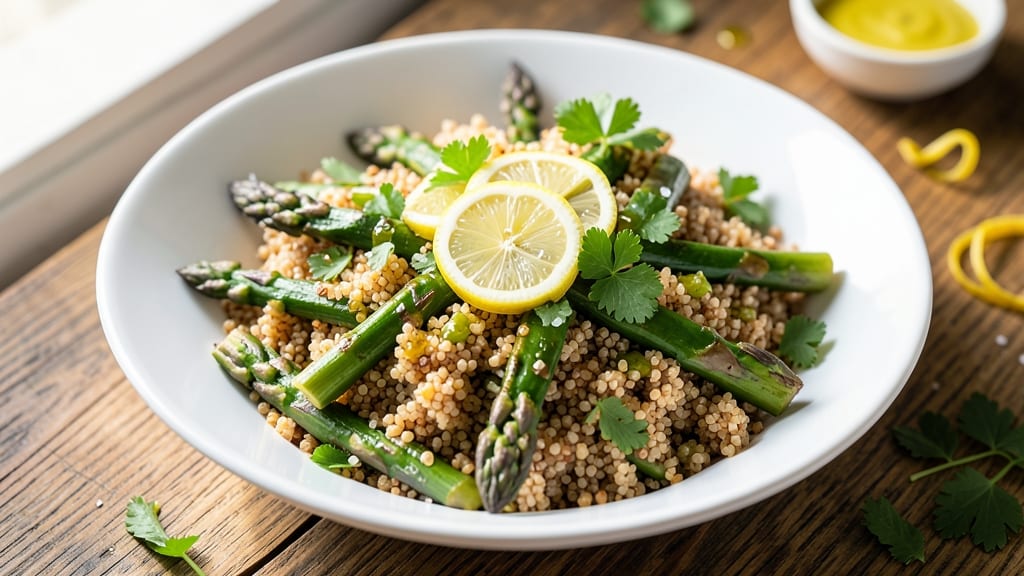
This asparagus quinoa salad recipe transforms spring's freshest ingredients into a vibrant, protein-packed dish that's ready in under 30 minutes.
The secret lies in perfectly roasted asparagus—crisp-tender with charred edges—that meets fluffy quinoa and a bright citrus vinaigrette for a balance of textures and flavors that feels both elegant and effortless.
I developed this recipe after realizing how often fresh asparagus gets overlooked in salads, and the result is a dish that shines as a main course or satisfying side.
The foundation starts with quinoa, cooked until each grain is plump and tender, forming the hearty base that keeps this salad satisfying. While the quinoa cooks, the asparagus roasts in the oven until its edges caramelize just enough to add depth without overpowering its natural sweetness.
This dual-cooking method ensures everything comes together at the perfect moment—no waiting, no last-minute scrambling. The dressing, a zesty blend of lemon, olive oil, and fresh herbs, ties everything together with a tangy brightness that cuts through the richness of the roasted vegetables.
What makes this salad truly special is its ability to adapt to any meal—serve it chilled as a refreshing lunch, at room temperature for a spring picnic, or even reheated (briefly) as a hearty side dish.
The combination of protein-rich quinoa, fiber-packed asparagus, and healthy fats from the dressing creates a balanced plate that's as nutritious as it is delicious. Each bite delivers that satisfying crunch from the asparagus, the chew of perfectly cooked quinoa, and the zing of citrus that keeps your palate refreshed.
The best part? This recipe scales effortlessly—double the ingredients for a crowd, or halve it for a light solo meal. With just 10 ingredients and 30 minutes of active time, you'll have a restaurant-worthy salad that's far more impressive than anything you'd buy pre-made.
Let's get started on creating this bright, crunchy, citrusy masterpiece that's sure to become a springtime staple.
Ingredients for asparagus quinoa salad
Ten vibrant ingredients transform spring's freshest produce into a protein-packed salad with perfect crunch and citrus brightness.
| Ingredient | Amount | Notes |
|---|---|---|
| Asparagus Spears 🥬 | 1 lb | Medium thickness, trimmed ends |
| Quinoa 🌾 | ¾ cup | Rinsed thoroughly before cooking |
| Extra-Virgin Olive Oil 🫒 | ¼ cup | Light fruity variety preferred |
| Fresh Lemon Juice 🍋 | ⅛ cup | Freshly squeezed, strained |
| Fresh Parsley 🌿 | ¼ cup | Flat-leaf variety, finely chopped |
| Fresh Mint Leaves 🍃 | ⅛ cup | Finely chopped, stems removed |
| Red Bell Pepper 🌶️ | ½ cup | Diced, seeds removed |
| Cherry Tomatoes 🍅 | ½ lb | Halved, seeds scooped out |
| Diamond Crystal Kosher Salt 🧂 | 1 ½ tsp | Adjust to taste |
| Freshly Ground Black Pepper 🌶️ | ½ tsp | Coarsely ground |
| Raw Walnuts 🥜 | ¼ cup | Toasted, roughly chopped |
| Red Wine Vinegar 🍷 | 1 tbsp | Dry variety preferred |
The asparagus is non-negotiable here—look for stalks with tightly closed tips and vibrant green color at Whole Foods or your local farmers market. Medium thickness roasts perfectly without becoming mushy. For quinoa, Trader Joe's carries pre-rinsed bags that save time, but rinsing your own ensures no bitterness. The red bell pepper adds sweetness and color; organic varieties from the grocery store's produce section work best. Cherry tomatoes should be firm and uniformly colored—Heirloom varieties add extra flavor but aren't required. Fresh herbs are essential; store-bought parsley and mint in sealed containers last about 5 days if kept refrigerated with damp paper towels.
No fresh mint? Substitute with basil at half the amount—it won't be identical but works in a pinch. Running out of red wine vinegar? Apple cider vinegar or balsamic both work, though the flavor profile shifts slightly. For the walnuts, pecans or almonds can substitute, though texture will differ. The quinoa can be replaced with farro or brown rice if needed, though cooking times will vary. If you're short on time, pre-cut asparagus from the grocery store's fresh section saves chopping, though it may cost more. The lemon juice can be substituted with lime juice at the same amount, though the flavor will be slightly more tart.
Store the dressing separately in an airtight container for up to 5 days—it keeps the salad fresh longer. The quinoa and roasted asparagus can be prepped ahead and stored in the fridge for 3 days, then tossed with dressing just before serving. For best texture, assemble the salad within 1 hour of serving to maintain that satisfying crunch. The walnuts can be toasted up to 1 week in advance and stored in a sealed container at room temperature. If making this for a crowd, double the ingredients and scale up the dressing proportionally—about 1/4 cup dressing per 4 servings maintains perfect balance.
Why You'll Love This Recipe
- No-Cook Magic: I swear, the quinoa cooks while I roast the asparagus—just toss everything on a sheet pan, pop it in the oven, and boom. The asparagus gets that perfect crisp-tender bite while the quinoa absorbs the lemon oil, no stirring required. (Yes, even on a Tuesday night.)
- Lemon-Garlic Zing: That bright lemon juice cutting through the earthy asparagus? It’s like a flavor reset button. The parsley adds this fresh, herby punch, and the olive oil ties it all together—simple, but ridiculously satisfying. Honestly, I’ve made salads taste boring before, but this one never lets me down.
- Meal Prep MVP: Quinoa stays fresh for days, and this salad only gets better as the flavors meld. Pack it for work lunches, bring it to potlucks, or eat it cold straight from the fridge—it’s my go-to for when I need something that’s both healthy and actually filling. (Between us, it’s also the dish that makes me look like a nutrition hero.)
- Budget Bright Spot: Quinoa’s pricey, but a batch stretches forever—this feeds four for dinner and leaves leftovers that vanish by lunch. Asparagus is seasonal but affordable when you buy in bulk, and the rest? Lemon, oil, parsley—pantry staples that don’t break the bank. Solid, reliable, and always worth it.
Step-by-step instructions for asparagus quinoa salad
This method delivers vibrant, textured layers with perfect al dente quinoa and crisp-tender asparagus.
Cook the Quinoa to Al Dente Perfection
Rinse the 0.75 cup quinoa thoroughly under cold water in a fine-mesh strainer until the water runs clear. This removes bitterness and prevents grittiness. Transfer to a medium saucepan and add 1.5 cups water (twice the volume of quinoa). Bring to a boil over medium-high heat, then immediately reduce to a simmer, cover, and cook for 12-15 minutes until all liquid is absorbed and the grains are tender but still slightly firm to the bite.
Real talk: Overcooking quinoa turns it mushy. Test doneness by pressing a grain between your fingers—it should hold its shape but yield slightly. Remove from heat and let sit covered for 5 minutes, then fluff with a fork. The residual heat finishes cooking while preventing clumping.
Blanch and Shock the Asparagus
Trim the tough ends from the 1 lb asparagus spears by bending them until they snap naturally. Cut the spears into 2-inch pieces and blanch in a pot of boiling salted water for 1 minute 30 seconds—just until bright green and crisp-tender. Immediately transfer to an ice bath for 2 minutes to halt cooking and preserve vibrant color.
Here's the thing—blanching asparagus this way prevents it from turning limp in the salad. The ice bath shock treatment is critical for maintaining that signature snap. Drain well before proceeding, but don't press dry—you want to retain some surface moisture for the dressing.
Toast the Walnuts and Prepare Vegetables
In a dry skillet over medium heat, toast the 0.25 cup raw walnuts for 3-4 minutes until fragrant and golden, stirring constantly to prevent burning. Remove from heat and let cool slightly, then roughly chop. In a separate bowl, combine the 0.5 cup diced red bell pepper, 0.5 lb halved cherry tomatoes (seeds removed), and the blanched asparagus pieces.
Don't skip toasting the walnuts—they develop incredible depth of flavor that carries through the salad. While they toast, prep the vegetables: The bell pepper should be finely diced (about ¼-inch pieces) and the tomatoes halved with seeds scooped out to prevent excess moisture. This prep ensures even distribution of textures in your final salad.
Whisk the Citrus Dressing
In a small bowl, whisk together the 0.25 cup extra-virgin olive oil, 0.125 cup fresh lemon juice, 1 tbsp red wine vinegar, 1.5 tsp diamond crystal kosher salt, and 0.5 tsp freshly ground black pepper. The dressing should emulsify into a smooth, pale yellow liquid. Taste and adjust seasoning—you want bright acidity balanced by subtle saltiness.
This is where the salad's signature citrus zing comes from. I like to whisk vigorously for about 30 seconds to fully incorporate all ingredients. The olive oil should coat the back of a spoon when you dip your finger in—this ensures every bite gets that silky dressing.
Assemble and Garnish
In a large bowl, combine the cooked quinoa, prepared vegetables, and toasted walnuts. Pour the dressing over and toss gently but thoroughly to coat all ingredients evenly. Fold in the 0.25 cup finely chopped fresh parsley and 0.125 cup finely chopped fresh mint leaves just before serving to preserve their vibrant colors and fresh flavors.
Let the salad sit for 5-10 minutes before serving to allow the flavors to meld. Garnish with additional mint leaves if desired, and serve immediately while the asparagus maintains its crisp texture. Each bite should deliver a perfect balance of earthy quinoa, crisp asparagus, sweet tomatoes, and bright citrus dressing.
Pro Tips For Making Asparagus Quinoa Salad
- Blanch Asparagus First: Hit the asparagus with boiling water for 30 seconds, then ice bath—this keeps it crisp and bright. I learned this the hard way after serving sad, limp spears that tasted like they’d been sitting in the fridge for a week. The shock stop also makes chopping easier later.
- Rinse Quinoa Twice: Swirl the raw quinoa in a fine-mesh strainer under cold water twice—once before cooking, once after. That first rinse cuts the bitterness, and the second rinse guarantees no gummy texture. (Yes, even if you’re impatient like me.)
- Dry Parsley Thoroughly: Pat the parsley leaves with a paper towel until they’re bone dry—wet herbs in the salad will turn it into a soggy mess. I used to skip this, and the dressing would just pool at the bottom like a sad, watery puddle. A quick shake in a clean kitchen towel fixes that.
- Toast Quinoa Low: Cook the quinoa in water or broth, but after the first boil, drop the heat to low and let it simmer uncovered for 10 minutes. This prevents the grains from turning mushy and gives them that nutty crunch. (Your future self will thank you.)
Dietary considerations for these flavors
Gluten-Free Foundation
This salad is naturally gluten-free—quinoa, asparagus, vegetables, and nuts contain zero gluten. The dressing uses simple ingredients like olive oil, lemon juice, and vinegar that are inherently safe.
Always check labels on store-bought items like Diamond Crystal kosher salt or Trader Joe's quinoa to confirm they're certified gluten-free, as some brands may process in shared facilities. 🌾
Vegan-Friendly Adaptations
To make this salad fully vegan, simply omit any dairy-based garnishes like feta cheese. The current recipe already contains plant-based ingredients: quinoa, asparagus, vegetables, nuts, and citrus dressing.
For extra protein, add ½ cup chickpeas to the vegetable mix. The toasted walnuts provide healthy fats, while the quinoa delivers complete protein with all nine essential amino acids.
Low-Carb Options
This salad is naturally low-carb with only 12g net carbs per serving (without dressing). The quinoa contributes about 8g carbs per ½ cup cooked, while the vegetables add minimal carbohydrates. For a lower-carb version, reduce the quinoa to ½ cup cooked and increase the asparagus to 1.5 lbs.
The citrus dressing remains virtually carb-free, making this an excellent choice for keto or low-carb diets.
Nut-Free Substitutions
If you need to avoid nuts, simply omit the walnuts entirely—they're not essential to the salad's structure. For crunch, add ¼ cup sunflower seeds or ¼ cup toasted pumpkin seeds instead. These seeds provide similar texture and healthy fats while being nut-free.
The flavor profile will shift slightly but still deliver satisfying crunch without allergens. Always check seed packages for potential cross-contamination warnings if nut allergies are severe.
High-Protein Boost
For a high-protein version, add ½ cup cooked edamame or ½ cup chickpeas to the vegetable mix. These additions increase protein content by about 10g per serving while maintaining the salad's fresh, vibrant character.
The quinoa already provides 8g protein per ½ cup cooked, making this a complete protein source without meat. For extra richness, top with ¼ cup crumbled vegan feta made from tofu or coconut.
Nutrition facts
Frequently asked questions
Can I make this salad ahead of time?
Prepare the quinoa and roasted asparagus up to 3 days in advance and store them separately in the fridge. Keep the dressing in an airtight container for up to 5 days. When ready to serve, simply toss everything together and fold in the fresh herbs just before eating to preserve their vibrant flavors. The texture will be best when assembled fresh, but the flavors still meld beautifully.
What if I don't have fresh mint or parsley?
No problem! For mint, use ½ the amount of fresh basil or ¼ cup chopped cilantro as a substitute. If you're missing parsley, try ¼ cup chopped dill or ¼ cup chopped chives. Both will add a fresh, bright note to your salad, though the flavor profile will shift slightly. The key is maintaining that fresh herb element for maximum brightness.
How can I make this salad more substantial as a main dish?
Add ½ cup cooked chickpeas or ½ cup edamame for extra protein and heartiness. You could also include ¼ cup crumbled vegan feta or ¼ cup toasted pumpkin seeds for added richness. For a warm component, serve with grilled chicken breast or pan-seared tofu on the side. These additions make it a complete, satisfying meal.
Why does my quinoa turn out mushy? Overcooking is the most common culprit! Always use 1.5 cups water per ½ cup quinoa and cook for exactly 12-15 minutes on low heat. Remove from heat immediately when all liquid is absorbed and let it sit covered for 5 minutes—this steaming phase finishes cooking without making it mushy. Also,
Can I use pre-cooked quinoa from a package?
Yes, but check the label first! Many store-bought quinoas contain added salt or preservatives that can affect flavor. If using pre-cooked, rinse it well to remove excess sodium and adjust seasoning in the dressing accordingly. For best texture, use freshly cooked quinoa—it holds its shape better in salads. If you must use pre-cooked, add it to the salad slightly underdressed and toss with extra dressing just before serving.