
Salads
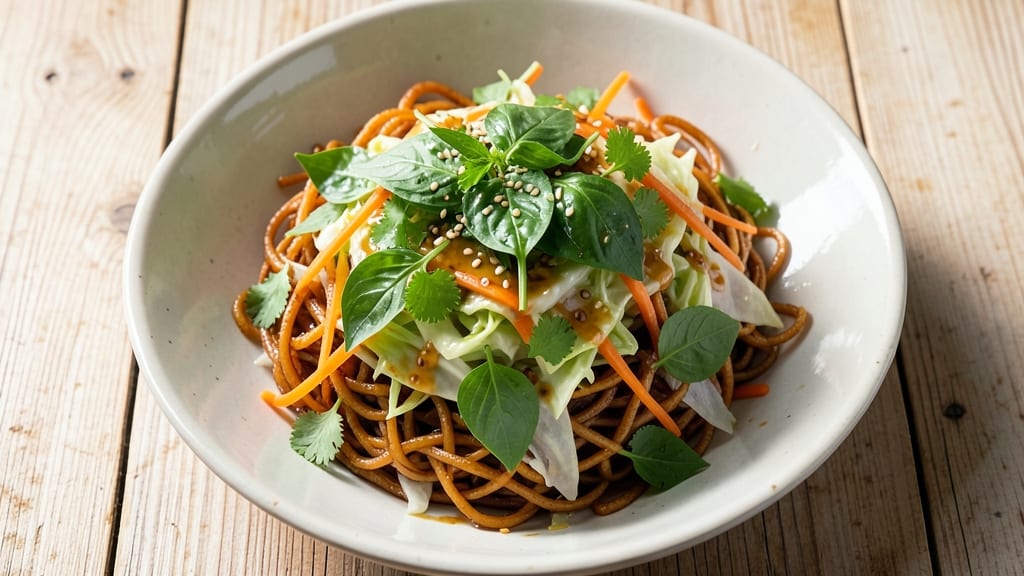
This Asian Thai salad recipe delivers the perfect balance of crispy rice noodles, vibrant fresh herbs, and a tangy lime-lemongrass dressing that transports you to a bustling Bangkok street market.
The secret lies in toasting the rice noodles until they're golden and crisp at the edges while keeping them tender inside—a technique that transforms ordinary noodles into a textural masterpiece.
I developed this recipe after years of experimenting with Thai flavors, and it's now my go-to for both quick weeknight dinners and impressive shared plates.
The dressing is where the magic happens: a bright, aromatic blend of lime juice, fish sauce, lemongrass, and a touch of palm sugar that creates the signature Thai balance of sweet, sour, and umami.
Fresh herbs like Thai basil, cilantro, and mint add layers of complexity, while shredded cabbage and carrots bring satisfying crunch. What makes this salad truly special is its adaptability—add grilled shrimp or chicken for protein, or keep it vegetarian with tofu or edamame.
The crispy noodles hold up beautifully, soaking up the dressing without turning soggy.
What you'll end up with is a salad that's as visually stunning as it is delicious—bright green herbs contrasting with golden noodles, all drizzled with that vibrant dressing. The flavors are bold but harmonious: the crispy noodles provide texture, the dressing delivers tangy brightness, and the fresh vegetables add freshness.
This isn't just another salad; it's a complete meal that's satisfying, balanced, and packed with authentic Thai flavors you can make at home.
Perfect for lunch, dinner, or even as a light main course, this Thai salad comes together in just 20 minutes with minimal prep. The key is working efficiently—chopping all your vegetables while the dressing marinates and the noodles toast.
Serve it immediately while everything is crisp and fresh, or pack it for a lunch that tastes like you spent hours in the kitchen. Let's get started!
Ingredients for asian thai salad
Crispy noodles, fresh herbs, and tangy dressing—just 15 ingredients for a Thai salad that tastes like Bangkok.
| Ingredient | Amount | Notes |
|---|---|---|
| Rice Noodles 🍜 | 8 oz | Thin rice noodles, uncooked |
| Thai Basil Leaves 🌿 | ½ cup | Fresh, stems removed |
| Cilantro Leaves 🌿 | ¼ cup | Fresh, chopped |
| Fresh Mint Leaves 🍃 | ¼ cup | Fresh, chopped |
| Green Cabbage 🥬 | 2 cups | Shredded, thinly sliced |
| Carrots 🥕 | 2 medium | Shredded, medium size |
| Lemongrass 🌿 | 3 inches | White part only, thinly sliced |
| Lime Juice 🍋 | ½ cup | Freshly squeezed |
| Fish Sauce 🍶 | 2 tbsp | Red Boat preferred |
| Palm Sugar 🍯 | 2 tbsp | Or substitute brown sugar |
| Vegetable Oil 🫒 | 3 tbsp | For toasting noodles |
| Garlic Cloves 🧄 | 2 cloves | Minced |
| Salt 🧂 | ½ tsp | Kosher or sea salt |
| Black Pepper 🌶️ | ¼ tsp | Freshly ground |
| Grilled Shrimp 🦐 | ½ lb | Optional protein, chopped |
The rice noodles are the star here. Thai rice noodles (the thin kind) are essential—they toast up perfectly without turning mushy. Asian markets carry them in bulk, but Trader Joe's has them in packages too. Look for ones labeled 'rice noodles' or 'sen lek'—avoid the thick pad thai noodles. Fresh herbs make all the difference: Thai basil has that anise-like kick, but regular basil works in a pinch. Just make sure they're bright green and crisp. The cabbage should be crisp and pale green—avoid wilted outer leaves.
No Thai basil? Regular basil plus a pinch of anise seeds gets you close. Running short on fish sauce? Soy sauce plus a dash of sugar mimics the umami, though it won't be identical. Palm sugar unavailable? Brown sugar works perfectly. The carrots can be baby carrots if that's what's handy—just julienne them for even texture. For the lemongrass, only use the white, inner part (about 3 inches per stalk). The green tops are tough and bitter. Want to make it vegetarian? Skip the shrimp and add extra tofu or edamame for protein.
Toast the noodles in batches—they burn fast. Store leftovers in an airtight container with a paper towel to absorb moisture. Keeps for 3 days in the fridge, though the noodles get softer over time. The dressing can be made a day ahead and stored in a sealed jar. For extra crunch, re-toast noodles for 2 minutes before serving leftovers. The shrimp, if using, should be cooked separately and added just before serving to keep it tender.
Why You'll Love This Recipe
- No-Cook Crunch: The cabbage stays crisp even after sitting—no sad wilted lettuce here. Toss it in raw, and you’ve got that perfect texture without boiling or wilting.
- Herb-Packed Punch: Thai basil, cilantro, and mint? That trio is chef’s kiss—bright, aromatic, and impossible to resist. Honestly, I’ve seen people take seconds just from the scent alone.
- Lunchbox Hero: Between us, this keeps perfectly for 3 days in the fridge. Pack it cold or at room temp—no reheating needed, and it’s my go-to for work lunches or picnics.
- Budget-Friendly Staples: Rice noodles and cabbage stretch this salad into a full meal without breaking the bank. I make it twice a month, and it’s always the first thing to disappear.
Step-by-step instructions for crispy rice noodles with tangy lime-lemongrass dressing
Here's how to create restaurant-quality Thai salad with perfectly toasted noodles and vibrant flavors.
Prepare the Crispy Rice Noodles
Heat a large skillet over medium-high heat and add the 3 tablespoons vegetable oil. Once hot, add the 8 oz rice noodles in a single layer and stir continuously for 3-4 minutes until they turn a beautiful golden brown color and begin to crisp slightly at the edges.
This toasting step is crucial for that authentic Thai crunch. You'll know they're ready when they look like delicate, crispy strands rather than the soft noodles you're used to. Remove from heat immediately and transfer to a large mixing bowl - they'll continue to crisp as they cool.
Assemble the Fresh Vegetable Mixture
While the noodles toast, shred the 2 medium carrots into thin matchsticks and thinly slice the 2 cups green cabbage into bite-sized pieces. Add both to the warm mixing bowl with the toasted noodles.
Next, finely chop the 0.5 cup Thai basil leaves, 0.25 cup cilantro leaves, and 0.25 cup fresh mint leaves separately, then add them to the bowl. Toss everything together gently but thoroughly to distribute the fresh herbs evenly through the noodles and vegetables.
Make the Tangy Lime-Lemongrass Dressing
In a small bowl, combine the 0.5 cup lime juice, 2 tablespoons fish sauce, and 2 tablespoons palm sugar. Stir until the sugar dissolves completely, creating a smooth, slightly syrupy dressing. Add the 3 inches lemongrass (thinly sliced) and 2 cloves minced garlic, then let the mixture sit for 5 minutes to allow the flavors to meld.
This is where the magic happens. The acidity of the lime brightens the flavors while the fish sauce adds umami depth. The lemongrass and garlic infuse the dressing with their aromatic qualities, creating that signature Thai flavor profile.
Combine and Season the Salad
Pour the dressing over the noodle and vegetable mixture in the large bowl. Add the 0.5 tsp salt and 0.25 tsp black pepper, then toss everything together until the noodles and vegetables are evenly coated with the dressing.
Taste and adjust the seasoning if needed - you might want to add a bit more fish sauce for saltiness or a splash more lime juice for acidity. The salad should be balanced with bright, tangy, slightly sweet, and umami flavors.
Add Protein and Serve Immediately
Gently fold in the 0.5 lb grilled shrimp (chopped into bite-sized pieces) just before serving to keep them warm and prevent them from absorbing too much of the dressing. Serve the salad immediately while the noodles are still crisp and the dressing is fresh.
This dish is best enjoyed right away when the noodles are at their crispest. Garnish with additional fresh herbs if desired, and serve with extra lime wedges on the side for those who like it extra tangy.
Pro Tips For Making Asian Thai Salad
- SOAK NOODLES UNTIL FLEXIBLE: I learned this the hard way—rice noodles that aren’t properly hydrated turn to mush when tossed with dressing. Soak them in warm water for 10-15 minutes until they’re pliable but still hold shape. Drain and rinse with cold water immediately after to stop cooking. (Yes, even if you’re impatient like me.)
- STACK HERBS LAST MINUTE: Thai basil, cilantro, and mint lose their bright punch when sitting in dressing too long. Keep them whole until the very end—toss them in just before serving so they stay vibrant and crisp. If you’re prepping ahead, store them separately and add them fresh.
- SHRED CABBAGE THIN AND DRY: Thick cabbage shreds stay crunchy but can overpower the dish. Use a mandoline or sharp knife for paper-thin slices, then pat them very dry with a towel. Wet cabbage releases water, diluting the dressing and making the salad soggy. (Your future self will thank you.)
- TOSS WITH DRY HANDS: Wet fingers make noodles stick together like glue. After draining the noodles, give them a quick shake in the colander to fluff them up, then toss with the dressing using completely dry hands. This keeps them separate and ready to grab. (I skip this when I’m lazy, but the dish is noticeably better when I don’t.)
Pro cooking tips for great asian thai salad
Toast Noodles Perfectly
Use a large skillet with medium-high heat and 3 tbsp vegetable oil to toast the 8 oz rice noodles in a single layer. Stir constantly for 3-4 minutes until golden brown and crisp at the edges.
I recommend working in batches if your pan isn't large enough—overcrowding steams the noodles instead of crisping them. 🔥
Remove them immediately when done—they continue to crisp as they cool. Spread them on a wire rack if you have one to maintain maximum crunch. This toasting technique transforms soft noodles into crispy, flavorful strands that hold up beautifully in the salad.
Balance the Dressing
The dressing is where Thai flavors shine, but it needs careful balancing. Start with 0.5 cup lime juice, 2 tbsp fish sauce, and 2 tbsp palm sugar—this creates the perfect sweet-sour-umami foundation. Let it sit for 5 minutes before tossing to allow the flavors to meld.
Taste as you go: need more tang? Add 1 tbsp lime juice. Too salty? A splash of water dilutes the fish sauce.
For extra depth, muddle the 3 inches lemongrass and 2 cloves garlic directly in the dressing. This infuses the oil with their aromatic qualities, giving the salad that authentic Thai aroma. Red Boat fish sauce is my go-to—it has the perfect balance of salt and umami without overpowering.
Prep Vegetables Efficiently
Shred the 2 medium carrots into thin matchsticks (about ¼-inch wide) and slice the 2 cups green cabbage into bite-sized pieces while the noodles toast. Use a mandoline for even carrot shreds if you have one—I love the OXO Good Grips model for safety and precision.
Keep everything in one bowl to avoid cross-contamination with raw proteins like shrimp.
Chop the herbs last: Thai basil, cilantro, and mint should be finely minced and added just before serving to preserve their freshness. If using shrimp, cook it separately and add it right before tossing to keep it warm and tender.
This keeps the salad components at their peak texture and temperature.
Serve Immediately
This salad is best enjoyed right away when the noodles are crisp and the dressing is fresh. The longer it sits, the softer the noodles become.
I like to plate it in wide, shallow bowls to showcase the vibrant colors—golden noodles, green herbs, and white shredded veggies create a stunning visual contrast.
Garnish with extra lime wedges on the side and a sprinkle of crushed peanuts (about 2 tbsp) for added crunch. Serve with steamed jasmine rice on the side if you want a heartier meal. The combination of textures—crispy, fresh, and creamy—makes every bite exciting. 💫
Nutrition facts
Frequently asked questions
Can I make this Thai salad without fish sauce?
Yes! For a vegetarian version, replace the 2 tbsp fish sauce with 2 tbsp soy sauce plus 1 tsp sugar. This mimics the umami and saltiness while keeping the sweet-sour balance. For vegans, use coconut aminos instead of soy sauce. The salad will still taste amazing—just slightly less complex than the traditional version.
How do I store leftovers without making the noodles soggy?
Store the salad in an airtight container with a paper towel pressed on top to absorb moisture. Keep it refrigerated for up to 3 days. When reheating, spread the noodles on a baking sheet and toast at 350°F for 5 minutes to restore crispiness. Add fresh herbs and dressing just before serving.
What's the best way to cook the shrimp for this salad?
Pat the shrimp dry, season with ½ tsp salt and ¼ tsp black pepper, then grill or pan-sear over medium-high heat for 2-3 minutes per side until opaque. Let cool completely before chopping into bite-sized pieces. Add them last to keep the salad fresh and prevent the shrimp from absorbing too much dressing.
Can I use regular basil instead of Thai basil?
You can substitute, but Thai basil has a distinct anise-like flavor that's key to authentic Thai dishes. If using regular basil, add ¼ tsp ground anise seed or ½ tsp dried basil to enhance the flavor. The salad will still taste good—just slightly different from traditional versions.
Is this salad spicy?
Not traditionally—this recipe focuses on bright, tangy flavors without heat. For spice, add ½ tsp chili flakes or 1 sliced Thai chili to the dressing. Adjust to taste: start with less and add more gradually. The natural spiciness comes from the fresh herbs and garlic, not added heat.