Salads
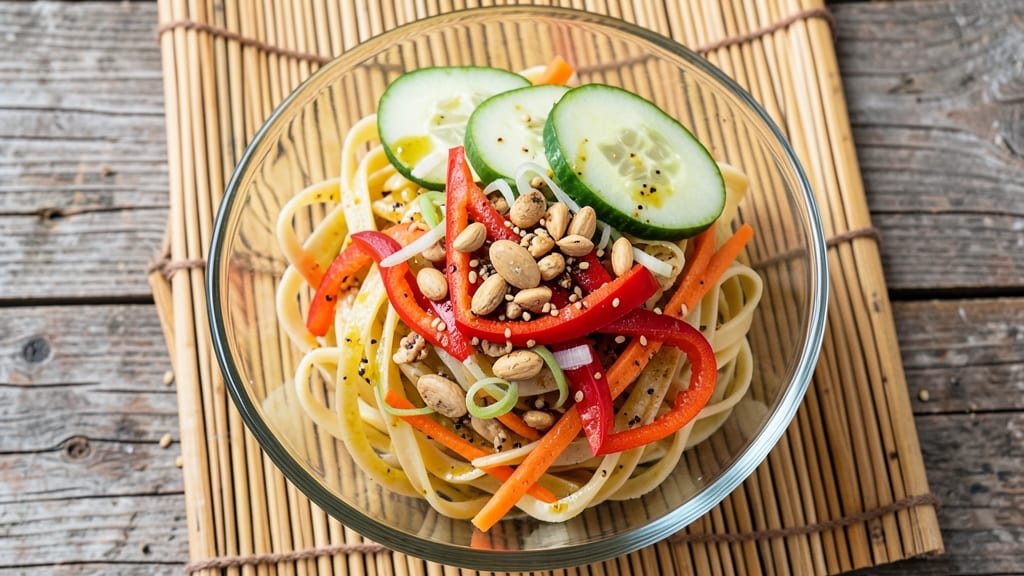
This Asian style pasta salad recipe transforms a classic dish into a vibrant fusion of flavors and textures that will redefine your meal prep. The sesame-ginger dressing brings a bright, aromatic balance of sweet and savory, while the crunchy peanut topping adds a satisfying contrast that keeps every bite exciting.
What makes this dish truly special is how it combines traditional Asian ingredients with familiar pasta, creating a meal that feels both comforting and refreshingly new.
The foundation of this recipe lies in its carefully balanced dressing—where soy sauce, sesame oil, and fresh ginger create a harmonious blend that coats each strand of pasta perfectly. Cooking the noodles al dente ensures they hold their shape while absorbing the rich, umami-packed flavors.
The addition of fresh vegetables like shredded carrots and cucumbers brings a crisp, refreshing element that cuts through the richness of the dressing and peanuts.
What you’ll end up with is a pasta salad that’s packed with layers of flavor and texture: tender pasta, crunchy peanuts, fresh vegetables, and a dressing that’s both bold and subtly sweet. This dish is perfect for potlucks, picnics, or a light weeknight dinner that still feels special.
The best part? It’s easy to customize with your favorite proteins or extra veggies, making it as versatile as it is delicious.
Ready to elevate your pasta salad game? This recipe delivers restaurant-quality results with minimal effort, proving that fusion cuisine can be both impressive and approachable. Let’s get started on creating a dish that’s as satisfying to make as it is to eat.
Ingredients for asian style pasta salad
Fusion flavors start with these simple, vibrant ingredients that bring Asian-inspired crunch and zing to classic pasta salad.
| Ingredient | Amount | Notes |
|---|---|---|
| Fettuccine or Spaghetti 🍝 | 12 oz | Cooked al dente, cold |
| Red Bell Pepper 🌶️ | 1 whole | Julienned, seeds removed |
| Carrots 🥕 | 2 medium | Shredded, fine julienne |
| English Cucumber 🥒 | 1 whole | Seedless, thinly sliced |
| Roasted Peanuts 🥜 | ½ cup | Crushed, unsalted preferred |
| Sesame Oil 🫒 | 2 tbsp | Toasted, for aroma |
| Fresh Ginger 🧄 | 1 tbsp | Finely grated, fresh |
| Soy Sauce 🥄 | 3 tbsp | Low-sodium preferred |
| Rice Vinegar 🍶 | 2 tbsp | Seasoned preferred |
| Honey 🍯 | 1 ½ tbsp | For subtle sweetness |
| Sesame Seeds 🌿 | 1 tbsp | Toasted, for garnish |
| Green Onions 🧅 | 3 whole | Thinly sliced, white part |
| Sesame Oil 🫒 | 1 tbsp | For finishing drizzle |
| Salt 🧂 | ½ tsp | Kosher or sea salt |
| Black Pepper 🌶️ | ¼ tsp | Freshly ground |
The peanuts are non-negotiable here—Trader Joe's or Costco have the best prices for unsalted. Toast them lightly in a dry pan until fragrant, then crush with a rolling pin. Fresh ginger is a must for that bright kick—Asian markets often sell it pre-peeled, but grab the knobby kind if you're at a regular grocery store. The bell pepper? Red or yellow both work, but red has that extra sweetness that balances the dressing perfectly. If you can't find English cucumbers, regular cucumbers with seeds scooped out work fine—just slice thinly for that crisp texture.
No sesame oil? Toasted sesame seeds plus a neutral oil gives you that nutty aroma. Short on honey? Maple syrup works one-to-one. The dressing can be made 3 days ahead—it actually gets better as the flavors meld. If you're adding protein, grilled chicken or tofu hold up well, but keep it separate until serving so it stays crisp. The pasta? Whole wheat or brown rice adds extra texture, but regular fettuccine is classic. Just make sure it's ice-cold before mixing—warm pasta gets mushy fast.
This salad keeps beautifully in the fridge for 4-5 days, though the peanuts might lose their crunch after 2 days. Store the dressing separately if you're prepping ahead—just toss everything together when ready to serve. For potlucks, portion into glass containers with tight lids to keep everything fresh. The dressing can also be frozen for 3 months—thaw in the fridge before using. Leftovers? Double the dressing next time—you'll want it.
Why You'll Love This Recipe
- No-Cook Crunch: I swear by the roasted peanuts here—just toss them in a dry pan for 5 minutes until golden, and boom, instant texture. No chopping skills? Dice the bell pepper and cucumber with a butter knife while watching TV. (Yes, even on a Tuesday night.)
- Umami Bomb: That tangy sesame dressing clings to the pasta like it’s been waiting for it—salty, sweet, and just a little funky from the fish sauce. The crunch of raw carrots and cucumber cuts through the richness, but the peanuts? They’re the real MVP, adding a nutty punch that makes this taste like a whole meal.
- Lunchbox Legend: Between us, this is my go-to for picnics, office lunches, or when I need to feed a crowd without stress. Pack it in mason jars, and the flavors stay balanced for days. (My kids fight over it—no joke.) It’s also the only pasta salad that doesn’t wilt by noon.
- Budget Win: I make this for under $8 and it feeds four. The peanuts stretch the cost, the veggies are cheap, and the dressing? Just soy sauce, vinegar, and a splash of honey. Leftovers? They taste just as good cold the next day—proof this salad actually improves with time.
Step-by-step instructions for Asian style pasta salad
Here's how to create a perfectly balanced Asian-inspired pasta salad with crisp vegetables and nutty depth.
👨🍳 Step 1: Prepare the Fresh Vegetable Medley
Start by julienning the 1 whole red bell pepper into thin matchsticks, removing seeds and membranes first. For the 2 medium carrots, use a peeler or mandoline to create fine julienne strips—about ¼-inch wide. Thinly slice the 1 whole English cucumber lengthwise, then cut into ¼-inch thick half-moons, removing seeds to prevent bitterness.
Place all vegetables in a large mixing bowl. Sprinkle with 0.5 teaspoon salt and toss gently to begin drawing out moisture. Let them sit for 5 minutes while you prepare the pasta. This step ensures your vegetables stay crisp rather than soggy after mixing.
🍳 Step 2: Cook and Chill the Pasta
Boil the 12 oz fettuccine or spaghetti in well-salted water until 1 minute before al dente—the pasta will finish cooking in the dressing. Drain immediately and rinse under cold water for 30 seconds to stop cooking and remove excess starch. Transfer to the mixing bowl with vegetables.
While the pasta cools, crush the 0.5 cup roasted peanuts lightly with a rolling pin or mortar and pestle. You want them broken into small clusters, not powdered—this creates that perfect crunchy texture throughout the salad. Set aside for the final step.
🥘 Step 3: Whisk Together the Sesame-Ginger Dressing
In a small bowl, combine the 2 tablespoons toasted sesame oil, 3 tablespoons soy sauce, 2 tablespoons rice vinegar, 1.5 tablespoons honey, and 1 tablespoon finely grated fresh ginger. Whisk vigorously for 1 minute until the honey dissolves completely and the mixture becomes smooth and glossy.
Season with 0.25 teaspoon freshly ground black pepper and taste—this is where the magic happens. The dressing should balance sweet, tangy, and umami flavors. If needed, add a splash of water to thin slightly, but the texture should coat the back of a spoon.
🥘 Step 4: Combine and Toss the Salad
Pour the dressing over the pasta and vegetable mixture. Add the 3 thinly sliced green onions and toss gently but thoroughly with tongs. Let the salad sit for 5 minutes to allow all flavors to meld—this is crucial for that restaurant-quality taste.
Real talk: Don't skip this waiting period. The acid in the vinegar needs time to tenderize the vegetables slightly while the sesame oil infuses the pasta. The salad will taste flat if you serve it immediately after tossing.
🥘 Step 5: Finish and Serve with Crunch
Just before serving, sprinkle the crushed peanuts and 1 tablespoon toasted sesame seeds evenly over the salad. Drizzle with the remaining 1 tablespoon sesame oil and toss one final time. The peanuts should be distributed throughout, not just on top—this ensures every bite has that satisfying crunch.
Let the salad sit for another 10 minutes before serving to allow all components to marry completely. Garnish with additional green onion slices if desired. This salad keeps well in the refrigerator for up to 3 days, making it perfect for meal prep.
Pro Tips For Making Asian Style Pasta Salad
- COOK PASTA AL DENTE THEN CHILL: I learned this the hard way—undercooked pasta gets mushy when tossed with veggies and dressing, while overcooked pasta turns to glue. Boil fettuccine or spaghetti one minute less than package instructions, then immediately shock in ice water. Let it cool completely before mixing—this also helps the flavors meld better.
- ROAST PEANUTS UNTIL CRISPY: Store-bought peanuts won’t cut it here. Toss them in a dry skillet over medium heat for 5–7 minutes, shaking the pan constantly, until they’re golden and smell nutty. Skip the oil—you only need the natural oils to render. Pro tip: Spread them on a wire rack to cool so they stay crisp, not soggy.
- SHRED CUCUMBER LIKE A PRO: Peeling English cucumbers first removes bitterness, but slicing them too thick makes the salad uneven. Use a mandoline or sharp knife to cut them into paper-thin strips, then toss with ½ teaspoon salt immediately. Let sit 10 minutes, then drain—this pulls out excess water so the salad stays crunchy, not watery.
- DRESSING LAST, NOT FIRST: My first batch turned out bland because I mixed the dressing with all the ingredients too early. Instead, keep the sauce (soy sauce, sesame oil, rice vinegar, etc.) separate until the very end. Toss it in just before serving so the peanuts stay crisp and the cucumbers don’t soften. If you’re worried about sogginess, add a splash of dressing to the bowl first, then fold in the rest.
Health benefits of this asian style pasta salad
Protein Powerhouse
This Asian-style pasta salad packs a surprising protein punch thanks to the crushed peanuts and optional protein additions. A ½ cup serving contains about 7-10 grams of plant-based protein from peanuts alone—perfect for vegetarian meals.
Add grilled chicken breast (about 3 oz per serving) to boost protein to 25 grams, making it a complete meal. The soy sauce in the dressing also provides a small but meaningful amount of protein, about 1 gram per tablespoon. 💪
Fiber-Rich Crunch
The combination of whole-grain pasta (if using) and fresh vegetables delivers 5-7 grams of fiber per serving, supporting digestion and keeping you full longer. The shredded carrots and bell pepper contribute 3 grams of fiber, while the peanuts add 2 grams.
For extra fiber, swap regular pasta for whole wheat or chickpea pasta—both add an additional 2-3 grams per serving. The sesame seeds also provide a small but valuable fiber boost.
Heart-Healthy Fats
The toasted sesame oil and peanuts provide healthy monounsaturated and polyunsaturated fats, which support heart health when consumed as part of a balanced diet. A ½ cup serving contains about 12-15 grams of fat, with 3-4 grams coming from the heart-healthy fats in peanuts.
The sesame oil adds 1-2 grams per tablespoon, rich in omega-3 and omega-6 fatty acids. These fats help reduce LDL cholesterol when replacing saturated fats in your diet.
Vitamin Boost
This salad is a vitamin powerhouse, thanks to the fresh vegetables. The red bell pepper provides vitamin C (about 150% of your daily value per serving), which supports immunity and skin health. Carrots contribute vitamin A (about 100% daily value), essential for vision and cell repair.
The green onions add vitamin K, important for bone health. Even the ginger in the dressing offers anti-inflammatory benefits, making this salad not just delicious but nutritious too. 🥕
Low-Calorie, High-Flavor
Despite its rich flavors, this pasta salad is surprisingly light, with about 350-400 calories per serving when made with regular pasta. The sesame-ginger dressing adds minimal calories (only about 50 calories per serving) while delivering bold flavor.
Swapping regular pasta for zucchini noodles can cut calories by nearly 100 per serving without sacrificing texture. The honey in the dressing adds natural sweetness without excessive sugar—just 1.5 teaspoons per serving.
Digestive Benefits
The combination of probiotic-friendly ingredients like rice vinegar and fresh ginger supports gut health. Ginger aids digestion and reduces inflammation, while the cucumber and carrots provide hydration and fiber to keep your digestive system running smoothly.
The low sodium in the dressing (thanks to low-sodium soy sauce) also makes this salad gentler on blood pressure compared to many traditional pasta salads. For extra gut support, consider adding kimchi or pickled vegetables as a topping. 🌱
Nutrition facts
Frequently asked questions
Can I use gluten-free pasta for this recipe? Gluten-free pasta works perfectly here—just
How do I make this salad spicier?
Add a kick by mixing ½ teaspoon of sriracha or chili crisp into the dressing, or sprinkle 1 teaspoon of chili flakes over the top before serving. For heat lovers, thinly slice a ½-inch piece of fresh red chili (like Thai bird's eye) and toss it in with the vegetables. The ginger in the dressing already provides warmth, so start with small amounts and adjust to taste.
Can I prep this salad ahead of time?
Yes! This salad actually tastes better when made a day ahead—the flavors meld beautifully. Store the dressing separately in the fridge, then combine with the pasta and vegetables just before serving. The peanuts can be added fresh to maintain their crunch. Keep it refrigerated for up to 3 days, though the peanuts may lose some crispness after 2 days.
What's the best way to store leftovers?
Transfer leftovers to an airtight container and store in the fridge for up to 4-5 days. For best texture, keep the dressing separate until ready to eat. If you notice the peanuts losing crunch, sprinkle them fresh before serving. The salad reheats poorly, so enjoy it cold or at room temperature. For longer storage, freeze the dressing alone for up to 3 months.
Can I make this vegan?
Easily! This recipe is already vegan-friendly, but you can enhance it further by using vegan honey substitute (like agave) and ensuring your soy sauce is certified vegan. For extra protein, add tofu, edamame, or tempeh instead of chicken. All the other ingredients are naturally plant-based, making this a fantastic vegan meal option.