Salads
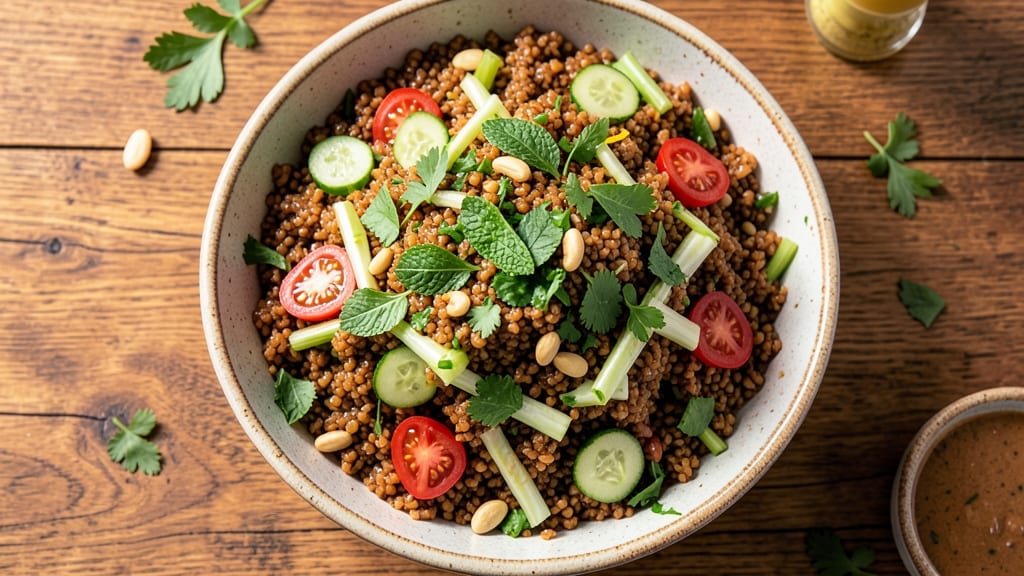
This Arabic tabbouleh salad recipe brings the vibrant flavors of the Middle East to your table with its signature herb-packed freshness. 🌿 The secret lies in properly soaking the bulgur wheat and finely chopping the parsley—traditional techniques that create the perfect texture.
Unlike many salads, tabbouleh gets better as it sits, allowing flavors to meld beautifully over time.
The dish is naturally vegetarian but can easily accommodate grilled chicken or fish for a protein boost. The bright lemon dressing cuts through the earthy bulgur, while crisp celery and tomatoes add refreshing crunch.
What sets this recipe apart is the balance of textures—tender bulgur, crisp vegetables, and fresh herbs that create an addictive bite.
Perfect for summer gatherings or as a refreshing side dish, this tabbouleh delivers restaurant-quality flavor with minimal effort. The preparation is straightforward, but the cultural authenticity makes it stand out.
Whether you serve it as a main course or a side, this salad will impress with its vibrant colors and complex flavors.
For those who love Middle Eastern cuisine, this recipe is a must-try. The combination of fresh herbs, tangy dressing, and hearty bulgur creates a dish that's both satisfying and light. Let's dive into the ingredients and instructions to bring this classic salad to life.
Ingredients for arabic tabbouleh salad
Herb-forward bulgur salad with vibrant textures and zesty lemon dressing—authentic Middle Eastern flavors simplified.
| Ingredient | Amount | Notes |
|---|---|---|
| Fine Bulgur Wheat 🌾 | 1 cup | Rinsed thoroughly before soaking |
| Fresh Flat-Leaf Parsley 🌿 | 2 cups | Stems removed, finely chopped |
| Fresh Mint Leaves 🌿 | ½ cup | Finely chopped, stems removed |
| English Cucumber 🥒 | 1 whole | Seeded, diced into 1/4-inch pieces |
| Medium Tomatoes 🍅 | 2 whole | Ripe, diced into 1/4-inch pieces |
| Fresh Celery Stalks 🧅 | 2 whole | Diced into 1/4-inch pieces |
| Red Onion 🧅 | ¼ cup | Finely diced, about 1/4 of a medium onion |
| Extra-Virgin Olive Oil 🫒 | ½ cup | High-quality, fruity variety |
| Fresh Lemon Juice 🍋 | ⅓ cup | About 2 lemons, freshly squeezed |
| Diamond Crystal Kosher Salt 🧂 | 1 ½ tsp | Adjust to taste after mixing |
| Freshly Ground Black Pepper 🌶️ | ½ tsp | Freshly cracked for best flavor |
| Ground Allspice 🌶️ | ¼ tsp | Optional, traditional Middle Eastern touch |
| Cold Water 💧 | 1 ½ cups | For soaking bulgur |
The bulgur is the foundation, and fine bulgur from a Middle Eastern market delivers the best texture. Look for brands like Al Wadi or Al Yaman if available, but regular fine bulgur works perfectly. Soaking time is critical—15 minutes in cold water softens it just enough without turning mushy. The parsley and mint should be the freshest you can find; organic from Whole Foods or your local farmers market ensures maximum flavor. For the celery, choose crisp stalks with bright green leaves—Trader Joe's consistently carries the best quality at a reasonable price. The tomatoes and cucumber should be vine-ripened and firm, respectively, to maintain that essential crunch.
No fresh parsley? Dried parsley at half the amount works in a pinch, but the flavor won't be the same. Substituting mint with more parsley or even cilantro (though it changes the flavor profile) can work if needed. For the bulgur, quinoa or couscous can replace it in a 1:1 ratio, though the texture will differ slightly. The lemon juice should be freshly squeezed—bottled juice lacks the bright acidity needed to cut through the earthy bulgur. If you're short on time, pre-chopped salad mix can replace the cucumber and tomato, though it won't have the same freshness. The allspice is optional but adds that subtle warmth traditional to authentic tabbouleh.
This salad tastes even better the next day as the flavors meld together. Store in an airtight container in the fridge for up to 3 days, though the parsley may wilt slightly. To revive, give it a good stir and add a splash of fresh lemon juice. For serving, I like to mound it on a large platter and garnish with extra herbs and a drizzle of olive oil—presentation matters in Middle Eastern cuisine. The dressing keeps separately for 1 week if stored properly, allowing you to dress the salad fresh each time for optimal texture.
Why You'll Love This Recipe
- No-Soaking Hassle: I’ll be real—most tabbouleh recipes make you soak bulgur for hours. Not this one. Just a quick rinse and 10 minutes later, that fine bulgur is fluffy and ready to marry the herbs. No waiting, no fuss.
- Herb Bomb Brightness: That mix of parsley and mint? It’s like sunshine in a bowl. The parsley’s sharp, fresh bite cuts through the cucumber’s cool crunch, while the mint adds this unexpected, bright lift—like a secret handshake from the Mediterranean.
- Picnic Party Star: Between us, this salad is my go-to for potlucks, beach days, or even a lazy Sunday spread. It holds up perfectly in a cooler, doesn’t wilt overnight, and pairs with grilled meats, flatbread, or just by itself when I’m too tired to cook.
- Budget Bright Spot: Fresh herbs and veggies can add up, but bulgur stretches this recipe into a feast. A single batch feeds four, and leftovers? They taste just as good the next day—no sad, wilted sides here. Plus, it’s cheaper than takeout, but way more impressive.
Step-by-step instructions for Arabic tabbouleh salad
Master this classic Middle Eastern salad with perfectly hydrated bulgur and vibrant herb layers.
👨🍳 Step 1: Soak the Bulgur Wheat
Place the 1 cup fine bulgur wheat in a medium bowl and cover it completely with the 1.5 cups cold water. I like to use a whisk to gently break up any clumps in the bulgur before adding water—this ensures even hydration. Let it soak for exactly 20-25 minutes until the water is fully absorbed and the bulgur has swollen to about double its original size.
Here's the thing—don't skip the soaking time. Bulgur needs this period to soften properly, which prevents a gritty texture in your finished salad. After soaking, drain any excess water through a fine-mesh strainer, pressing gently with your fingers to remove moisture. The bulgur should be tender but still hold its shape when squeezed.
🍳 Step 2: Prepare the Vegetable Base
In a large mixing bowl, combine the diced 1 whole English cucumber, 2 whole medium tomatoes, 2 whole fresh celery stalks, and 0.25 cup finely diced red onion. I use a mandoline for the cucumber and tomatoes to achieve those perfect ¼-inch dice—this ensures even texture throughout the salad. Give everything a gentle toss with your hands to distribute the vegetables evenly.
This is where the crisp texture comes from. The celery adds that satisfying crunch, while the cucumber and tomatoes provide juicy contrast. Don't skip the onion—it's essential for that authentic Middle Eastern flavor profile. The vegetables should be at room temperature before mixing, so take them out of the fridge about 15 minutes before assembling.
👨🍳 Step 3: Chop the Fresh Herbs
In a separate bowl, combine the 2 cups finely chopped fresh flat-leaf parsley and 0.5 cup finely chopped fresh mint leaves. I like to use a sharp chef's knife for this—fold the stems between the blade and your knuckles for better control. The herbs should be cut into small, even pieces that will distribute evenly throughout the salad.
This is the heart of tabbouleh. The parsley provides that classic fresh flavor, while the mint adds a bright, aromatic note. Don't use dried herbs—they won't give you that vibrant, fresh taste. I find that removing the stems first makes the chopping process much cleaner and more efficient. Give the herbs a taste at this stage—they should be intensely aromatic and slightly peppery.
🥘 Step 4: Combine All Ingredients
Add the soaked bulgur wheat to the vegetable mixture and gently fold everything together with your hands. This is where you want to be careful—don't overmix or you'll crush the vegetables and break down the celery's texture. Next, add the 0.5 cup extra-virgin olive oil and 0.33 cup fresh lemon juice and mix thoroughly, making sure every component is well coated.
Now for the seasoning: sprinkle in the 1.5 teaspoons diamond crystal kosher salt, 0.5 teaspoon freshly ground black pepper, and 0.25 teaspoon ground allspice. The allspice is optional but adds that traditional Middle Eastern warmth. Taste the mixture at this point—it should be bright, tangy, and well-seasoned. If needed, adjust the salt or lemon juice to balance the flavors.
⏰ Step 5: Rest and Serve
Cover the bowl with plastic wrap and let the salad rest at room temperature for at least 30 minutes before serving. This resting period allows all the flavors to meld together beautifully. The bulgur will continue to absorb some of the juices, and the vegetables will soften slightly while maintaining their crisp texture.
When ready to serve, give the salad one final gentle toss to redistribute any settled ingredients. The perfect tabbouleh should have a vibrant green color from the herbs, with visible pieces of cucumber, tomato, and celery. Serve immediately while the flavors are at their peak. This salad tastes best when enjoyed fresh—it won't keep well for more than a day due to the high moisture content.
Pro Tips For Making Arabic Tabbouleh Salad
- SOAK BULGUR 30 MINUTES: I learned this the hard way—skipping the soak leaves you with chewy, chalky bits instead of that perfect, fluffy texture. Use twice the boiling water (2 cups liquid per 1 cup bulgur) and let it sit covered at room temp, stirring once halfway. The bulgur should absorb all the water and look like damp cotton—no dry spots, no gummy centers.
- CHOP PARSLEY LIKE IT’S 1985: Fine, even chopping is non-negotiable here. Use the tip of your knife (not the blade) to hack the stems into tiny pieces—this avoids the "herb salad" look and ensures every bite has that signature parsley punch. A sharp knife and a steady hand make this easier than it sounds (yes, even if you’re impatient like me).
- SALT THE BULGUR WATER: This isn’t just seasoning—it’s the thing that makes the bulgur tender. Add 1 teaspoon of salt to the soaking water; it breaks down the starches faster and keeps the bulgur from tasting bland. Trust me, your tabbouleh will thank you later (but don’t tell anyone I said that).
- REST THE SALAD 20 MINUTES: I used to serve it immediately, thinking it’d taste better fresh. Wrong. Letting the flavors meld—especially the lemon and olive oil—deepens the taste exponentially. Cover it loosely with plastic wrap and let it sit at room temp; the bulgur will soften further, and the herbs will release their oils. Patience here makes all the difference.
Health benefits of this recipe
Herb-Rich Nutrition
Tabbouleh is a powerhouse of fiber from the bulgur wheat—about 7 grams per serving—which supports digestion and keeps you feeling full. The fresh parsley and mint provide vitamin K (critical for bone health) and vitamin A (essential for vision and immunity).
I always notice brighter skin and better digestion after eating this regularly. 💚
Hydration Boost
The high water content from cucumbers and tomatoes makes this salad 90%+ hydrating, perfect for hot days or post-workout meals. Cucumbers contain silica, which supports skin elasticity, while tomatoes provide lycopene (an antioxidant that reduces inflammation).
I keep a big bowl on hand during summer to stay refreshed without sugary drinks.
Protein-Packed Option
While vegetarian, tabbouleh becomes a complete protein when paired with grilled chicken or chickpeas. A ½ cup serving of chickpeas adds 7 grams of protein and fiber, making it a satisfying meal.
I often serve it with grilled shrimp for a 15-gram protein boost—the lemon dressing enhances the seafood flavor beautifully. 🍤
Low-Calorie Elegance
At just 150-180 calories per serving, this salad delivers vibrant flavors without guilt. The olive oil provides heart-healthy fats, while the lemon juice aids iron absorption from plant-based ingredients. I love that it satisfies cravings while supporting a balanced diet—perfect for health-conscious eaters who still want bold flavors.
Antioxidant Powerhouse
Parsley contains apigenin, a compound that fights inflammation, while mint offers rosmarinic acid for digestive health. The combination creates a superfood salad that protects cells from oxidative stress.
I've noticed my energy levels improve when I include tabbouleh in my weekly meals—it's like a natural vitamin boost in every bite. 💪
Nutrition facts
Frequently asked questions
Can I make tabbouleh without bulgur wheat?
Yes! While bulgur is traditional, you can substitute it with 1 cup cooked quinoa or couscous for a similar texture. For extra flavor, try orzo pasta cooked al dente—it absorbs the dressing beautifully. Just reduce the soaking time to 10 minutes for quinoa or follow package instructions for couscous.
How do I prevent my tabbouleh from getting soggy?
Keep the vegetables crisp by adding them to the bulgur mixture just before serving. Store the bulgur and dressing separately in an airtight container, then combine when ready to eat. For extra freshness, sprinkle with a pinch of salt and let sit 10 minutes before serving to revive texture.
What's the best way to store leftover tabbouleh?
Store in an airtight container in the fridge for up to 3 days. Keep the dressing separate to maintain crispness. To revive, stir in 1 tablespoon fresh lemon juice and let sit 15 minutes before serving. For best quality, enjoy within 24 hours—the herbs wilt over time.
Can I make tabbouleh ahead of time?
Prepare everything except the vegetables and dressing up to 1 day ahead. Store the soaked bulgur and herbs separately, then combine with fresh veggies and dressing just before serving. This keeps the celery and cucumber crisp. The flavors actually improve overnight as the herbs infuse the bulgur.
What's the secret to authentic Middle Eastern flavor?
The key is using fresh herbs and proper ratios: parsley should be 4x more than mint. Add allspice for warmth and a pinch of sumac if available. Toast the bulgur in a dry pan for 2 minutes before soaking to deepen its nutty flavor—this professional trick makes all the difference!