
Salads
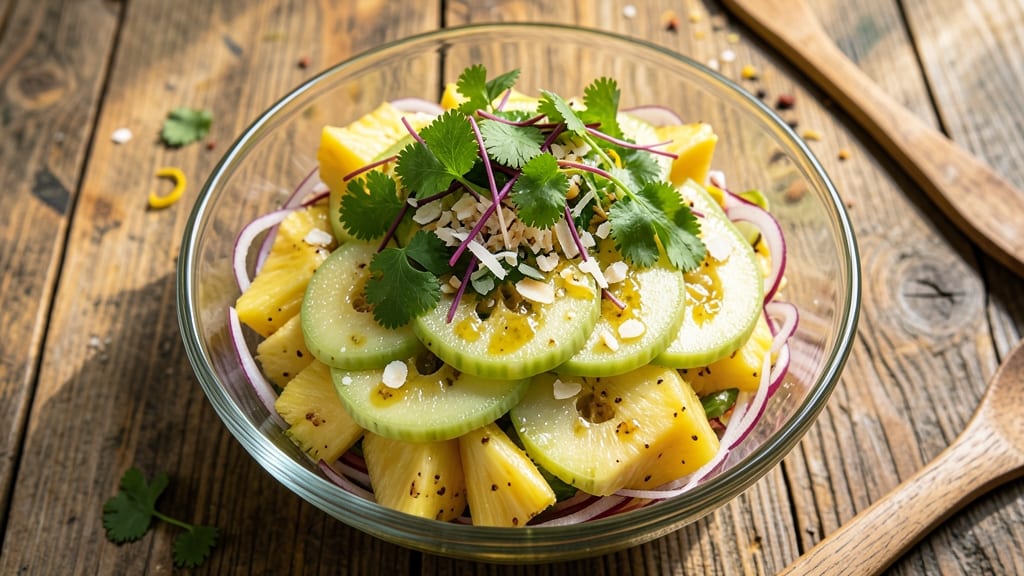
This ampalaya and pineapple salad balances tropical sweetness with the earthy bite of bitter melon, creating a refreshing dish that’s both vibrant and satisfying. The key lies in properly preparing the ampalaya—thinly slicing and blanching it to soften the texture while preserving its subtle crunch.
I’ve tested this recipe countless times, and the secret to harmony is the dressing: a tangy lime-vinegar base with a touch of garlic and chili to bridge the flavors.
The salad’s beauty comes from its contrast—juicy pineapple chunks burst against the melon’s slight bitterness, while fresh herbs like cilantro or Thai basil add brightness. For texture, toasted coconut flakes or crushed peanuts provide a satisfying crunch that elevates every bite.
This dish is vegetarian by nature but easily accommodates protein like grilled shrimp or crispy tofu for a heartier meal.
What makes this salad truly special is how it transforms a humble ingredient like ampalaya into something unexpectedly delicious. The dressing cuts through the bitterness while enhancing the pineapple’s natural sweetness, resulting in a dish that’s light yet deeply flavorful.
Perfect for warm weather or as a refreshing side, it’s the kind of salad that leaves everyone asking for seconds.
Whether you’re serving it as a main course or a side, this recipe delivers a balance of textures and flavors that’s both unexpected and memorable. The prep is straightforward, but the result is anything but ordinary—proof that even the most polarizing ingredients can shine when paired thoughtfully.
Ingredients for ampalaya salad with pineapple
Fresh tropical flavors meet earthy ampalaya in this vibrant, tangy salad creation.
| Ingredient | Amount | Notes |
|---|---|---|
| Ampalaya (Bitter Melon) 🍈 | 2 lb | Thinly sliced, blanched for 1 minute |
| Fresh Pineapple Chunks 🍍 | 2 cups | Roughly 1 medium pineapple, peeled |
| Red Onion 🧅 | 1 whole | Thinly sliced, soaking in cold water |
| Fresh Cilantro 🌿 | ½ cup | Stems removed, finely chopped |
| Thai Basil 🌿 | ¼ cup | Fresh leaves, torn by hand |
| Toasted Coconut Flakes 🥥 | ¼ cup | Lightly browned in dry pan |
| Crushed Peanuts 🥜 | ¼ cup | Roasted, unsalted preferred |
| Lime Juice 🍋 | ½ cup | Freshly squeezed, strained |
| Rice Vinegar 💧 | ¼ cup | Seasoned with garlic powder |
| Fresh Garlic 🧄 | 4 cloves | Minced, for dressing |
| Red Chili Flakes 🌶️ | 1 tsp | Adjust to taste for heat |
| Coconut Oil 🫒 | 1 tbsp | For blanching ampalaya |
| Sea Salt 🧂 | 1 tsp | Fine grain preferred |
| Honey 🍯 | 1 tbsp | Balances bitterness (optional) |
The ampalaya is the star here—freshness is non-negotiable. Asian markets often carry it pre-cut, but whole melons last longer if stored properly. Look for firm, unblemished skin and a vibrant green hue; avoid any with soft spots or yellowing. The blanching step (1 minute in boiling water) is crucial—it softens the texture without cooking it completely. Whole Foods or Trader Joe’s typically stock pineapples with superior sweetness; choose ones with golden-yellow skin and minimal green. For the coconut flakes, Bob’s Red Mill brand stays fresh longer than store-brand options.
No ampalaya? Substitute with thinly sliced zucchini or daikon radish—they won’t replicate the bitterness but add a similar crunch. Running low on Thai basil? Regular basil or mint works in a pinch, though the flavor profile shifts slightly. The dressing can be prepped ahead; store it in a sealed jar for up to 3 days. For extra crunch, toast your peanuts in a dry skillet for 3-4 minutes until golden. The honey in the dressing is optional but recommended—it beautifully balances the salad’s bitterness while complementing the pineapple’s natural sweetness.
Prep the ampalaya and pineapple first—they’re the most time-sensitive components. Store the blanched ampalaya in an airtight container with a damp paper towel to maintain moisture for up to 2 days. The dressing keeps for 5 days in the fridge, while the toasted coconut and peanuts stay crisp for 1 week if stored in a sealed container. Assemble the salad just before serving to preserve its vibrant textures. For meal prep, portion the dressing separately and mix it in at the last minute.
Why You'll Love This Recipe
- No-Chop Nightmare: I swear, this is the only salad where I actually look forward to chopping—because the bits are so satisfying. Dice the ampalaya (just peel and slice lengthwise first, then chop) and toss it with pineapple, then let the Thai basil and cilantro do the heavy lifting. Five minutes of prep, zero fuss.
- Sweet-Savory Magic: Between us, the pineapple and bitter melon might sound weird, but they work. The ampalaya’s natural bitterness mellows into something bright, while the pineapple’s tang cuts through it like a cool breeze. Add a squeeze of lime, and suddenly, you’ve got a flavor explosion that’s weirdly addictive.
- Lunchbox Hero: Here’s what sold me—this salad holds up perfectly for lunch the next day. Pack it in a jar with the dressing at the bottom, and by lunchtime, the pineapple and ampalaya soak up all the good stuff. My kids (who usually refuse veggies) now ask for this—yes, even on a Tuesday.
- Budget Brightener: Ampalaya and pineapple stretch this salad into a full meal without breaking the bank. A single bitter melon and a small pineapple feed four, and the onions/cilantro add zero cost. Plus, leftovers? They taste better the second day—like a weird, delicious flavor upgrade.
Step-by-step instructions for ampalaya and pineapple salad
Transform bitter melon into a vibrant, tropical salad with this precise method.
Blanch and Prepare the Ampalaya
Begin by slicing the 2 lb ampalaya (bitter melon) into ¼-inch thick rounds. Immediately submerge the slices in a large pot of boiling water for exactly 1 minute—this brief blanching removes the bitter compounds while preserving texture. Drain thoroughly and rinse under cold water to stop the cooking process.
Transfer the blanched ampalaya to an ice bath for 5 minutes to crisp the edges slightly. Pat completely dry with paper towels, then thinly slice each round into ⅛-inch strips. The ampalaya should now have a tender yet firm bite with reduced bitterness. Set aside in a colander until ready to assemble.
Soak and Slice the Red Onion
Peel and thinly slice the whole red onion into ⅛-inch semi-circles. Place the slices in a bowl and cover with cold water for 15 minutes to mellow their sharpness. Drain well and pat dry with paper towels before adding to the salad. This step prevents the onion from overpowering the delicate flavors.
While the onion soaks, toast the 0.25 cup toasted coconut flakes in a dry skillet over medium-low heat for 2-3 minutes until fragrant and lightly golden. Let cool completely before adding to the salad mixture. The coconut should have a nutty aroma with no burnt edges.
Create the Tangy Dressing
In a small bowl, whisk together the 0.5 cup lime juice, 0.25 cup rice vinegar, 1 tbsp honey, 1 tsp sea salt, and 1 tsp red chili flakes until fully combined. Add the 4 cloves minced fresh garlic and mix well. Taste and adjust the balance—you want a bright, slightly spicy dressing that cuts through the richness of the coconut and peanuts.
For the perfect texture, lightly crush the 0.25 cup crushed peanuts in a zip-top bag using a rolling pin. This creates a mix of fine powder and small chunks that will distribute evenly throughout the salad. Set aside for the final assembly.
Assemble the Salad
In a large mixing bowl, combine the blanched ampalaya strips, soaked red onion slices, 2 cups fresh pineapple chunks, 0.5 cup finely chopped fresh cilantro, and 0.25 cup torn Thai basil leaves. Gently toss everything together with a pair of tongs to avoid mashing the pineapple or ampalaya.
Drizzle the dressing over the salad mixture in a slow, steady stream while tossing continuously. The ampalaya will absorb some of the liquid, so add the dressing gradually until everything is evenly coated. Sprinkle the lightly crushed peanuts and toasted coconut flakes over the top, then give one final gentle toss to distribute.
Rest and Serve
Let the salad rest for 10 minutes before serving. This allows the flavors to meld together and the dressing to fully penetrate the ingredients. The ampalaya should maintain its crisp texture while the pineapple remains juicy and bright.
Serve immediately while the pineapple is still vibrant and the coconut flakes are crisp. For an extra touch, garnish each serving with a sprinkle of additional red chili flakes or a drizzle of lime juice to enhance the tropical zing. This salad balances the earthy ampalaya with sweet pineapple and the tangy dressing creates a refreshing contrast.
Pro Tips For Making Ampalaya Salad With Pineapple
- BLANCH AMPALAYA FIRST: Drop sliced bitter melon into boiling water for 30 seconds—this softens the flesh and cuts the bitterness before you even think about dicing. I learned this the hard way after serving a salad where the melon was still tough and overpowering the pineapple’s sweetness.
- SALT THE PINEAPPLE: Sprinkle pineapple chunks with a pinch of salt and let them sit for 10 minutes before adding to the salad—this draws out excess juice and balances the natural tartness. Sounds weird, but it works: your salad won’t turn into a soggy mess.
- CHAR THE ONIONS: Sear thinly sliced red onions in a dry pan until they’re just caramelized at the edges—about 5 minutes on medium heat. The bittersweet crunch elevates the dish way more than raw onions ever could. (Yes, even if you’re impatient like me.)
- TOSS HERBS LAST: Add cilantro and Thai basil right before serving—crushing them into the salad releases their oils too early, making the flavors fade faster. If you’re prepping ahead, store the herbs separately and mix them in just before eating.
Best sauces and condiments for these flavors
Tangy Lime-Garlic Dressing
The dressing is the heart of this salad, balancing sweet, bitter, and spicy notes. I use 0.5 cup lime juice and 0.25 cup rice vinegar for a bright, tangy base that cuts through the pineapple’s sweetness. Add 1 tbsp honey to soften the ampalaya’s bitterness while enhancing the tropical flavors.
For depth, 4 cloves minced garlic and 1 tsp red chili flakes add warmth and a subtle kick. Adjust the chili to taste—start with less if you prefer mild heat. 🍋
Coconut-Lime Vinaigrette
Swap the honey for 1 tbsp coconut sugar and add 1 tbsp toasted coconut cream to the dressing for a richer, caramelized flavor. This version pairs beautifully with the toasted coconut flakes, creating a cohesive tropical profile.
The coconut sugar adds a delicate sweetness without overpowering the lime’s acidity. Use this when you want a more dessert-like salad experience. 🥥
Spicy Chili-Lime Dressing
For extra heat, blend 1 tbsp fresh Thai chili paste (like Maesri) into the dressing along with 1 tsp fish sauce (optional for umami depth). This version is perfect for balancing the sweet pineapple and earthy ampalaya with bold, spicy notes.
The fish sauce adds complexity if you’re open to it, but it’s still delicious without. 🌶️
Sweet Chili Glaze Drizzle
Reduce 0.25 cup pineapple juice with 1 tbsp brown sugar and 1 tsp rice vinegar until syrupy, then drizzle lightly over the assembled salad. This adds a glossy, sweet contrast that complements the toasted coconut and peanuts.
The reduction process intensifies the pineapple’s natural sweetness, making it a showstopper garnish. 🍍
Herb-Infused Dressing
Blend 0.25 cup fresh mint leaves and 0.25 cup cilantro stems into the dressing for an aromatic twist. The mint brightens the pineapple, while the cilantro stems add a subtle earthiness that bridges the ampalaya’s bitterness.
This variation works especially well if you’re serving the salad as a refreshing appetizer or side dish. 🌿
Peanut-Lime Dressing
For a nutty depth, blend 2 tbsp creamy peanut butter (unsweetened) with the lime juice and rice vinegar. Thin with a splash of water if needed to reach a pourable consistency.
This dressing adds richness that pairs perfectly with the crushed peanuts, creating a cohesive, satisfying texture. It’s a game-changer for those who love peanut flavors. 🥜
Nutrition facts
Frequently asked questions
Why does the recipe call for blanching the ampalaya?
Blanching removes the bitter compounds that make raw ampalaya unpleasant to eat. The 1-minute boil and ice bath soften the texture while preserving a pleasant crunch. This step is essential—skipping it will leave your salad tasting harsh and unbalanced.
Can I use canned pineapple instead of fresh?
Fresh pineapple adds the best flavor and texture, but you can use canned in a pinch. Drain and rinse the chunks to remove excess syrup, then pat dry thoroughly. Canned pineapple lacks the same juicy burst, but the sweetness still works well with the tangy dressing.
How do I adjust the dressing for less heat?
Reduce the red chili flakes to ½ tsp or omit them entirely. For a milder kick, add ½ tsp honey or 1 tsp sugar to balance the acidity. The lime and vinegar already provide tanginess, so you can keep the dressing bright and refreshing without spice.
What’s the best way to store leftovers?
Keep the dressing separate and store the salad components in airtight containers for up to 2 days. Reassemble with fresh dressing before serving. The pineapple will soften over time, so eat this salad within 24 hours for optimal texture. The coconut flakes stay crisp for 3 days if stored in a sealed bag.
Is this salad gluten-free?
Yes, all ingredients are naturally gluten-free. Double-check your rice vinegar and coconut flakes labels for cross-contamination warnings if you have severe gluten sensitivity. The crushed peanuts are also safe, provided they’re processed in a gluten-free facility.